Growing skills gap threatens infrastructure delivery


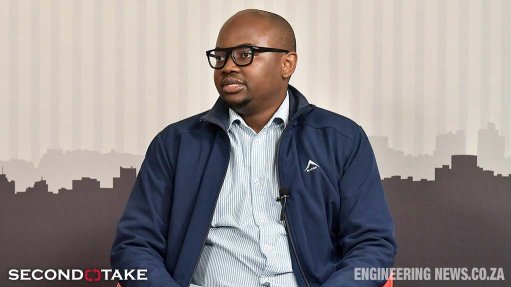
GEORGE ASAMANI Future-ready project professionals need to combine deep technical expertise with strong governance capabilities and the human skills to lead complex projects



While demand for project management and engineering-related skills is accelerating in emerging markets, the supply of qualified professionals is not keeping pace, consequently widening a gap that could affect project delivery across infrastructure-intensive sectors, says nonprofit organisation Project Management Institute (PMI) sub-Saharan Africa MD George Asamani.
Construction is projected to experience demand growth of between 50% and 66%, driven by major infrastructure investment, climate-resilient development, urbanisation, supply chain shifts and technological change.
As projects become larger and more complex, the demand for skilled project professionals who can coordinate engineering, governance and delivery is expected to outpace the available talent pipeline.
Consequently, expanding only the labour force is insufficient to close the gap, Asamani says. Instead, greater investment in education, upskilling and professional development is required to prepare workers for increasingly complex project environments.
“A future-ready project professional will need to combine deep technical expertise with strong governance capabilities and the human skills required to lead in complex, uncertain environments.”
He elaborates that project managers will need to go beyond managing schedules and budgets, with increased focus on translating strategy into execution through a strong understanding of modern delivery approaches and emerging technologies, such as AI, that are reshaping project execution.
Alongside this, governance is increasingly critical as organisations require professionals who can manage risk, ensure compliance, align projects with strategic objectives and maintain strong oversight throughout the project life cycle.
Asamani adds that human skills, such as agility, communication, stakeholder engagement and leadership, particularly within multidisciplinary teams, are also expected to differentiate high-performing project managers from one another.
“Today's training pipelines are not yet fully aiding the realisation of this combination of skills,” he stresses.
AI Governance and the New PMI Standard
To improve project manager readiness, PMI has released its Standard for Artificial Intelligence in Portfolio, Programme and Project Management, serving as a practical framework for adopting AI in various applications such as improving project delivery or developing AI-enabled products and services.
Asamani explains that integrating AI can expose an organisation to various risks that extend beyond technical implementation. AI systems can unintentionally reproduce bias, create privacy concerns, generate inaccurate or misleading outputs or produce decisions that are difficult to explain.
Meanwhile, factors, such as legal uncertainty regarding intellectual property, ownership of AI-generated content, accountability and differing national regulatory approaches can expose projects to compliance risks, undermine stakeholder trust and reduce confidence in project outcomes.
As opposed to prescribing specific technologies, the standard establishes the principles, governance and management practices needed to integrate AI responsibly across portfolios, programmes and projects.
Asamani says AI technologies are evolving far more rapidly than any individual framework or software platform. Therefore, by focusing on principles and governance rather than specific tools, the standard remains relevant, regardless of how AI evolves.
As a result, the standard encourages project professionals to focus on the capabilities AI should provide and how those capabilities create value throughout the project life cycle. These include automating routine administrative work, analysing large volumes of project information, supporting risk identification, improving resource allocation, enhancing scheduling, generating documentation and strengthening decision-making through predictive insights.
Further, because it is technology agnostic, the standard ensures that organisations can adopt new AI capabilities without constantly redesigning their project management approach. This gives organisations the flexibility to tailor implementation to their own industry, regulatory environment and level of AI maturity while maintaining consistency in governance and decision-making.
Project professionals can, therefore, adapt as technology advances without losing sight of the outcomes, accountability and value that innovations and projects are intended to deliver.
The standard is built around eight guiding principles: strategic value, risk, governance and compliance, people and culture, ethics and professional responsibility, stakeholder engagement, optimisation, and innovation and data quality. The principles are supported by five performance domains covering stakeholder expectations, AI scope, architecture and quality, the execution of strategic goals and risk management.
Together, they provide guidance across the entire AI life cycle, from planning and development to deployment, monitoring, optimisation and retirement.
Asamani enthuses that rather than waiting for regulation to align with technological developments, the standard encourages organisations to establish their own governance structures grounded in the “enduring principles” of ethics, accountability, transparency and human oversight.
This approach is intentionally designed to apply across jurisdictions, including jurisdictions where AI-specific legislation is still developing, by promoting practices that support responsible adoption regardless of local legal maturity.
“The standard positions human judgement, supported by appropriate governance and continuous monitoring, as the safeguard that enables organisations to realise AI’s benefits while responsibly managing its uncertainties. It positions AI as a capability that augments, rather than replaces, professional judgement,” Asamani says.
He stresses that human oversight remains essential to validate AI-generated outputs, interpret context and make decisions requiring ethical consideration, stakeholder understanding and strategic alignment.
“The future is not about mastering any single platform, but about integrating AI capabilities into project delivery confidently while maintaining governance, accountability and professional responsibility,” Asamani concludes.
Article Enquiry
Email Article
Save Article
Feedback
To advertise email advertising@creamermedia.co.za or click here
Research Reports

Projects

Latest Multimedia
Latest News


Showroom
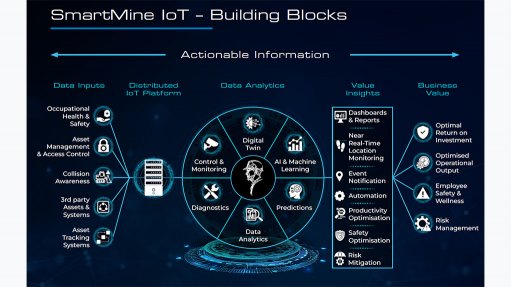
SmartMine IoT has been developed with the mining industry in mind, to provides our customers with powerful business intelligence and data modelling...
VISIT SHOWROOM
Complete range of security sealing solutions including security seals bags and labels.
VISIT SHOWROOM


Press Office
Announcements
What's On
Subscribe to improve your user experience...
Option 1 (equivalent of R125 a month):
Receive a weekly copy of Creamer Media's Engineering News & Mining Weekly magazine
(print copy for those in South Africa and e-magazine for those outside of South Africa)
Receive daily email newsletters
Access to full search results
Access archive of magazine back copies
Access to Projects in Progress
Access to ONE Research Report of your choice in PDF format
Option 2 (equivalent of R375 a month):
All benefits from Option 1
PLUS
Access to Creamer Media's Research Channel Africa for ALL Research Reports, in PDF format, on various industrial and mining sectors
including Electricity; Water; Energy Transition; Hydrogen; Roads, Rail and Ports; Coal; Gold; Platinum; Battery Metals; etc.
Already a subscriber?
Forgotten your password?
Receive weekly copy of Creamer Media's Engineering News & Mining Weekly magazine (print copy for those in South Africa and e-magazine for those outside of South Africa)
➕
Recieve daily email newsletters
➕
Access to full search results
➕
Access archive of magazine back copies
➕
Access to Projects in Progress
➕
Access to ONE Research Report of your choice in PDF format
RESEARCH CHANNEL AFRICA
R4500 (equivalent of R375 a month)
SUBSCRIBEAll benefits from Option 1
➕
Access to Creamer Media's Research Channel Africa for ALL Research Reports on various industrial and mining sectors, in PDF format, including on:
Electricity
➕
Water
➕
Energy Transition
➕
Hydrogen
➕
Roads, Rail and Ports
➕
Coal
➕
Gold
➕
Platinum
➕
Battery Metals
➕
etc.
Receive all benefits from Option 1 or Option 2 delivered to numerous people at your company
➕
Multiple User names and Passwords for simultaneous log-ins
➕
Intranet integration access to all in your organisation