Capability before infrastructure





This article has been supplied and will be available for a limited time only on this website.
Every mining company wants its Social and Labour Plan (SLP) to leave a lasting legacy. Yet too many well-intentioned projects fail to achieve their full potential because they prioritise infrastructure before building the capabilities needed to benefit from it.
"Community halls, enterprise hubs, agricultural projects and artisan training all have value," says Marco Maree, Training & Development Expert at Triple E Training. "However, none can deliver sustainable outcomes if beneficiaries lack the literacy and numeracy skills needed to participate confidently."
This challenge is becoming increasingly relevant as the mining industry shifts towards more strategic SLP planning. Many of Triple E Training's clients have achieved far greater impact by aligning investments with municipal Integrated Development Plans (IDPs), the District Development Model (DDM), mine closure planning and future regional economic opportunities. According to Maree, the emphasis is on ensuring that every investment contributes to long-term economic resilience and measurable community outcomes.
"And if that is the objective, then one critical question must be asked before any project is approved: Do communities possess the foundational skills needed to benefit from these opportunities?" he says. "This is where adult literacy and numeracy deserve far greater attention."
Pathways to employment and enterprise
One study of 873 employees across three South African mines found that almost 99% were functionally innumerate, highlighting the extent of the foundational skills challenge that still exists in parts of the sector. This helps explain why the Mining Qualifications Authority (MQA) continues to invest in Adult Education and Training (AET) as a gateway to technical skills development.
In its 2024/25 financial year alone, the MQA reported that 1,927 learners successfully completed AET and NATED programmes, equipping them with the literacy and numeracy skills needed to progress into learnerships, artisan development and other occupational qualifications.
Many adults in South Africa's mining and labour-sending communities have had limited access to quality education and continue to require foundational literacy and numeracy support.
"The skills gap often becomes apparent when people enrol in technical training, workplace learning or enterprise development programmes, where reading comprehension, written communication and basic mathematics are essential for success," Maree says.
He notes that the consequences extend well beyond the classroom. Workers may struggle to interpret safety procedures, understand technical manuals and work instructions, complete
workplace documentation accurately, or progress into artisan and supervisory roles. For aspiring entrepreneurs, weak foundational skills can make it more difficult to maintain financial records, prepare quotations, manage stock and meet regulatory requirements.
"Adult literacy and numeracy address these challenges at their source," he says.
The multiplier effect of foundational skills
Strong foundational literacy and numeracy skills improve outcomes across almost every type of SLP initiative. “They enable beneficiaries to complete artisan and vocational training, understand health and safety requirements, interpret technical drawings and work instructions, keep accurate business and financial records, prepare quotations, manage stock and communicate effectively with customers, suppliers and employers,” Maree explains. Whether participants pursue employment in mining, establish small businesses or develop agricultural enterprises, these skills provide the foundation for long-term economic participation and help communities build more resilient local economies long after a mine has closed.
"This makes literacy and numeracy one of the few SLP investments that strengthens almost every other intervention," he states. "Whether a mine supports local supplier development, agricultural projects, entrepreneurship programmes or technical apprenticeships, participants with strong foundational skills are far more likely to succeed."
Demonstrating lasting social impact
It also aligns with the evolving philosophy underpinning successful SLPs. Rather than measuring success by expenditure or the number of projects delivered, mines are increasingly expected to demonstrate lasting social and economic impact. “This is particularly relevant to enterprise development,” Maree says.
He refers to a 2023 Wits Business School study which found that mining Enterprise and Supplier Development (ESD) programmes provide funding, training and mentorship. However, they often do not adequately measure whether they create sustainable businesses capable of surviving beyond mining contracts. Strengthening foundational literacy and numeracy helps address one of the key factors influencing long-term business sustainability by equipping entrepreneurs with the skills to manage finances, understand contracts, maintain records and make informed business decisions.
"Literacy and numeracy provide the foundation on which skills development, enterprise creation, employment and community resilience are built," he adds.
For mining companies planning future SLP cycles, the question is no longer simply which projects to fund. It is whether communities possess the foundational capabilities needed to maximise the value of every investment.
"Adult literacy and numeracy may not be the most visible SLP initiative, but they are often the investment that determines the success of all the others," Maree concludes.
Article Enquiry
Email Article
Save Article
Feedback
To advertise email advertising@creamermedia.co.za or click here
Research Reports

Projects


Latest Multimedia
Latest News


Showroom
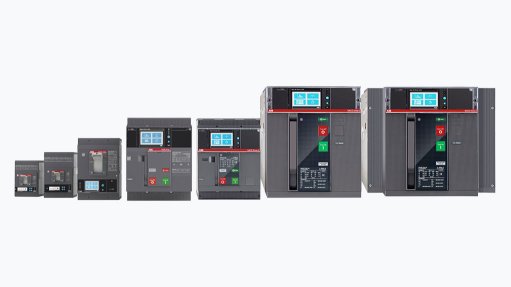
Electrifying the world in a safe, smart, and sustainable way, ABB Electrification is a global technology leader in electrical distribution and...
VISIT SHOWROOM
Established in 1983, the ASTPM is an industry association and representative body of the welded carbon steel tube and pipe manufacturers of South...
VISIT SHOWROOM



Press Office
Announcements
What's On
Subscribe to improve your user experience...
Option 1 (equivalent of R125 a month):
Receive a weekly copy of Creamer Media's Engineering News & Mining Weekly magazine
(print copy for those in South Africa and e-magazine for those outside of South Africa)
Receive daily email newsletters
Access to full search results
Access archive of magazine back copies
Access to Projects in Progress
Access to ONE Research Report of your choice in PDF format
Option 2 (equivalent of R375 a month):
All benefits from Option 1
PLUS
Access to Creamer Media's Research Channel Africa for ALL Research Reports, in PDF format, on various industrial and mining sectors
including Electricity; Water; Energy Transition; Hydrogen; Roads, Rail and Ports; Coal; Gold; Platinum; Battery Metals; etc.
Already a subscriber?
Forgotten your password?
Receive weekly copy of Creamer Media's Engineering News & Mining Weekly magazine (print copy for those in South Africa and e-magazine for those outside of South Africa)
➕
Recieve daily email newsletters
➕
Access to full search results
➕
Access archive of magazine back copies
➕
Access to Projects in Progress
➕
Access to ONE Research Report of your choice in PDF format
RESEARCH CHANNEL AFRICA
R4500 (equivalent of R375 a month)
SUBSCRIBEAll benefits from Option 1
➕
Access to Creamer Media's Research Channel Africa for ALL Research Reports on various industrial and mining sectors, in PDF format, including on:
Electricity
➕
Water
➕
Energy Transition
➕
Hydrogen
➕
Roads, Rail and Ports
➕
Coal
➕
Gold
➕
Platinum
➕
Battery Metals
➕
etc.
Receive all benefits from Option 1 or Option 2 delivered to numerous people at your company
➕
Multiple User names and Passwords for simultaneous log-ins
➕
Intranet integration access to all in your organisation