



Glasenberg’s iron barbs blunted by coal expansion


Ivan Glasenberg, the billionaire CEO of Glencore, has argued that his two biggest rivals have got it wrong by feeding a global glut of iron-ore.
The world’s largest producers, including BHP Billiton and Rio Tinto Group, are fueling a 25% increase in output, and “that’s what’s killing the supercycle”, says Glasenberg.
That criticism is cold comfort for coal producers suffering as Glencore, the biggest exporter of the power station fuel, raises output even as prices dipped to the lowest in five years last week.
“There’s certainly a tension there and that certainly provides ammunition for those that would say, ‘Look, this is simply talk, not walk,’” says Paul Gait, an analyst at Sanford C Bernstein, in London.
Glencore’s coal output increased 5% in the first half from 12 months earlier and production this year will be 14% higher than in 2012, according to a September 29 presentation to analysts by the Switzerland-based company.
While BHP Billiton and Rio have defended plans to expand mines, ports and railways in Australia, Glasenberg believes the strategy is flawed as it deepens a price slump and erodes profit margins. His heightened criticism has coincided with Glencore’s proposed $160-billion combination with Rio Tinto, the second-largest exporter, which was rejected two months ago.
Last year, Glasenberg said rival mining chiefs had “screwed up” by swamping the world with raw materials that had eroded prices and profits. Speaking in London on the day BHP Billiton announced a $2-billion investment to boost Australian iron-ore output, the 30-year veteran of the commodities trade voiced concern over the plan.
He reiterates that view: “If you look at the statement put out . . . by BHP Billiton, one of the world’s biggest iron-ore producers, saying they are going to expand production – it has already had an impact on prices.”
Glencore is seeking to bring “discipline” to its coal operations, the company says. “We have consistently told the market that part of the problem with oversupply in coal has been due to legacy capital expenditure commitments that we inherited with the takeover of Xstrata, which we could not cancel. Part of the logic of our acquisition of Xstrata was to reintroduce capital discipline.”
Iron-ore has slumped 40% this year. Rio said on October 15 that its project to expand annual iron-ore production capacity in Australia by 24% to 360-million tons is “poised to generate significant value for shareholders”.
BHP Billiton has a similar goal, according to marketing head Arnoud Balhuizen, who says that it is still “extremely value-creative” to invest in iron-ore.
“I’ll leave you to draw your own conclusions,” BHP Billiton CEO Andrew Mackenzie said in response to a question on whether Glencore’s view on iron-ore was contradicted by the company’s coal output expansion. “We believe in free markets. We believe in being the lowest-cost producer.”
Glasenberg, a 57-year-old accountant-turned-coal trader, last year doubled down on the power station fuel, betting on rising world demand as he completed the $29-billion takeover of Xstrata. That gave Glencore an interest in more than 35 coal mines in Colombia, Africa and Australia.
Still, Glasenberg has also shuttered mines in a bid to partly offset the impact of new production, says Bernstein’s Gait. The company last month suspended operations at Ravensworth, in Australia, citing lower prices and higher costs.
“We have seen Glencore close thermal coal mines and cut thermal coal capacity, so, to Glencore’s defence, I would say that they’ve done a better job of it,” says Gait.
Four months after completing the Xstrata takeover, Glencore told investors in September last year that about 30% of seaborne coal was being sold at a loss. That has increased to more than 40%, according to Macquarie Group.
The price of energy coal from Australia’s Newcastle port, a benchmark for Asia, has plunged about 25% this year to $63.30/t last week, the lowest since 2009, according to data from McCloskey.
“We believe the spot thermal coal price could test the $60/t level over the next three to six months,” Deutsche Bank analysts, including Grant Sporre, wrote in an October 10 note. A drop below $60/t “would catalyse the much-needed production shuts to stabilise the market.”
With freight contracts at some mines in Australia, the second-biggest exporter of energy coal, making it cheaper to ship at a loss rather than close, producers are helping to prolong a supply glut.
Glencore plans to increase output in Australia by about ten-million tons from 2015 to 2018, more than any of its rivals, according to a presentation last month by Macquarie analyst Stefan Ljubisavljevic. BHP Billiton and Rio Tinto do not figure in the bank’s analysis of new Australian supply.
Glencore estimates its production, including coking coal, will climb to 168-million tons this year, up from 157-million tons last year.
While output from its mines in South Africa and Colombia is set to fall this year, production in Australia is expected to rise 16% this year to 94-million tons at operations acquired from Xstrata. The company sees thermal coal demand growth at 5% a year and a slowing of supply increases. It predicts a deficit in global production next year.
Still, the company’s spending on expanding mines in Australia, South Africa and Colombia in the first half of this year dropped to $420- million, less than half the $919-million invested a year earlier. Glencore spent $2.5-billion in 2012 and $1.66-billion last year, largely on mines inherited through the acquisition of Xstrata.
“Ivan is an incredibly bright guy, very smart, who, when he says something, as he’s been talking about with the iron-ore market, there’s a very specific reasoning behind it,” says Clive Burstow, an investment manager who helps oversee about $800-million at Barings Asset Management. “The supply-demand fundamentals for coal are much more supportive of a longer-term upward tick in coal prices. In the iron-ore market, I’d argue you’ve got probably a bit more pain you need to take.”
Like Rio Tinto and BHP Billiton in iron-ore, Glencore says it is best positioned to weather the coal price drop, given its low costs. Still, Glasenberg has at least shelved some developments, according to Ben Davis, an analyst at Liberum Capital, in London, who has a ‘hold’ recommendation on the company’s stock.
“While Glencore is undoubtedly contributing to continued weakness in thermal coal prices by bringing on new supply, those projects were already in progress and they’ve delayed others that were in earlier stages,” says Davis. “BHP Billiton and Rio Tinto are guilty of bringing on destructive new supply, whereas Glencore expected to meet demand.”
Article Enquiry
Email Article
Save Article
Feedback
To advertise email advertising@creamermedia.co.za or click here
Research Reports

Projects


Latest Multimedia


Latest News
Showroom

Developed to exceed the latest EN 15964 standards for police breathalysers proving that it will remain accurate and reliable for many years to come.
VISIT SHOWROOM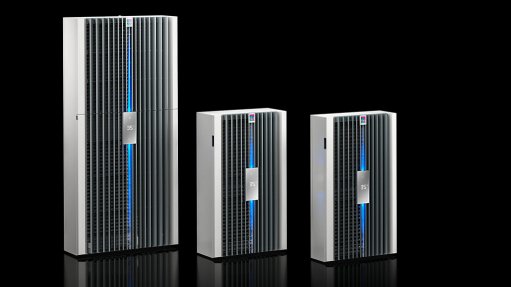
Rittal is a world leading provider of top-quality integrated systems for enclosures, power distribution, climate control, IT infrastructure and...
VISIT SHOWROOM



Announcements
What's On
Subscribe to improve your user experience...
Option 1 (equivalent of R125 a month):
Receive a weekly copy of Creamer Media's Engineering News & Mining Weekly magazine
(print copy for those in South Africa and e-magazine for those outside of South Africa)
Receive daily email newsletters
Access to full search results
Access archive of magazine back copies
Access to Projects in Progress
Access to ONE Research Report of your choice in PDF format
Option 2 (equivalent of R375 a month):
All benefits from Option 1
PLUS
Access to Creamer Media's Research Channel Africa for ALL Research Reports, in PDF format, on various industrial and mining sectors
including Electricity; Water; Energy Transition; Hydrogen; Roads, Rail and Ports; Coal; Gold; Platinum; Battery Metals; etc.
Already a subscriber?
Forgotten your password?
Receive weekly copy of Creamer Media's Engineering News & Mining Weekly magazine (print copy for those in South Africa and e-magazine for those outside of South Africa)
➕
Recieve daily email newsletters
➕
Access to full search results
➕
Access archive of magazine back copies
➕
Access to Projects in Progress
➕
Access to ONE Research Report of your choice in PDF format
RESEARCH CHANNEL AFRICA
R4500 (equivalent of R375 a month)
SUBSCRIBEAll benefits from Option 1
➕
Access to Creamer Media's Research Channel Africa for ALL Research Reports on various industrial and mining sectors, in PDF format, including on:
Electricity
➕
Water
➕
Energy Transition
➕
Hydrogen
➕
Roads, Rail and Ports
➕
Coal
➕
Gold
➕
Platinum
➕
Battery Metals
➕
etc.
Receive all benefits from Option 1 or Option 2 delivered to numerous people at your company
➕
Multiple User names and Passwords for simultaneous log-ins
➕
Intranet integration access to all in your organisation
