



Finance Minister says imperfect G20 still relevant for world and Africa

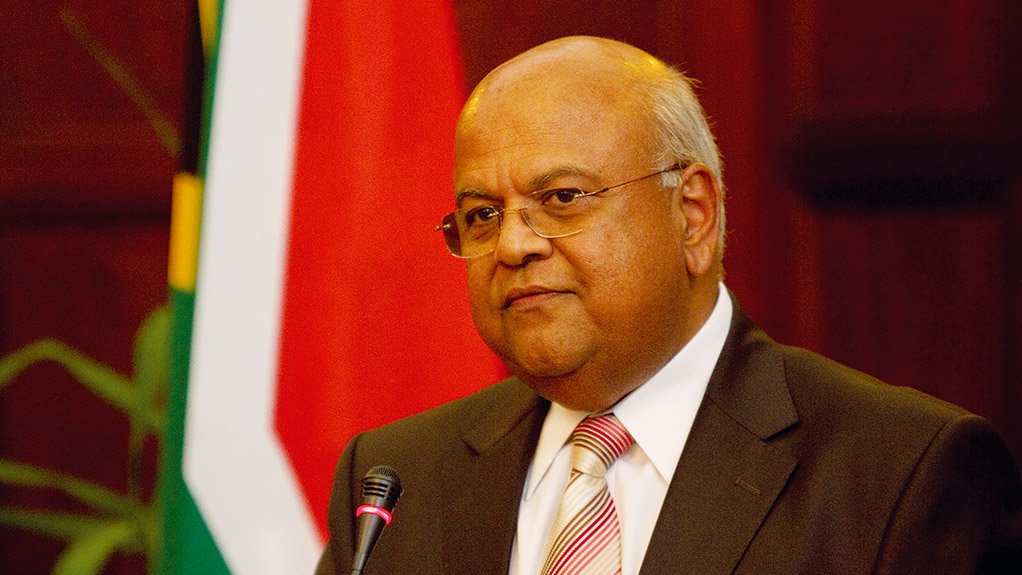
PRAVIN GORDHAN The G20 is an important experiment in global financial governance
Photo by Duane Daws


South African Finance Minister Pravin Gordhan believes that the Group of 20 leading economies (better known as the G20), of which South Africa is a member, has played an important role in helping the world face the global economic crisis that broke in 2007/2008.
It took centre stage when the original financial crisis broke in the US, and, by its actions, “averted a deeper crisis and indeed a depression”, he affirmed recently. It has also prevented a further deepening of the euro crisis.
While affirming that the US had acted decisively to intervene in its banking crisis, he regretted that others had not followed suit. In addition, “Europe’s inability to resolutely address its downside risks” has been a problem.
“The G20 remains a relevant forum,” he said. “It is an important experiment in global financial governance. As South Africa, we would like to promote, and do promote, Africa’s interests at the G20.” This is both because “it is the right thing to do” and because faster African economic growth and development benefits South Africa.
Africa now has three seats at the G20, one occupied by South Africa, one by the African Union, and one by Nepad (the New Partnership for Africa’s Development). “What is required is greater cohesiveness and assertiveness from ourselves [in Africa].” The G20 remains important, “despite it’s weaknesses and imperfections”.
“Africa has gotten G20 agreement on issues important to Africa,” he noted. These include illicit capital flows out of African countries. “Regrettably, this problem is getting worse, not better.” The G20 also has a development agenda – which he credited to the Republic of Korea. “For developing countries, the G20 is a significant and strategic platform.” It helps deal with financial crisis spillover effects, strengthens international financial institutions and oversees reforms within financial institutions. It is looking at how to stimulate development in the poorest countries.
Nevertheless, the international body has its own problems. “The G20 faces challenges in building consensus on pro-growth policies,” cited Gordhan. Other challenges concern capital flow management, the implementation of financial sector rules which improve liquidity, the implementation of structural reforms to unlock growth and create jobs, the promotion of multilateral trade and the combatting of protectionism.
Member countries face competition between their domestic priorities and the needs of the wider world. “Often, at this point in time, the national interest is the dominant factor,” he avered. “We have yet to see sustained growth.”
At the last G20 summit, in St Petersburg in Russia during September, the group adopted the St Petersburg Action Plan. This is aimed at strengthening growth and creating jobs. “Each of the [G20] countries has committed to take certain actions. Are those commitments going to be implemented? And will they help?” he queried. (The commitments made by South Africa include easing its energy constraints through building a third coal-fired power station and by “respons-ibly exploiting” shale gas and improving the education system.)
Gordhan expressed the view that the St Petersburg Action Plan was the best way forward, and that it would allow African countries to build on their recent economic successes. Although the probability of coordinated action by the world’s leading economies was not encouraging at this time, he was optimistic that a virtuous economic cycle could be achieved.
The Finance Minister delivered the keynotes address at the South African Institute of International Affair’s recent second annual G20 and Africa conference, entitled the ‘G20 and Africa’s Economic Growth and Transformation’.
Article Enquiry
Email Article
Save Article
Feedback
To advertise email advertising@creamermedia.co.za or click here
Research Reports

Projects

Latest Multimedia
Latest News
Showroom

Sulzer South Africa, established in 1922, partners with critical industries like power, oil & gas, water, mining, and chemicals to boost...
VISIT SHOWROOM
Leading condition monitoring specialists, WearCheck, help boost machinery lifespan and reduce catastrophic component failure through the scientific...
VISIT SHOWROOM


Press Office
Announcements
What's On
Subscribe to improve your user experience...
Option 1 (equivalent of R125 a month):
Receive a weekly copy of Creamer Media's Engineering News & Mining Weekly magazine
(print copy for those in South Africa and e-magazine for those outside of South Africa)
Receive daily email newsletters
Access to full search results
Access archive of magazine back copies
Access to Projects in Progress
Access to ONE Research Report of your choice in PDF format
Option 2 (equivalent of R375 a month):
All benefits from Option 1
PLUS
Access to Creamer Media's Research Channel Africa for ALL Research Reports, in PDF format, on various industrial and mining sectors
including Electricity; Water; Energy Transition; Hydrogen; Roads, Rail and Ports; Coal; Gold; Platinum; Battery Metals; etc.
Already a subscriber?
Forgotten your password?
Receive weekly copy of Creamer Media's Engineering News & Mining Weekly magazine (print copy for those in South Africa and e-magazine for those outside of South Africa)
➕
Recieve daily email newsletters
➕
Access to full search results
➕
Access archive of magazine back copies
➕
Access to Projects in Progress
➕
Access to ONE Research Report of your choice in PDF format
RESEARCH CHANNEL AFRICA
R4500 (equivalent of R375 a month)
SUBSCRIBEAll benefits from Option 1
➕
Access to Creamer Media's Research Channel Africa for ALL Research Reports on various industrial and mining sectors, in PDF format, including on:
Electricity
➕
Water
➕
Energy Transition
➕
Hydrogen
➕
Roads, Rail and Ports
➕
Coal
➕
Gold
➕
Platinum
➕
Battery Metals
➕
etc.
Receive all benefits from Option 1 or Option 2 delivered to numerous people at your company
➕
Multiple User names and Passwords for simultaneous log-ins
➕
Intranet integration access to all in your organisation
