



Feasibility of Cape Town’s Plan to Limit Load Shedding Will Come Down to Data


This article has been supplied.
South Africa faces another 18 months of regular load shedding, with unreliable utility power becoming the new normal. But this won’t end until sufficient generating capacity is added to the electricity grid to meet demand. To protect locals from the ongoing impacts of load shedding, the City of Cape Town has recently issued a tender that will establish third-party aggregators who will ostensibly reward customers for reducing their power usage when the grid is constrained.
To roll out this plan, these aggregators will be responsible for signing up ‘Power Heroes’ comprised of residential and small-scale commercial electricity users who will participate in the initiative on a voluntary basis. When energy use needs to be brought down, the aggregators will switch off agreed-to non-essential electrical equipment remotely at the properties of those who have opted in through installed smart devices.
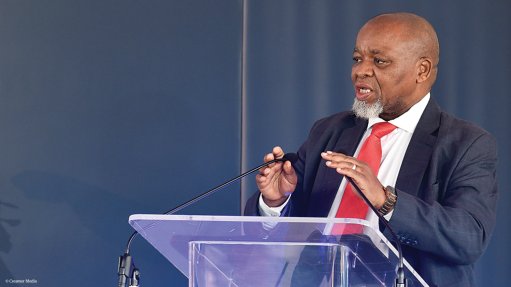
“In principle, this sounds great, but whether it will work or not comes down to the detail,” says Roger Hislop, Energy Management Systems Executive at CBI-electric: low voltage’s newly launched energy management division, CBI :energy.
His first concern is how numerous loads scattered across thousands of locations will be turned off. “The technology exists but has not yet been tested in widespread deployment. The back-end management systems will need to be more complex.”
Hislop adds that the auditability and quality of the data that is generated by the smart devices will be crucial in drawing a straight line between the voluntary load shedding intervention and whether there was, in fact, a real change in consumption.
He points out that the City of Cape Town will need to check their numbers on the supply side against those produced by the aggregators with the thousands of load control devices under their management. “Essentially, what this means is that quite a lot of work will need to go into exactly how the data is captured and how the incentives are paid out to ensure that the model is economically viable. Most municipalities in South Africa derive a substantial amount of their revenue from the markup they make on the electricity they resell from Eskom. The City of Cape Town will be faced with a double whammy – they’ll make less money from the electricity they sell, and they’ll also be paying out ‘discretionary load shedding incentives’.”
Article Enquiry
Email Article
Save Article
Feedback
To advertise email advertising@creamermedia.co.za or click here
Research Reports

Projects


Latest Multimedia


Latest News
Showroom
Sika South Africa is a trusted partner for the nation’s infrastructure, commercial, residential, and industrial sectors.
VISIT SHOWROOM
As a reticulator, Egoli Gas provides natural gas to homes and businesses via underground pipes.
VISIT SHOWROOM



Press Office
Announcements
What's On
Subscribe to improve your user experience...
Option 1 (equivalent of R125 a month):
Receive a weekly copy of Creamer Media's Engineering News & Mining Weekly magazine
(print copy for those in South Africa and e-magazine for those outside of South Africa)
Receive daily email newsletters
Access to full search results
Access archive of magazine back copies
Access to Projects in Progress
Access to ONE Research Report of your choice in PDF format
Option 2 (equivalent of R375 a month):
All benefits from Option 1
PLUS
Access to Creamer Media's Research Channel Africa for ALL Research Reports, in PDF format, on various industrial and mining sectors
including Electricity; Water; Energy Transition; Hydrogen; Roads, Rail and Ports; Coal; Gold; Platinum; Battery Metals; etc.
Already a subscriber?
Forgotten your password?
Receive weekly copy of Creamer Media's Engineering News & Mining Weekly magazine (print copy for those in South Africa and e-magazine for those outside of South Africa)
➕
Recieve daily email newsletters
➕
Access to full search results
➕
Access archive of magazine back copies
➕
Access to Projects in Progress
➕
Access to ONE Research Report of your choice in PDF format
RESEARCH CHANNEL AFRICA
R4500 (equivalent of R375 a month)
SUBSCRIBEAll benefits from Option 1
➕
Access to Creamer Media's Research Channel Africa for ALL Research Reports on various industrial and mining sectors, in PDF format, including on:
Electricity
➕
Water
➕
Energy Transition
➕
Hydrogen
➕
Roads, Rail and Ports
➕
Coal
➕
Gold
➕
Platinum
➕
Battery Metals
➕
etc.
Receive all benefits from Option 1 or Option 2 delivered to numerous people at your company
➕
Multiple User names and Passwords for simultaneous log-ins
➕
Intranet integration access to all in your organisation
