



Exxaro Resources' Sipho Nkosi on SA's 20 years of democracy

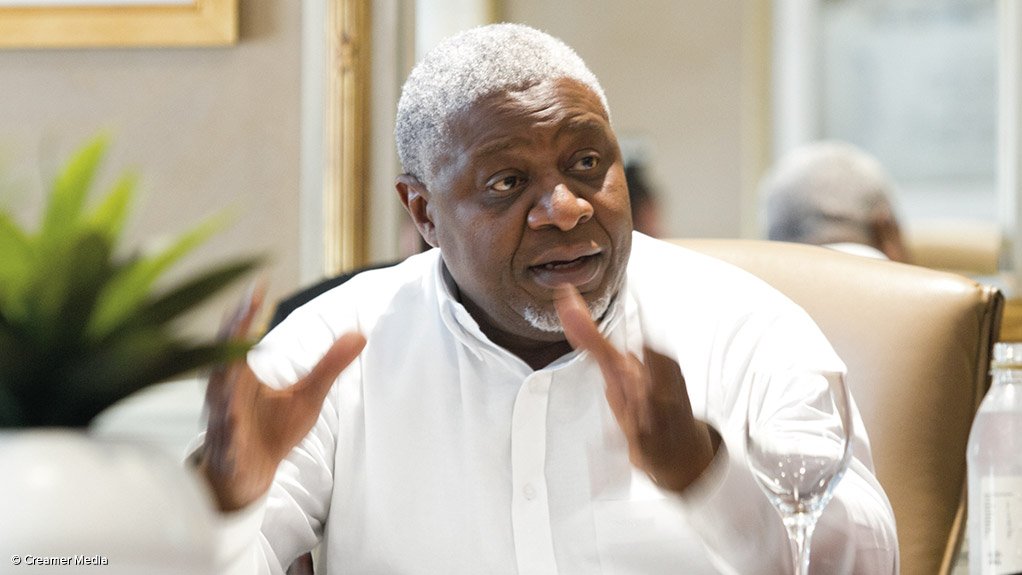


In an interview with Engineering News’ sister publication, Mining Weekly, Exxaro Resources CEO Sipho Nkosi reflected on changes that have taken place in the mining sector over the past two decades.
Twenty years ago, the industry was still the preserve of a particular group of people. After 1994, that changed and historically disadvantaged people were allowed to participate in the industry. But to make it work, the law had to change, which is why the Mineral and Petroleum Resources Development Act (MPRDA) was introduced. Through the MPRDA, the State became the custodian of the resources. Without that change, we would not have been where we are today and historically disadvantaged people would not have been given the opportunity to participate in the sector. The Mining Charter supported the MPRDA such that it encouraged companies to transform by bringing in historically disadvantaged people and changing various aspects of the way companies conduct their business.
Now, the MPRDA and Mining Charter, what have they done? The biggest thing that happened after the introduction of both initiatives is that big companies were willing to do deals with quite a number of historically disadvantaged people. Close to R400-billion worth of black economic-empowerment deals have been done in the wake of the MPRDA and the Mining Charter.
However, if you look at transformation you will find two models that were followed. The first is people who considered their entry into the industry an investment rather than a lifetime career opportunity. And there is the second group of people who came in as operators and committed themselves to a long-term career in the industry. In my view, the second group has positively participated in the transformation of the industry. In terms of the investor model, their mentality is that, when the time comes to cash in, they will cash in and go. That has been the biggest drawback as far as I am concerned. And that is why when people look at the industry from the outside, they cannot see the true extent of transformation. The empowerment deals that have worked – and we raise our hand as one of those success stories – would not have been viable were it not for the change in legislation and the willingness of companies to sell assets. The key thing, though, is that once we got into the business, we had a vision to grow the business.
Conditions for mineworkers have also improved over the period. Things that we are doing – whether we are talking salaries, housing, living-out allowances, medical aid – are a subject of negotiation. Of course, the accusation would be that the industry has been set certain milestones to achieve, for instance, getting rid of hostels, and I agree that certain companies have not met these targets. But I also know that there are certain companies, especially in the gold sector, that cannot comply with the Charter by 2014 in so far as houses are concerned because they just do not have the money to do all those things. But I do think that workers are better off overall than they were in the past.
As regards the outlook, I run a very good coal business. Eskom will build power stations – that I know. They may not be built this year but they will happen. South Africa still has the largest deposit of minerals in the world. Yes, people can go to other destinations, so it is critical that we make our industry as attractive as possible and there is no question that the industry is going through some difficulty. There is strong contestation right now between government, business and labour. That has to be resolved. But I am hopeful because we are now working very hard to resolve issues and improve the engagement between the various stakeholders. I am more positive today than I was five years ago about government’s commitment to making this industry work.
Article Enquiry
Email Article
Save Article
Feedback
To advertise email advertising@creamermedia.co.za or click here
Research Reports

Projects


Latest Multimedia

Latest News

Showroom
At Airshrink - CiP, we surpass customer expectations with innovative MV and LV cable accessories, including heat shrink joints, terminations,...
VISIT SHOWROOM
As one of South Africa's leading manufacturers, Bell Equipment distributes and exports its wide range of heavy equipment globally to mining,...
VISIT SHOWROOM



Press Office
Announcements
What's On
Subscribe to improve your user experience...
Option 1 (equivalent of R125 a month):
Receive a weekly copy of Creamer Media's Engineering News & Mining Weekly magazine
(print copy for those in South Africa and e-magazine for those outside of South Africa)
Receive daily email newsletters
Access to full search results
Access archive of magazine back copies
Access to Projects in Progress
Access to ONE Research Report of your choice in PDF format
Option 2 (equivalent of R375 a month):
All benefits from Option 1
PLUS
Access to Creamer Media's Research Channel Africa for ALL Research Reports, in PDF format, on various industrial and mining sectors
including Electricity; Water; Energy Transition; Hydrogen; Roads, Rail and Ports; Coal; Gold; Platinum; Battery Metals; etc.
Already a subscriber?
Forgotten your password?
Receive weekly copy of Creamer Media's Engineering News & Mining Weekly magazine (print copy for those in South Africa and e-magazine for those outside of South Africa)
➕
Recieve daily email newsletters
➕
Access to full search results
➕
Access archive of magazine back copies
➕
Access to Projects in Progress
➕
Access to ONE Research Report of your choice in PDF format
RESEARCH CHANNEL AFRICA
R4500 (equivalent of R375 a month)
SUBSCRIBEAll benefits from Option 1
➕
Access to Creamer Media's Research Channel Africa for ALL Research Reports on various industrial and mining sectors, in PDF format, including on:
Electricity
➕
Water
➕
Energy Transition
➕
Hydrogen
➕
Roads, Rail and Ports
➕
Coal
➕
Gold
➕
Platinum
➕
Battery Metals
➕
etc.
Receive all benefits from Option 1 or Option 2 delivered to numerous people at your company
➕
Multiple User names and Passwords for simultaneous log-ins
➕
Intranet integration access to all in your organisation
