



Endemic poverty now a threat to SA stability – analyst

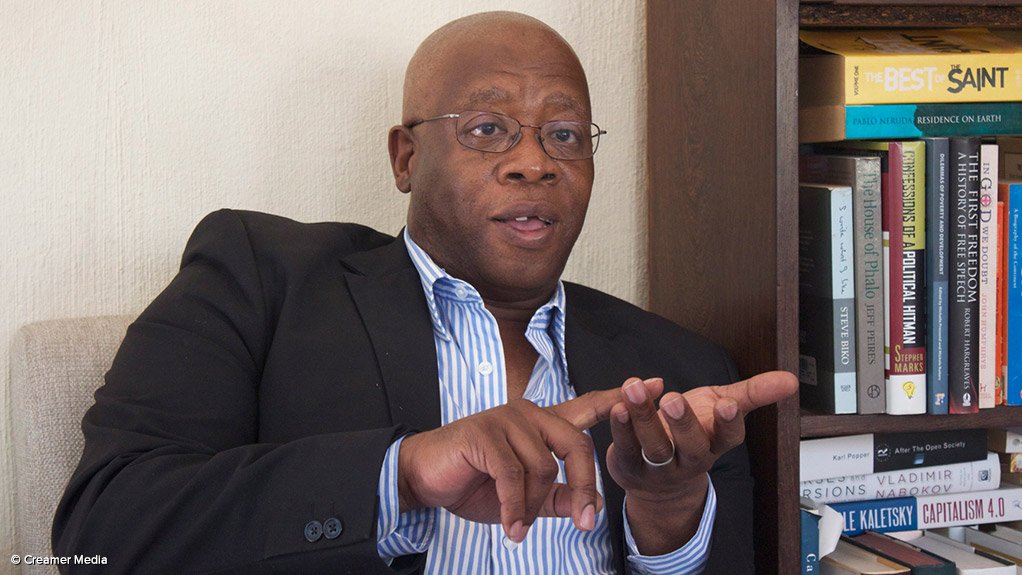


Widespread unemployment and snowballing levels of poverty could spark unrest in South Africa, political analyst Aubrey Matshiqi said at the Institute for Security Studies (ISS) on Wednesday.
“It is argued in the (ISS) paper that we spend very little time looking ahead. We obsess over Nkandla, whether Cyril Ramaphosa is going to be the next president or not, some even argue that if President Jacob Zuma is recalled that all ills in South Africa will be remedied. We have a very short-termist approach to how we talk about and analyse the challenges facing the country,” he said.
“If we do spend some time looking ahead, we might find a cure for a disease which afflicts us. We are either seized by a state of hysterical optimism or a state of hysterical pessimism.”
With the current state of affairs, where millions of young people are jobless, Matshiqi warned that such a scenario could engineer radical change in South Africa.
“We should leave some room for events, phenomena that fall outside the realm of the expected. We must not think change will happen gradually. It might not. Every day in this country we wake up to the possibility of an explosion,” said Matshiqi.
“The levels of inequality and unemployment we have in this country and the lack of opportunity for millions of young people mean change might not occur gradually. You wake up every day to the possibility of an explosion in South Africa.”
On Wednesday, the ISS was launching the latest edition of its African Futures paper titled SA Futures 2035 – authored by ISS executive director Jakkie Cilliers.
Amidst numerous problems mounting up in the country, particularly electricity deficiency and inequality, Cilliers said the long-term ISS forecast predicted that South Africa’s future was not all doom and gloom.
“Despite the steady economic growth we have had since 1994, things in South Africa have improved in many ways. One example is the changes in so-called living standards measurements. The massive transfer in wealth and income that we have seen in South Africa in the 20 year period is a momentum,” he said.
“While we have an incomplete economic transition, the momentum of transfer of income and wealth between race groups in South Africa is well established. That is a significant change.”
He said the country was struggling to break free from problems of crime, inequality, poverty and unemployment.
“It is also true that there has been significant policy experimentation and there have also been significant failures along the way. The electricity blackouts that we see is only one of many examples of wastage. Today, the sense is South Africa is constantly engaging in crisis management,” said Cilliers.
“It is also true to acknowledge at the same time that since the African National Congress come to power in 1994, it has made huge investments on the structural drivers of economic growth – health, education, water and sanitation. These issues are generational in nature and investments take time to pay off, but they do pay off.”
He said while South Africa was not on “a happy spot”, it was a struggle for one not to completely succumb to “the negativity and wave of how bad things are in South Africa”.
Cilliers said the significantly increasing population could have spin-offs for the ailing economy.
“A larger population definitely translates to a bigger economy and faster economic growth, particularly with migration – it boosts your economy but reduces your average income levels. One of the reasons our growth forecasts remains relatively positive is because we believe South Africa will have a larger population,” he said.
“South Africa is in a demographics sweet spot. The per cent of South Africans that are of working age in the population … that increases slowly and steadily from about 65% in 2015 to about 68% (by 2035). As the relative size of the working age population increases, it grows your economy. Of course you have to provide them the jobs and social services.”
Cilliers warned that political inclusion was a key ingredient of the envisaged economic growth.
“Clearly, despite the progress there is an incomplete political and economic transition. A whole cadre of groups of South Africans have bought into living off handouts and government contracts that are provided, not earned,” he added.
Article Enquiry
Email Article
Save Article
Feedback
To advertise email advertising@creamermedia.co.za or click here
Research Reports

Projects
Latest Multimedia
Showroom
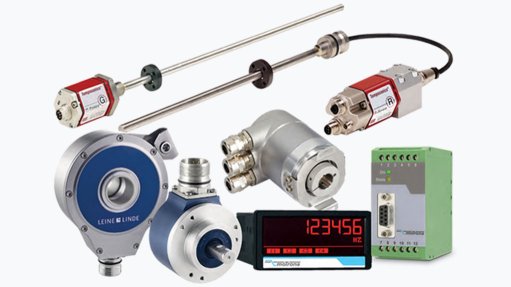
ATI systems comprises five divisions: electrical assemblies, drives and controls, feedback sensors, enclosures, and strip guiding.
VISIT SHOWROOM
Your global lifecycle technology & service partner for materials & minerals processing equipment for coal, iron ore, copper, manganese & other...
VISIT SHOWROOM


Announcements
What's On
Subscribe to improve your user experience...
Option 1 (equivalent of R125 a month):
Receive a weekly copy of Creamer Media's Engineering News & Mining Weekly magazine
(print copy for those in South Africa and e-magazine for those outside of South Africa)
Receive daily email newsletters
Access to full search results
Access archive of magazine back copies
Access to Projects in Progress
Access to ONE Research Report of your choice in PDF format
Option 2 (equivalent of R375 a month):
All benefits from Option 1
PLUS
Access to Creamer Media's Research Channel Africa for ALL Research Reports, in PDF format, on various industrial and mining sectors
including Electricity; Water; Energy Transition; Hydrogen; Roads, Rail and Ports; Coal; Gold; Platinum; Battery Metals; etc.
Already a subscriber?
Forgotten your password?
Receive weekly copy of Creamer Media's Engineering News & Mining Weekly magazine (print copy for those in South Africa and e-magazine for those outside of South Africa)
➕
Recieve daily email newsletters
➕
Access to full search results
➕
Access archive of magazine back copies
➕
Access to Projects in Progress
➕
Access to ONE Research Report of your choice in PDF format
RESEARCH CHANNEL AFRICA
R4500 (equivalent of R375 a month)
SUBSCRIBEAll benefits from Option 1
➕
Access to Creamer Media's Research Channel Africa for ALL Research Reports on various industrial and mining sectors, in PDF format, including on:
Electricity
➕
Water
➕
Energy Transition
➕
Hydrogen
➕
Roads, Rail and Ports
➕
Coal
➕
Gold
➕
Platinum
➕
Battery Metals
➕
etc.
Receive all benefits from Option 1 or Option 2 delivered to numerous people at your company
➕
Multiple User names and Passwords for simultaneous log-ins
➕
Intranet integration access to all in your organisation
