



Enabling national environment needed for cities to drive economic growth

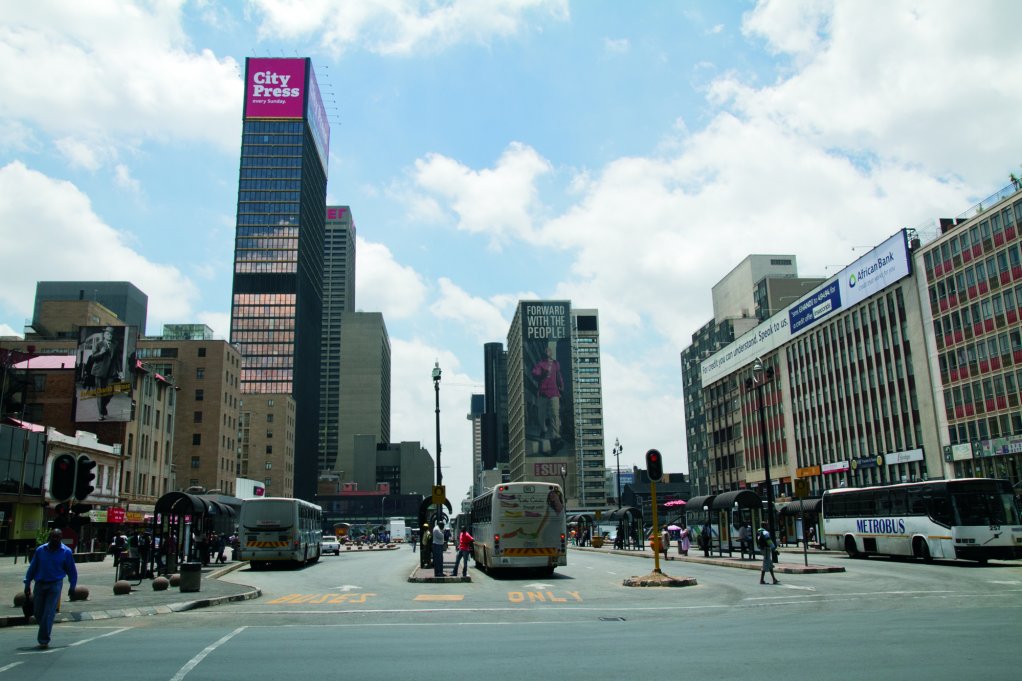
ECONOMIC DRIVERS Cities such as Cape Town, Johannesburg and Durban were the economic drivers and where value had to be created
Photo by Picture by Chief Photographer Duane Daws


Cities must have greater autonomy and a greater level of accountability and responsibility for economic growth on a national level, business think-tank Accelerate Cape Town CEO Chris Whelan said during a recent panel discussion at an Africa Frontiers Forum in Johannesburg.
He said cities could not be separated from the national economy. “We need to recognise the relationship between national and local and how we use local [developments] to drive national [growth],” Whelan said, adding that this also had to be done within the global economic context.
In South Africa, cities such as Cape Town, Johannesburg and Durban were the economic drivers and it was there where value had to be created. However, at national level, economic development seemed to be more focused on distributing value and “making sure that, the entire country gets everything equally”, Whelan said.
“There seems to be a battle raging between people that create value and those that distribute value, and if that battle is won by the redistributors, we will all lose”, he stated, adding that this was a poor way of growing an economy.
Whelan pointed out that in China, for example, the economic growth over the last 30 years mostly revolved around the city of Hong Kong and, yet, in South Africa, the focus was not on cities and what they could offer but rather on making everyone equal.
“And that does not make sense,” he said.
Whelan further stated that the conversation around cities and their role in economic growth was too important to be left to politicians alone.
“It needs to be a conversation between business, government and civil society,” he said.
Also speaking at the forum, advisory firm Deloitte risk advisory associate director Denise Lee said one of the most significant challenges Africa and South Africa faced was leveraging significant investment by multinationals to springboard the continent into a decade or even a century of growth.
Panel chairperson Frontier Advisory director and research and strategy head Hannah Edinger asked the panel whether South Africa had in fact missed some of these opportunities and was losing out on investment, as global investors were bypassing South Africa to invest north of its borders.
Lee stated that she definitely believed this to be the case.
“We have lost out on a lot of opportunities to Mozambique and Brazil, specifically mining,” she stated, adding that South Africa’s major cities had over the past years also started to lose their competitive advantage over other African cities.
Meanwhile, Whelan said he believed a lack of certainty for investors could perhaps be one of the reasons why international investors would possibly bypass South Africa.
“For example, if you look at the issue of black economic empowerment in South Africa, no one objects to it, but when things change all the time, that is problematic,” Whelan explained, stating that investments were often long-term, which meant that certainty was of great importance.
He further stated that the investor climate created on a national level was problematic, noting that companies could not go straight to cities for clarification or assistance as cities were not autonomous.
“Companies are limited by what the national framework is – and the national framework is vaguely schizophrenic, where [the country] wants international capital but is not sure whether it wants the business. I am not sure whether this is useful to growing the economy, [as this] limits cities’ abilities to attract talent and drive growth,” Whelan stated.
Meanwhile, Housing Development Agency CEO Taffy Adler said, if growth figures, such as gross domestic product, were considered over 20 years, South Africa had improved.
“It is true that unemployment is high, but so is employment. The absolute number of people employed in this country has never been higher. Not to deny the country’s issues, but, at the same time, you have to understand what is happening in the underlying economy,” Adler said.
However, Whelan noted that while the country was certainly doing better than in 1994, it had to ask itself whether it was doing well enough.
“Coming off a zero base, it is easy to do well, but is this as good as it gets?” he asked.
Moving into the futute, African and South African cities had to find ways to become more competitive, Lee said.
She pointed out that, for example, water would become an even scarcer resource in future and cities would have to find ways of making themselves more competitive in terms of using this finite resource.
“Another major resource that will be the differentiator from a competitiveness perspective is data. There is so much data being created and all of that is value. So we have to be able to tap into that value. If we don’t start harnessing it today, we will be left behind,” Lee stated.
Further, the availability of electricity would also play a major role in Africa’s development in future, State-owned power utility Eskom integrated demand-side management senior manager John Thorby said.
He pointed out that, currently, South Africa produced just below 50% of Africa’s electricity, which could be problematic for the continent as economic growth was linked to energy growth.
“So, if we are going to take Africa forward, where are we going to find the energy to enable people to develop the continent’s economies?” Thorby asked.
However, he did point out that many innovations were being developed that consumed a lot less energy.
“The future solution lies in adopting such technologies rather than building huge new power stations,” Thorby said.
Article Enquiry
Email Article
Save Article
Feedback
To advertise email advertising@creamermedia.co.za or click here
Research Reports

Projects


Latest Multimedia


Latest News

Showroom

EIMS is an independent specialised environmental consulting firm offering the full spectrum of environmental management services across all sectors...
VISIT SHOWROOM
The Beneficiation Academy is a certified training institution that follows all compliance legislation and is accredited with various Sector...
VISIT SHOWROOM



Announcements
What's On
Subscribe to improve your user experience...
Option 1 (equivalent of R125 a month):
Receive a weekly copy of Creamer Media's Engineering News & Mining Weekly magazine
(print copy for those in South Africa and e-magazine for those outside of South Africa)
Receive daily email newsletters
Access to full search results
Access archive of magazine back copies
Access to Projects in Progress
Access to ONE Research Report of your choice in PDF format
Option 2 (equivalent of R375 a month):
All benefits from Option 1
PLUS
Access to Creamer Media's Research Channel Africa for ALL Research Reports, in PDF format, on various industrial and mining sectors
including Electricity; Water; Energy Transition; Hydrogen; Roads, Rail and Ports; Coal; Gold; Platinum; Battery Metals; etc.
Already a subscriber?
Forgotten your password?
Receive weekly copy of Creamer Media's Engineering News & Mining Weekly magazine (print copy for those in South Africa and e-magazine for those outside of South Africa)
➕
Recieve daily email newsletters
➕
Access to full search results
➕
Access archive of magazine back copies
➕
Access to Projects in Progress
➕
Access to ONE Research Report of your choice in PDF format
RESEARCH CHANNEL AFRICA
R4500 (equivalent of R375 a month)
SUBSCRIBEAll benefits from Option 1
➕
Access to Creamer Media's Research Channel Africa for ALL Research Reports on various industrial and mining sectors, in PDF format, including on:
Electricity
➕
Water
➕
Energy Transition
➕
Hydrogen
➕
Roads, Rail and Ports
➕
Coal
➕
Gold
➕
Platinum
➕
Battery Metals
➕
etc.
Receive all benefits from Option 1 or Option 2 delivered to numerous people at your company
➕
Multiple User names and Passwords for simultaneous log-ins
➕
Intranet integration access to all in your organisation
