



Electric vehicle policy gaps receiving attention, Mbalula assures

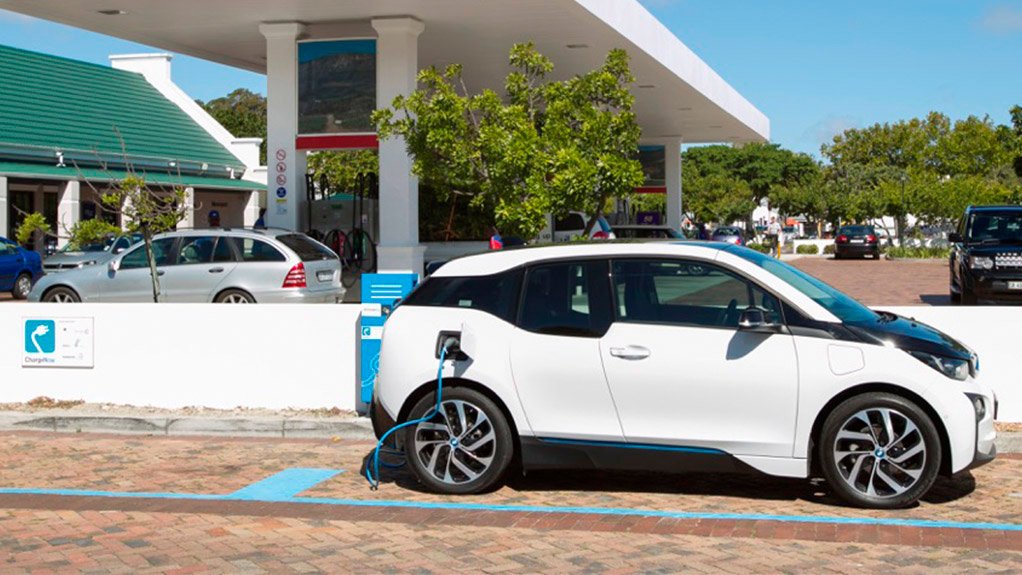


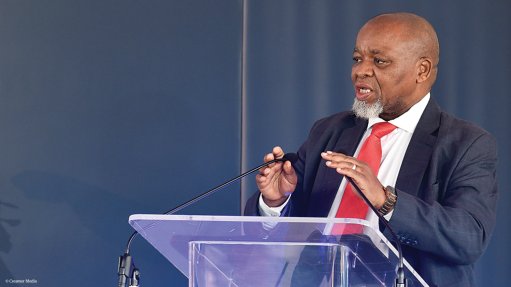
Transport Minister Fikile Mbalula assured delegates attending the Southern African Transport Conference (SATC) on July 4 that his department is looking at legislative and regulation gaps pertaining to automated and electric vehicles (EVs).
This includes policy gaps on charging infrastructure and how EVs will be integrated into South Africa’s electrical grid, with a view to eliminating unnecessary barriers to ensure the predominant use of EVs in the country in future.
The Minister’s speech, which was read by Department of Transport (DoT) Integrated Transport Planning deputy director-general Rirhandzu Mashava in Mbalula’s absence, confirmed that the DoT has established an autonomous and EV working group to gather input from stakeholders that will be considered when drafting legislation and regulations.
He firmly believes that cleaner vehicle technologies can make for a lower carbon emitting transport sector.
The National Autonomous/EV Working Group will ensure collaboration in the legislative and regulation drafting process, across all relevant institutions and spheres of government, to ensure a smooth transition to the use of these vehicles in the country.
The DoT is also working with the Development Bank of Southern Africa to deploy electric buses into local municipal fleets.
Mbalula’s speech noted that national government was already making progressive policy strides, with the White Paper on National Rail Policy having been published earlier this year, as well as the White Paper on Transport Policy, the Comprehensive Maritime Policy and the National Civil Aviation Policy, all of which aimed to create a more level playing field in the industry and a more inclusive economy.
Meanwhile, Annual Transport Convention chairperson Philip Hendricks opened the fortieth iteration of the SATC conference by pointing out the changing nature of transport supply chains that the local industry had been dealing with.
“We have seen backlogged cargo and stoppages in manufacturing. The reality is that manufacturing and their supply chain networks have changed and shifted after Covid-19, with issues being exacerbated by the Ukraine conflict.
“We also see disruption to public transport systems, including aviation and rail. For example, the Gautrain is currently at 43% of operational capacity. These are huge issues for our transport industry,” he said.
Hendricks added that the only remedy for the industry was for more infrastructure projects to be undertaken by the private sector and incentivised and supported by government, as well as more cooperation between stakeholders across the spectrum.
National Association of Automobile Manufacturers of South Africa | The Automotive Business Council CEO Mikel Mabasa agreed, stating that the impact of Covid-19 on the automotive industry since March 2020 had been immense, and this had been compounded by challenges brought about by the Ukraine war, the global semiconductor shortage, flash floods in KwaZulu-Natal in April and the persistent unreliability of South Africa’s electricity supply.
Nonetheless, he said the industry found ways of adopting and adapting the new ways of working, preserving jobs and delivering initiatives for long-term success.
Currently, the automotive industry in South Africa contributes 4.3% to gross domestic product. It exported R138-billion worth of vehicles and automotive components, or 298 020 vehicles, raking in export earnings of R207-billion in 2021.
South Africa’s share of global vehicle production stands at 0.62%, as the global industry produced 80-million vehicles last year.
Mabasa said, quoting World Economic Forum founder Klaus Schwab, that the industry now faced the task of understanding and governing twenty-first century technologies, with a twentieth-century mindset and nineteenth-century institutions.
He said that technological changes rarely happened smoothly, as evidenced by the transitions from the First Industrial Revolution to the Fourth Industrial Revolution.
To this day, 600-million people are still not benefiting from the mechanisation brought about by the First Industrial Revolution, while an estimated 3.6-billion remain without clean water, sanitation and electricity globally, and 3.9-billion people do not have Internet access.
Mabasa emphasised that it was imperative that the automotive industry ensured that as few people as possible got left behind in the EV transition, particularly as the sector was poised to change more in the next ten years than it had in the past 100 years.
For example, South Africa currently offers 12 models of battery EVs in the market, through imports, but by the end of October there will be about 22 models on offer, indicating an exponentially growing market.
Moreover, the Chinese government has introduced a licence that is necessary to buy an internal combustion engine in the country, as an encouragement for the population to move to EVs more quickly.
Countries with planned bans on fossil fuel vehicles in place, or in the pipeline, include China, Canada, France, Sri Lanka, Slovenia, Netherlands, Norway, Ireland, Sweden, Iceland, Israel, Costa Rica, Singapore and the UK.
“Exciting times are abound, with imminent vehicle-to-vehicle connectivity, and even vehicle-to-infrastructure connectivity,” Mabasa remarked.
He concluded by sharing information about the South African Auto Week event, to be attended by the International Organisation of Motors Vehicle Manufacturers. This organisation represents global automotive industry members.
Delegates from countries such as Turkey, Thailand, Switzerland, Spain, Romania, Italy, India, Germany, Finland, Croatia and Brazil, to name a few, will be gathering to debate issues and move the industry forward.
Article Enquiry
Email Article
Save Article
Feedback
To advertise email advertising@creamermedia.co.za or click here
Research Reports

Projects


Latest Multimedia


Latest News

Showroom
EIMS is an independent specialised environmental consulting firm offering the full spectrum of environmental management services across all sectors...
VISIT SHOWROOM
The Beneficiation Academy is a certified training institution that follows all compliance legislation and is accredited with various Sector...
VISIT SHOWROOM



Announcements
What's On
Subscribe to improve your user experience...
Option 1 (equivalent of R125 a month):
Receive a weekly copy of Creamer Media's Engineering News & Mining Weekly magazine
(print copy for those in South Africa and e-magazine for those outside of South Africa)
Receive daily email newsletters
Access to full search results
Access archive of magazine back copies
Access to Projects in Progress
Access to ONE Research Report of your choice in PDF format
Option 2 (equivalent of R375 a month):
All benefits from Option 1
PLUS
Access to Creamer Media's Research Channel Africa for ALL Research Reports, in PDF format, on various industrial and mining sectors
including Electricity; Water; Energy Transition; Hydrogen; Roads, Rail and Ports; Coal; Gold; Platinum; Battery Metals; etc.
Already a subscriber?
Forgotten your password?
Receive weekly copy of Creamer Media's Engineering News & Mining Weekly magazine (print copy for those in South Africa and e-magazine for those outside of South Africa)
➕
Recieve daily email newsletters
➕
Access to full search results
➕
Access archive of magazine back copies
➕
Access to Projects in Progress
➕
Access to ONE Research Report of your choice in PDF format
RESEARCH CHANNEL AFRICA
R4500 (equivalent of R375 a month)
SUBSCRIBEAll benefits from Option 1
➕
Access to Creamer Media's Research Channel Africa for ALL Research Reports on various industrial and mining sectors, in PDF format, including on:
Electricity
➕
Water
➕
Energy Transition
➕
Hydrogen
➕
Roads, Rail and Ports
➕
Coal
➕
Gold
➕
Platinum
➕
Battery Metals
➕
etc.
Receive all benefits from Option 1 or Option 2 delivered to numerous people at your company
➕
Multiple User names and Passwords for simultaneous log-ins
➕
Intranet integration access to all in your organisation
