



Education sector keen for Wingu cloud and future learning environments



This article has been supplied.
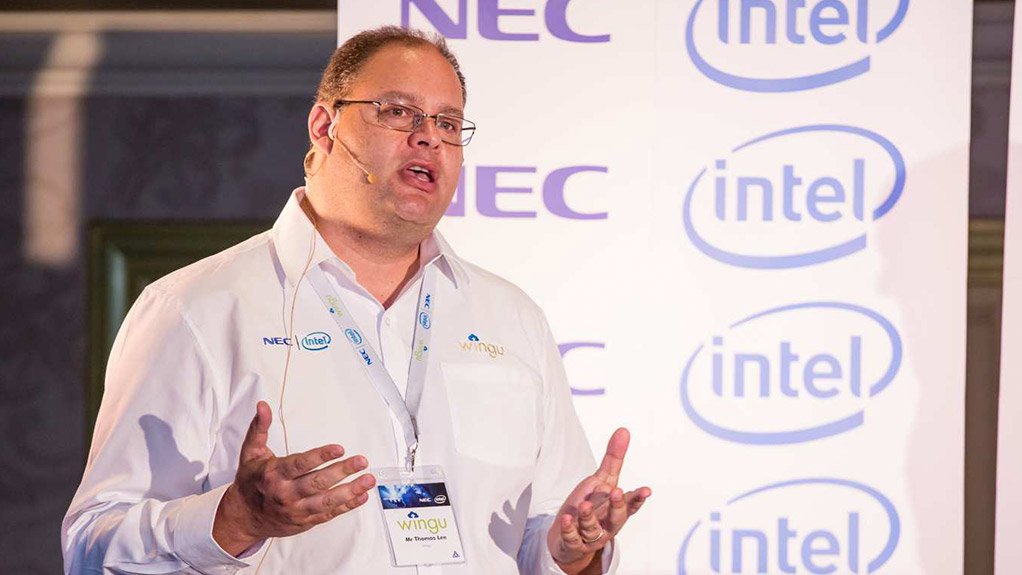
The education sector demonstrated considerable interest in Wingu’s cloud platform, which also enables future learning environments, at an event held at Emperor’s Palace on March 8, 2016. The Intel-sponsored event was hosted by Wingu, NEC, and XON, which wholly owns Wingu, and in co-operation with TENET, Coltech, and Greenpower ZA.
“It was clear from the interactive nature of the event that education institutions keenly feel the impacts of pressured revenue streams, a highly competitive education landscape, and the need to efficiently deliver education content to an increasingly diverse learner body,” says Thomas Lee, GM of Wingu. “Many of these institutions simply don’t have the budgets they need to get decent Internet connections or the bandwidth just isn’t available in their regions, others struggle with HR-related financial overheads for the growing number of techies they need to run their infrastructure, and some cannot afford the infrastructure itself which they need to properly serve their students and faculty.”
He adds: “Obviously the purpose of our event was to inform education institutions about our cloud offering tailored to meet their most pressing issues. But it emerged that, not only do they need flexible, scalable, locally hosted and costed compute infrastructure which we provide, they also have a desperate need for decent connectivity. There are 50 colleges in the country, each with an average of six campuses. Of those 300 campuses, 200 are in outlying areas with only around 100 in areas where fibre connectivity is available. Those in outlying areas, even if they had the funds, don’t have access to decent connectivity infrastructure. In some cases you have entire colleges running 4Mbps ADSL or low speed Diginet lines, which is pointless for a few thousand students. And you cannot even begin to offer them the scalable computing resources they need to offer students a competitive learning environment. That highlights our growing co-operation with TENET and its South African Broadband Education Network project, organisations designed to get education institutions connected at up to 70% less than current commercial rates, so they get usable fibre, microwave and other broadband connections.”
TENET’s Arno Hart, who is also an economist, says his organisation is dedicated to getting educational institutions connected, at usable speeds today of 100Mbps to 200Mbps, ultimately seeking to achieve gigabit connectivity in the next few years at 60% to 70% below commercial rates. “We’re able to offer rates today of R6 per megabit-per-second as opposed to the R300 to R400 equivalent speed commercial cost and we also have permission from Treasury that colleges may legally procure from us since we are not allowed, as a policy of our non-profit organisation, to respond to tenders.”
“This sector’s needs are diverse,” says Lee. “One Ekhuruleni institution has fibre connectivity so they’re keenly interested in getting cloud-based compute, storage and education content and management services today. Another, in Upington, has 5 500 enrolled students and they had a low speed breakout line. They engaged TENET and they’re in the process of getting a huge upgrade,” he says. Many education delegates said their institutions do not have the capital required to buy and deploy their own compute infrastructure, while their operating budgets are increasingly under pressure, which regularly depletes their ability to maintain IT support personnel.
“IT human capital is a drain,” said one delegate. “We want to scale back our infrastructure because it’s too expensive to maintain. We are spending a large portion of our budget on human capital before we even get to the servers and annual licence fees. And we have more than 20 000 enrolled students every year. For us connectivity is not an issue because we have fibre. It’s the infrastructure running costs that are too much.” Lee says that Wingu’s cloud platform extends exactly the economies of scale education institutions want. He says, for example, that one Wingu engineer named Hennie is easily capable of maintaining 120 virtual platforms due to automated technologies that assist. “We use DevOps technologies to scale resources so our customers can free up their capex and cut their HR overheads,” he says.
Another delegate mentioned that his institution recently surveyed students to ascertain device type and penetration as students are supposed to be the ultimate beneficiaries of any IT services. “80% of our students have tablets or notebooks and 90% smartphones,” he said. “There are many operating systems and standards so we need a democratised solution that works for all students. Open source, in the cloud, is one of the most accessible means we have at our disposal but it requires good inter-campus connectivity and also proper breakout connectivity like what TENET’s bringing to the equation.”
Lee says: “The open source platforms that we host locally, inside Terraco’s local data centre, provisioned via the NAPAfrica peering point, offer the best locally available opportunity to get the scalability, flexibility, low latency, and efficiency that is clearly desired by multiple education organisations to meet their wide-ranging needs.”
One of the major draw cards for educational institutions, and one of the reasons why Wingu can contain costs, is because the service is based on OpenStack, which is an open source platform already very popular at worldwide educational facilities. “It’s open source, which means open APIs (application programming interfaces), and that enables educational facilities to automate services which they cannot necessarily do on other platforms,” says Lee. “The Wingu cloud platform is an Ubuntu Certified Public Cloud, so customers can use us with confidence knowing that our system is designed and supported by the largest player in the OpenStack industry.”
Article Enquiry
Email Article
Save Article
Feedback
To advertise email advertising@creamermedia.co.za or click here
Research Reports

Projects


Latest Multimedia


Latest News

Showroom

As one of South Africa's leading manufacturers, Bell Equipment distributes and exports its wide range of heavy equipment globally to mining,...
VISIT SHOWROOM
From batteries for boats and jet skis, to batteries for cars and quad bikes, SABAT Batteries has positioned itself as the lifestyle battery of...
VISIT SHOWROOM


Announcements
What's On
Subscribe to improve your user experience...
Option 1 (equivalent of R125 a month):
Receive a weekly copy of Creamer Media's Engineering News & Mining Weekly magazine
(print copy for those in South Africa and e-magazine for those outside of South Africa)
Receive daily email newsletters
Access to full search results
Access archive of magazine back copies
Access to Projects in Progress
Access to ONE Research Report of your choice in PDF format
Option 2 (equivalent of R375 a month):
All benefits from Option 1
PLUS
Access to Creamer Media's Research Channel Africa for ALL Research Reports, in PDF format, on various industrial and mining sectors
including Electricity; Water; Energy Transition; Hydrogen; Roads, Rail and Ports; Coal; Gold; Platinum; Battery Metals; etc.
Already a subscriber?
Forgotten your password?
Receive weekly copy of Creamer Media's Engineering News & Mining Weekly magazine (print copy for those in South Africa and e-magazine for those outside of South Africa)
➕
Recieve daily email newsletters
➕
Access to full search results
➕
Access archive of magazine back copies
➕
Access to Projects in Progress
➕
Access to ONE Research Report of your choice in PDF format
RESEARCH CHANNEL AFRICA
R4500 (equivalent of R375 a month)
SUBSCRIBEAll benefits from Option 1
➕
Access to Creamer Media's Research Channel Africa for ALL Research Reports on various industrial and mining sectors, in PDF format, including on:
Electricity
➕
Water
➕
Energy Transition
➕
Hydrogen
➕
Roads, Rail and Ports
➕
Coal
➕
Gold
➕
Platinum
➕
Battery Metals
➕
etc.
Receive all benefits from Option 1 or Option 2 delivered to numerous people at your company
➕
Multiple User names and Passwords for simultaneous log-ins
➕
Intranet integration access to all in your organisation
