



Economists weigh in on mid-term budget expectations, see tax raise

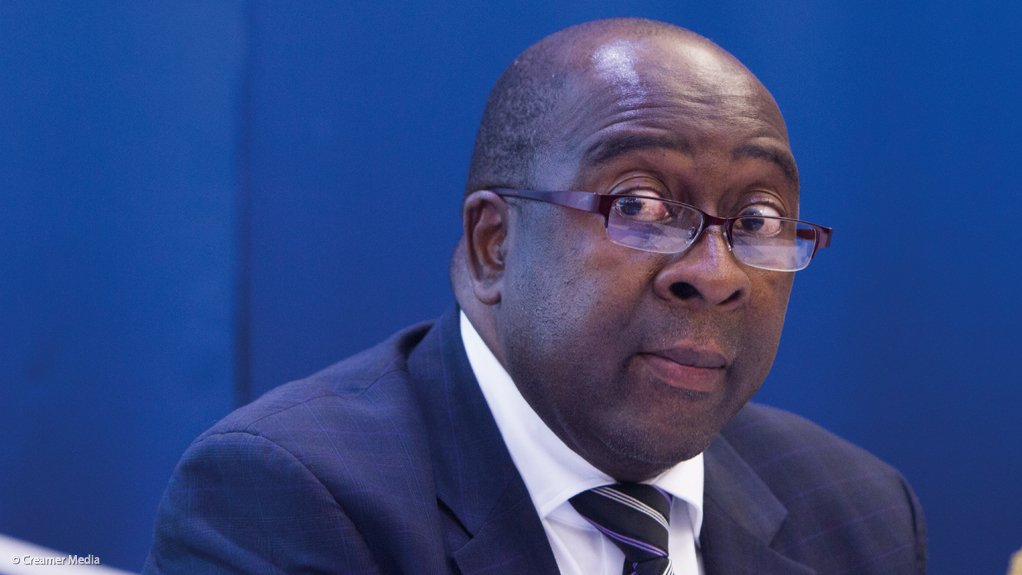



Further containment of government spending could be one of the themes Minister Nhlanhla Nene will tackle in his Medium-Term Budget Policy Statement (MTBPS), on Wednesday, as prudence at national, provincial and local level bring some stability and a more substantial platform on which future economic growth may be promoted, the South African Chamber of Commerce and Industry (Sacci) has said.
“Business and investors require political stability and a predictable environment in which they can operate. The country’s potential for economic growth remains solid, but for it to be realised, more attention must be paid to the fundamentals of growth, which include the attraction of investment and a regulatory and State policy framework which encourages, rather than inhibits,” Sacci president Vusi Khumalo said in a statement on Monday.
Financial services provider HSBC Africa economist David Faulkner agreed, noting that the stagnating economy and costly public sector wage deal would put pressure on fiscal metrics when the MTBPS is tabled on October 21.
“Government needs to respond to the deteriorating fiscal position. In rates, we expect some increases in South African government bond supply forecasts and steepening pressure on local currency curves,” he noted.
Faulkner further pointed out that the MTBPS would test the extent to which the government responded to its mounting fiscal risks.
“In past interactions with the National Treasury, officials have highlighted a determination to adhere to the fiscal targets, yet weak growth and the absence of fiscal flexibility owing to the public wage deal means that any response to these fiscal risks will require adopting a tighter fiscal policy stance – slower noninterest spending growth and/or higher taxes,” he said.
Expenditure restraint up to this point had principally taken place through cutting noncore spending and reprioritising spending decisions. Faulkner noted that there could be scope for further tightening on expenditure through cuts to nonrecurrent programmes and noncore priorities, while declared savings and lower payments to South African Customs Union partners would also help consolidation efforts.
“We estimate that reducing real noninterest government spending to zero could achieve the fiscal savings needed to keep to the government’s budget deficit targets,” he added.
Meanwhile, he warned that tax measures could be ruled out and, while these may be signalled at the MTBPS, details were unlikely to be forthcoming until next year's budget.
“Given South Africa’s growth challenges, any possible tax change is likely to be implemented in a way that achieves the deficit targets with the least distortionary impact on growth. As such, we continue to see room for a higher value-added tax (VAT) rate, possibly in combination with additional taxes on high-income earners and wealth to make it more politically palatable,” he forecast, adding that the Davis Tax Committee, which was reviewing South Africa's tax system, estimated that a one percentage point rise in VAT could deliver R15-billion in additional tax revenue.
“The fiscal challenge facing the government primarily reflects the absence of growth, which, in turn, reflects the range of structural and microeconomic constraints that hold South Africa back. Without addressing these constraints, fiscal policy will continue to require spending cuts and tax increases that consolidate the elevated and structural budget deficit and stabilise government debt levels.
“Among other risks to the public finances are rising debt service costs, the financial position of several State-owned enterprises and public entities and the proposed nuclear build programme. Any messages on these issues are also likely to be closely watched,” he said.
Also commenting on what the public could expect from the MTBPS, Investec economist Kamilla Kaplan noted that a modest lift in consumer price index (CPI) inflation, from 4.6% year-on-year in August to 4.7% year-on-year in September, was anticipated. “CPI inflation is likely to average 4.7% this year and 5.7% in 2016,” she added.
Further, she pointed out that growth in the retail, wholesale and motor trade sales statistics was unlikely to be particularly buoyant based on the survey evidence relating to third-quarter business confidence.
“The survey indicated that confidence among wholesalers and retailers declined, while motor dealer confidence remained significantly depressed. In all instances, it was noted that sales volumes continued to underperform, which is reflective of the weakening in the growth of consumer demand,” she said
Article Enquiry
Email Article
Save Article
Feedback
To advertise email advertising@creamermedia.co.za or click here
Research Reports

Projects


Latest Multimedia


Latest News
Showroom

Sulzer South Africa, established in 1922, partners with critical industries like power, oil & gas, water, mining, and chemicals to boost...
VISIT SHOWROOM
Leading condition monitoring specialists, WearCheck, help boost machinery lifespan and reduce catastrophic component failure through the scientific...
VISIT SHOWROOM



Press Office
Announcements
What's On
Subscribe to improve your user experience...
Option 1 (equivalent of R125 a month):
Receive a weekly copy of Creamer Media's Engineering News & Mining Weekly magazine
(print copy for those in South Africa and e-magazine for those outside of South Africa)
Receive daily email newsletters
Access to full search results
Access archive of magazine back copies
Access to Projects in Progress
Access to ONE Research Report of your choice in PDF format
Option 2 (equivalent of R375 a month):
All benefits from Option 1
PLUS
Access to Creamer Media's Research Channel Africa for ALL Research Reports, in PDF format, on various industrial and mining sectors
including Electricity; Water; Energy Transition; Hydrogen; Roads, Rail and Ports; Coal; Gold; Platinum; Battery Metals; etc.
Already a subscriber?
Forgotten your password?
Receive weekly copy of Creamer Media's Engineering News & Mining Weekly magazine (print copy for those in South Africa and e-magazine for those outside of South Africa)
➕
Recieve daily email newsletters
➕
Access to full search results
➕
Access archive of magazine back copies
➕
Access to Projects in Progress
➕
Access to ONE Research Report of your choice in PDF format
RESEARCH CHANNEL AFRICA
R4500 (equivalent of R375 a month)
SUBSCRIBEAll benefits from Option 1
➕
Access to Creamer Media's Research Channel Africa for ALL Research Reports on various industrial and mining sectors, in PDF format, including on:
Electricity
➕
Water
➕
Energy Transition
➕
Hydrogen
➕
Roads, Rail and Ports
➕
Coal
➕
Gold
➕
Platinum
➕
Battery Metals
➕
etc.
Receive all benefits from Option 1 or Option 2 delivered to numerous people at your company
➕
Multiple User names and Passwords for simultaneous log-ins
➕
Intranet integration access to all in your organisation
