



Digital broadcasting migration project, South Africa

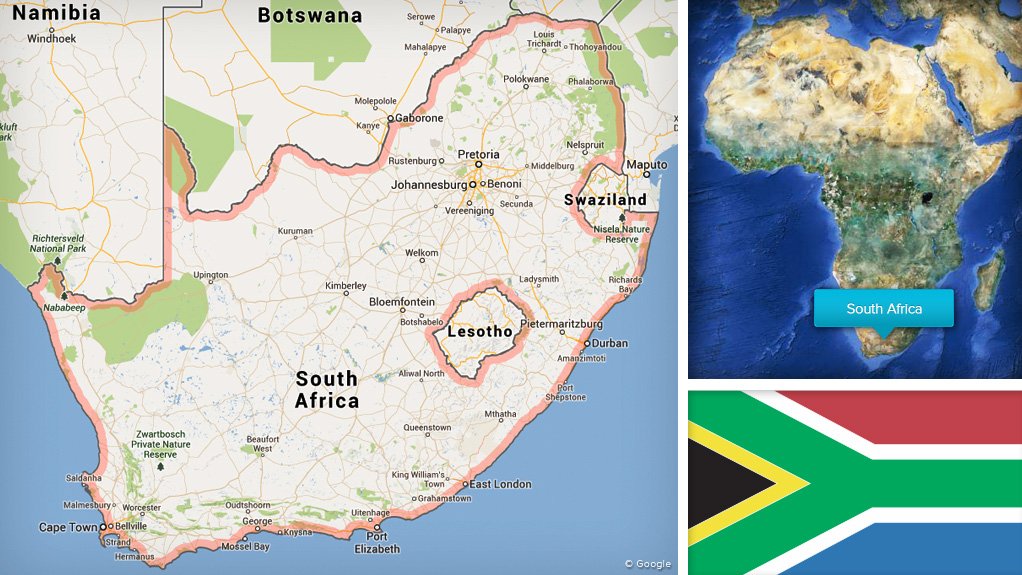


Name and Location
Digital broadcasting migration project, South Africa.
Client
The Department of Communications (DoC) and Sentech.
Project Description
Digital terrestrial television (DTT) is the implementation of digital technology to provide more channels and/or better picture quality and sound using a conventional television antenna or aerial, instead of a satellite dish or cable connection.
In 2005, State-owned enterprise Sentech announced its plans to roll out DTT using digital video broadcasting terrestrial (DVB-T) technology, in time for the 2010 FIFA World Cup.
Initially, there will be two DVB-T transmitters for each location or site.
The first phase of the project involves upgrading the Sentech broadcast network and duplicating the current analogue network channels on a digital system.
Most of the 220 sites needed to broadcast DTT to 92% of South Africa's population are in place, but have to be upgraded to become fully digital. Once that process has been completed, DTT and analogue systems will run simultaneously (a dual-illumination process) until South Africa is ready to switch off analogue transmission. This decision will be made by government.
Consumers will require a set-top box (STB) to decode the signal, even for public broadcasting and free-to-air channels. The STBs are expected to be subsidised.
Once the migration to DTT is complete, the country will no longer have exclusive use of the frequencies.
Value
The upgrade is expected to cost R1-billion.
Supplying the STBs will cost an estimated R2.45-billion.
Duration
According to an agreement with the International Telecommunications Union (ITU), the country has until 2015 to complete the migration.
Latest Developments
Communications Minister Faith Muthambi has placed an 18-month deadline on the implementation of South Africa’s migration from analogue to digital broadcasting – despite no digital switch-on and analogue switch-off dates having been set yet.
Muthambi has said that the DoC and all stakeholders will embark on a recently completed implementation plan for the long-delayed multibillion-rand project.
South Africa, which will miss the International Telecommunications Union-stipulated digital migration deadline of June 17, is now “well on track” with digital migration, with all the necessary policies amended and finalised and progress on the issue of the disputed STBs well advanced.
However, it is not clear what impact free-to-air broadcaster e.tv’s decision to take the DoC to court to have some provisions of the recently gazetted Broadcasting Digital Migration (BDM) policy reviewed will have on the process.
In March, the DoC published the amended policy stipulating that the five-million government-subsidised STBs will contain a control system.
e.tv requested that the provision stating that the subsidised STBs would not have the capability to encrypt broadcast signals be set aside and that the provision wherein the STB control system was nonmandatory be amended.
Meanwhile, the digital terrestrial television regulations developed by the Independent Communications Authority of South Africa are also ready, Muthambi has indicated.
Further, bilateral agreements with South Africa’s neighbouring countries will also be concluded by June to harmonise spectrum between the countries and limit the interruptions to the analogue transmissions, the protection of which would be lifted in two months.
Meanwhile, the names of 26 bidding organisations that have each won a piece of South Africa’s STB tender have finally been revealed by the state agency tasked with the project.
The multibillion-rand tender is intended to subsidise STBs to five-million poorer households.
The winning bidders revealed to Fin24 April 16 were: Ellies, Temic, Trafalgar Electronics, the National Association of Manufacturers in Electronic Components (Namec), Namec Western Cape, Namec Microtronix, Seroma Mowa, QEC, Worldtel, Altech, Tellumat, Divtech, ABT Africa, Vektronix, CZ Electronics, Kopano Digital, African Digitech, Sifikile, Lamec, Equiton, Meso Systems, Siyeza Suppliers, Leratadima, Maredi Telecoms, Baberiki and Phahama.
“The agency is in the process of negotiating with the various suppliers and they have indicated various lead times from four weeks to 32 weeks,” Universal Services and Access Agency of South Africa (Usaasa) head of financial services Zane Mhenyamwa told Fin24.
Apart from being divided into different stages of the manufacture process, a Usaasa presentation slide document indicates that all the winning bidders are subject to valid South African National Accreditation System test certificates.
Meanwhile, the slide also indicates that the process is further “subject to negotiations on commercial; technical; and transformation objectives”.
Mheyamwa further told Fin24 that bigger companies could take on larger slices of the tender deal, but he added that discussions about this are still under way.
Usaasa reports to the Department of Telecommunications and Postal Services despite the Department of Communications being tasked with driving South Africa’s digital migration process.
At a briefing in Parliament, Minister of Telecommunications and Postal Services Siyabonga Cwele told Fin24 that he expected to see an inclusive approach regarding the STB tender.
Key Contracts and Suppliers
None stated.
On Budget and on Time?
The project is six years behind schedule.
There have been several migration delays since South Africa reached an agreement with the ITU in 2006 to migrate from an analogue to a digital signal by mid-2015.
One of the major stumbling blocks was the dispute about whether the STBs should have a control system.
The South African Communications Forum previously told Engineering News Online that delays in South Africa’s transition to digital television had cost the country’s STB manufacturing industry more than R50-million and stressed that any more delays would lead to further losses.
Former Communications Minister Yunus Carrim has pointed out that the scrapping of the control system resulted in a further 36-week delay – and not the six-month delay as was initially thought – as the South African Bureau of Standards needed to rework the STB specifications (SANS 862) to exclude the STB control system.
Contact Details for Project Information
DoC media liaison officer Siya Qoza, tel +27 12 427 8511.
Sentech, tel +27 11 691 7000.
Article Enquiry
Email Article
Save Article
To advertise email advertising@creamermedia.co.za or click here
Research Reports

Projects


Latest Multimedia



Showroom
Design, Construction and Maintenance of Site Erected, Welded Bulk Storage Tanks for the Petrochemical, LNG, Ammonia and Sustainable fuel Sectors.
VISIT SHOWROOM
Sika South Africa is a trusted partner for the nation’s infrastructure, commercial, residential, and industrial sectors.
VISIT SHOWROOM



Press Office
Announcements
What's On
Subscribe to improve your user experience...
Option 1 (equivalent of R125 a month):
Receive a weekly copy of Creamer Media's Engineering News & Mining Weekly magazine
(print copy for those in South Africa and e-magazine for those outside of South Africa)
Receive daily email newsletters
Access to full search results
Access archive of magazine back copies
Access to Projects in Progress
Access to ONE Research Report of your choice in PDF format
Option 2 (equivalent of R375 a month):
All benefits from Option 1
PLUS
Access to Creamer Media's Research Channel Africa for ALL Research Reports, in PDF format, on various industrial and mining sectors
including Electricity; Water; Energy Transition; Hydrogen; Roads, Rail and Ports; Coal; Gold; Platinum; Battery Metals; etc.
Already a subscriber?
Forgotten your password?
Receive weekly copy of Creamer Media's Engineering News & Mining Weekly magazine (print copy for those in South Africa and e-magazine for those outside of South Africa)
➕
Recieve daily email newsletters
➕
Access to full search results
➕
Access archive of magazine back copies
➕
Access to Projects in Progress
➕
Access to ONE Research Report of your choice in PDF format
RESEARCH CHANNEL AFRICA
R4500 (equivalent of R375 a month)
SUBSCRIBEAll benefits from Option 1
➕
Access to Creamer Media's Research Channel Africa for ALL Research Reports on various industrial and mining sectors, in PDF format, including on:
Electricity
➕
Water
➕
Energy Transition
➕
Hydrogen
➕
Roads, Rail and Ports
➕
Coal
➕
Gold
➕
Platinum
➕
Battery Metals
➕
etc.
Receive all benefits from Option 1 or Option 2 delivered to numerous people at your company
➕
Multiple User names and Passwords for simultaneous log-ins
➕
Intranet integration access to all in your organisation
