


Digital broadcasting migration project, South Africa



Name and Location
Digital broadcasting migration project, South Africa.
Client
The Department of Communications (DoC) and Sentech.
Project Description
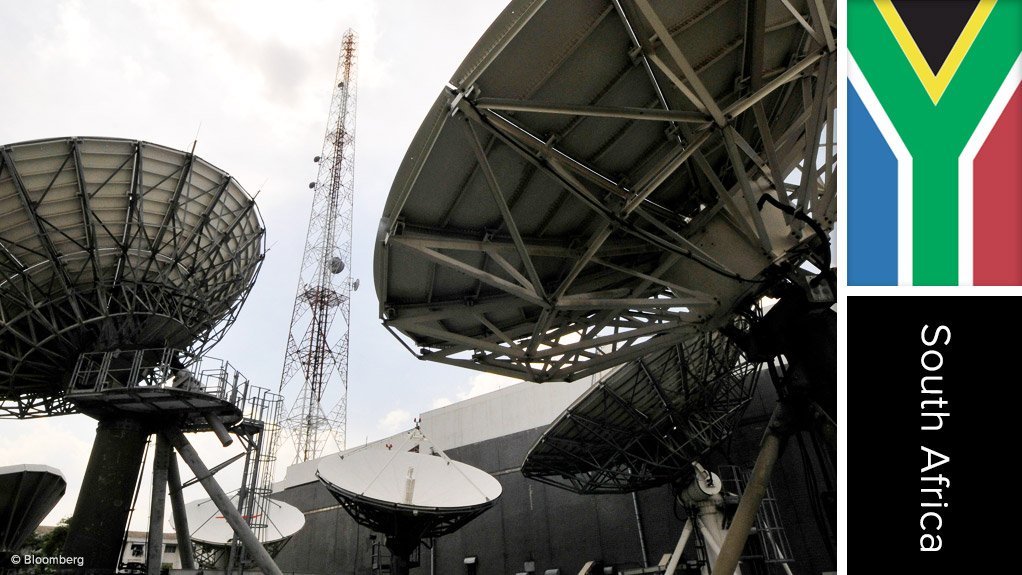
Digital terrestrial television (DTT) is the implementation of digital technology to provide more channels and/or better picture quality and sound using a conventional television antenna or aerial, instead of a satellite dish or cable connection.
In 2005, State-owned enterprise Sentech announced its plans to roll out DTT using digital video broadcasting terrestrial (DVB-T) technology, in time for the 2010 FIFA World Cup.
Initially, there will be two DVB-T transmitters for each location or site.
The first phase of the project involves upgrading the Sentech broadcast network and duplicating the current analogue network channels on a digital system.
Most of the 220 sites needed to broadcast DTT to 92% of South Africa's population are in place, but have to be upgraded to become fully digital. Once that process has been completed, DTT and analogue systems will run simultaneously (a dual-illumination process) until South Africa is ready to switch off analogue transmission. This decision will be made by government.
A set-top box (STB) will be required to decode the signal, even for public broadcasting and free-to-air channels. The STBs are expected to be subsidised.
Value
The upgrade is expected to cost R1-billion.
Supplying the STBs will cost an estimated R2.45-billion.
Duration
According to an agreement with the International Telecommunications Union, the country has until 2015 to complete the migration, after which it will no longer have exclusive use of the frequencies.
Latest Developments
Communications Minister Yunus Carrim has called for consensus on the drawn-out debate over the control systems of the STBs needed for South Africa’s digital migration.
With South Africa’s transition from analogue broadcasting to DTT five-and-a-half-years behind schedule, the department is “tired of negotiating” and hopes an accord among stakeholders will be reached soon.
“We agree [the DoC] made mistakes [in the roll-out of the project], but now we are ready to move on,” Carrim says.
He says a “balance”, in the heated – and ongoing – debate that has halted the DTT project, has been achieved, with Cabinet opting for the nonmandatory use of a control system in the STBs not subsidised by government.
Broadcasters not wanting to use the control system will be unaffected by the existence of the control system in the STBs or by the use of the system by other broadcasters, but different forms of engagement continue as different parties are opposing the decision.
The STB control system "discussion space” will remain open until an inclusive decision is made, but Carrim says there seems to be "some sense” that things cannot continue the way they have continued.
Key Contracts and Suppliers
None stated.
On Budget and on Time?
The project is five-and-a-half-years behind schedule.
There have been several migration delays since South Africa reached an agreement with the International Telecommunications Union in 2006 to migrate from an analogue to a digital signal by mid- 2015.
One of the major stumbling blocks was the dispute about whether the STBs should have control system.
The South African Communications Forum previously told Engineering News Online that delays in South Africa’s transition to digital television had cost the country’s STB manufacturing industry more than R50-million and had stressed that any more delays would lead to further losses.
Carrim has pointed out that the scrapping of the control system will result in a further 36-week delay – and not the six-month delay as was initially thought – as the South African Bureau of Standards will need to rework the STB specifications (SANS 862) to exclude the STB control system.
Contact Details for Project Information
DoC media liaison officer, Siya Qoza, tel +27 12 427 8511.
Sentech, tel +27 11 691 7000.
Article Enquiry
Email Article
Save Article
To advertise email advertising@creamermedia.co.za or click here
Research Reports

Projects


Latest Multimedia


Latest News
Showroom

Rooted in the hearts of South Africans, combining technology and a quest for perfection to bring you a battery of peerless standing. Willard...
VISIT SHOWROOM
The Steel Tube Export Association of South Africa was established to develop sustainable, internationally competitive carbon steel tube and pipe...
VISIT SHOWROOM



Announcements
What's On
Subscribe to improve your user experience...
Option 1 (equivalent of R125 a month):
Receive a weekly copy of Creamer Media's Engineering News & Mining Weekly magazine
(print copy for those in South Africa and e-magazine for those outside of South Africa)
Receive daily email newsletters
Access to full search results
Access archive of magazine back copies
Access to Projects in Progress
Access to ONE Research Report of your choice in PDF format
Option 2 (equivalent of R375 a month):
All benefits from Option 1
PLUS
Access to Creamer Media's Research Channel Africa for ALL Research Reports, in PDF format, on various industrial and mining sectors
including Electricity; Water; Energy Transition; Hydrogen; Roads, Rail and Ports; Coal; Gold; Platinum; Battery Metals; etc.
Already a subscriber?
Forgotten your password?
Receive weekly copy of Creamer Media's Engineering News & Mining Weekly magazine (print copy for those in South Africa and e-magazine for those outside of South Africa)
➕
Recieve daily email newsletters
➕
Access to full search results
➕
Access archive of magazine back copies
➕
Access to Projects in Progress
➕
Access to ONE Research Report of your choice in PDF format
RESEARCH CHANNEL AFRICA
R4500 (equivalent of R375 a month)
SUBSCRIBEAll benefits from Option 1
➕
Access to Creamer Media's Research Channel Africa for ALL Research Reports on various industrial and mining sectors, in PDF format, including on:
Electricity
➕
Water
➕
Energy Transition
➕
Hydrogen
➕
Roads, Rail and Ports
➕
Coal
➕
Gold
➕
Platinum
➕
Battery Metals
➕
etc.
Receive all benefits from Option 1 or Option 2 delivered to numerous people at your company
➕
Multiple User names and Passwords for simultaneous log-ins
➕
Intranet integration access to all in your organisation
