DFFE unveils two new water ecosystem studies


The Department of Forestry, Fisheries and the Environment (DFFE) has unveiled two Water Research Commission (WRC) studies that add to the understanding of the challenges facing South Africa’s rivers, estuaries and oceans.
Forestry, Fisheries and the Environment Deputy Minister Narend Singh says that the launches of the studies provide scientific substance to a legal framework long in place, showing how science and innovation can help to reimagine a more sustainable future, from the catchment through to the coast.
“Reimagining our relationship with the ocean means recognising that the health of our oceans is affected much earlier than the point at which our rivers reach the coastline. The decisions that we make in our homes, businesses, municipalities and industries determine the state of our rivers, estuaries and oceans,” says Singh, noting that the ocean is not merely an inexhaustible natural resource that can be exploited at will: it is a living system upon which survival is reliant.
The outcomes of the two projects mean reconsidering what is understood by pollution and resilience.
“For far too long, plastic pollution has been seen merely as a problem of waste management. However, as these studies prove, this is an incomplete way to look at things.”
Plastic pollution affects the health of South Africa’s ecosystems, the ability of people to earn a livelihood, economic activities, citizen’s health and the resilience of communities.
The studies offer clear evidence that plastic pollution is a multi-dimensional challenge that requires a multi-dimensional response, and reconsideration of how to produce, use and manage resources sustainably.
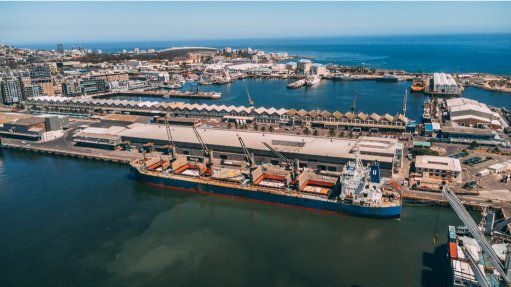
This first initiative is aimed at understanding and assessing the environmental challenges facing Durban Bay.
“The eThekwini municipality serves as a major gateway for trade and investment. However, the Bay faces mounting pressures arising from activities further up our river,” Singh comments.
“What the study reveals is alarming. However, the good news is that by looking at the socio-ecosystem dynamics of the Bay, the study has identified measures to enhance resilience while enabling economic growth.”
The second initiative is aimed at understanding and assessing the microplastics and associated pollutants entering the rivers through the catchment areas of Msunduzi and Swartkops.
“Together, these studies tell us something very important. If we want to restore and conserve our estuaries and oceans, we must effectively manage our rivers.”
Singh further notes that one of the most encouraging aspects of the launches is that it is an illustration of the District Development Model (DDM) in action, which was introduced to assist in planning, budgeting and delivering improved services as One Government, using One Plan and making coordinated investments.
“We recognise that development challenges cannot be solved by one person or by a single department working in isolation. Rather, success in development depends on alignment between spheres of government, partnerships with the private sector, collaboration with traditional leaders and, above all, citizen involvement.”
National government, provincial and local governments, the WRC, Transnet, universities and organisations from civil society have all joined hands in pursuit of a common objective, he continues, describing it as cooperative governance at its finest.
In the coastal space, this cooperative governance is given concrete form by the National Coastal Committee and the KwaZulu-Natal Provincial Coastal Committee, both established under the Integrated Coastal Management Act.
“The DDM and these statutory committees are not in competition. They reinforce one another - and a study like the Durban Bay socio-ecosystem assessment is exactly the kind of evidence base that should travel through both,” Singh says.
“With the knowledge provided by the two launches we have today, we now have the evidence for better decision-making and new pathways for solving our problems.”
Article Enquiry
Email Article
Save Article
Feedback
To advertise email advertising@creamermedia.co.za or click here
Research Reports
Projects



Latest News

Showroom
Rentech provides renewable energy products and services to the local and selected African markets. Supplying inverters, lithium and lead-acid...
VISIT SHOWROOM
SABAT Batteries is a renowned brand in the battery industry, manufacturing a wide range of batteries at its state-of-the-art production facility in...
VISIT SHOWROOM



Announcements
What's On
Subscribe to improve your user experience...
Option 1 (equivalent of R125 a month):
Receive a weekly copy of Creamer Media's Engineering News & Mining Weekly magazine
(print copy for those in South Africa and e-magazine for those outside of South Africa)
Receive daily email newsletters
Access to full search results
Access archive of magazine back copies
Access to Projects in Progress
Access to ONE Research Report of your choice in PDF format
Option 2 (equivalent of R375 a month):
All benefits from Option 1
PLUS
Access to Creamer Media's Research Channel Africa for ALL Research Reports, in PDF format, on various industrial and mining sectors
including Electricity; Water; Energy Transition; Hydrogen; Roads, Rail and Ports; Coal; Gold; Platinum; Battery Metals; etc.
Already a subscriber?
Forgotten your password?
Receive weekly copy of Creamer Media's Engineering News & Mining Weekly magazine (print copy for those in South Africa and e-magazine for those outside of South Africa)
➕
Recieve daily email newsletters
➕
Access to full search results
➕
Access archive of magazine back copies
➕
Access to Projects in Progress
➕
Access to ONE Research Report of your choice in PDF format
RESEARCH CHANNEL AFRICA
R4500 (equivalent of R375 a month)
SUBSCRIBEAll benefits from Option 1
➕
Access to Creamer Media's Research Channel Africa for ALL Research Reports on various industrial and mining sectors, in PDF format, including on:
Electricity
➕
Water
➕
Energy Transition
➕
Hydrogen
➕
Roads, Rail and Ports
➕
Coal
➕
Gold
➕
Platinum
➕
Battery Metals
➕
etc.
Receive all benefits from Option 1 or Option 2 delivered to numerous people at your company
➕
Multiple User names and Passwords for simultaneous log-ins
➕
Intranet integration access to all in your organisation