



Despite positive global trends, SA vulnerable to disorderly tapering

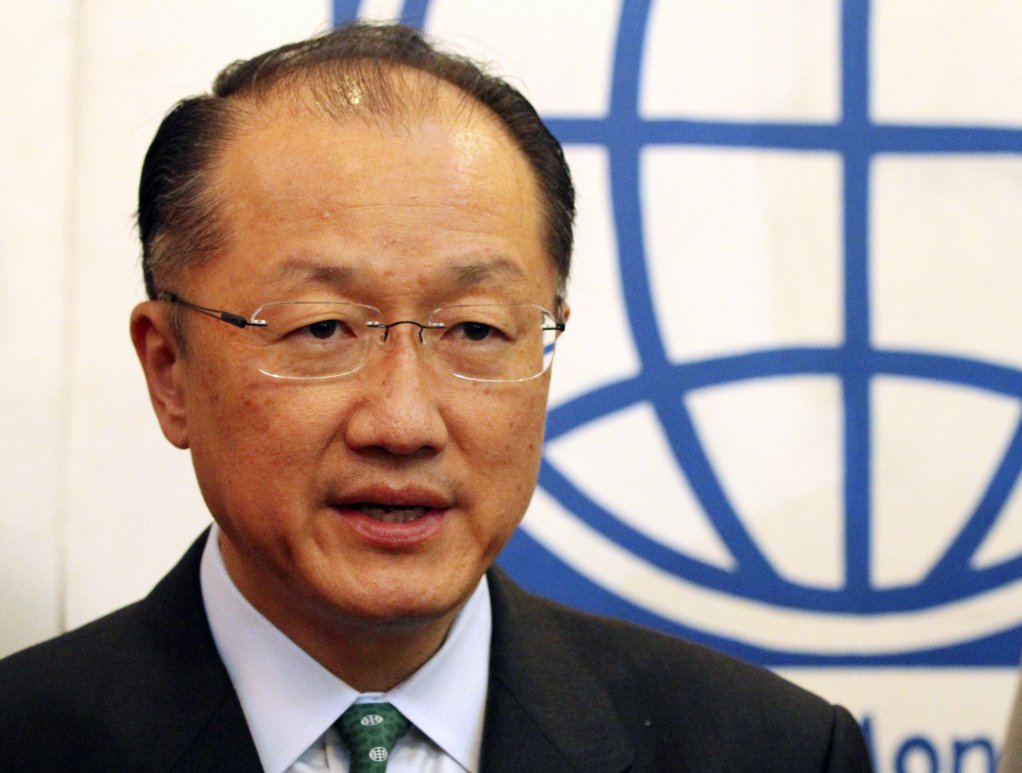
Jim Yong Kim Growth appears to be strengthening in both high-income and developing countries
Photo by Reuters


The World Bank expects South Africa to grow by a relatively modest 2.7% in 2014 – up from its forecast of a lowly 1.9% in 2013 – as the world economy strengthens on the back of a turnaround in high-income countries five years after the global financial crisis struck, as well as a steady rise in growth in developing countries.
The forecast is softer than the National Treasury’s October projection for the domestic economy, which it indicated would expand by 2.1% in 2013 and 3% in 2014. However, many private economists believe it is unlikely that South Africa would have breached the 2% growth level last year, which was characterised by protracted strikes in key productive sectors and a slowdown in consumer spending.
South Africa has also been included in a cluster of middle-income countries that remain particularly exposed to any “disorderly” tightening of financial conditions, owing primarily to its reliance on portfolio inflows to finance what has been a steadily widening current account deficit.
The World Bank estimates that South Africa ran a current account deficit of 6.9% in 2013 and expects it to remain at around 6.5% this year. South Africa’s National Treasury has itself forecast that the deficit will remain above 6% over the medium term to 2016.
In its Global Economic Prospects (GEP) report, released on January 14, the bank high-lights spillovers from US monetary tapering as a key external risk to Africa’s largest eco-nomy, with another being the potential for commodity prices to fall further. It also high- lights domestic risks, including labour instab-ility and the upcoming elections, which could threaten efforts at sustaining macroeconomic stability, particularly in the context of a likely transition to higher global interest rates.
Tapering Base Case
The report’s base case, however, is that of a ‘smooth’ tapering process, which lead author Andrew Burns indicates should result in a relatively modest decline in capital flows to developing countries – from 4.6% of gross domestic product (GDP) in 2013 to around 4.1% in 2016.
But should there be any repeat of the mid-2013 market speculation that followed the first signals that the US Federal Reserve was considering an easing back from its bond-buying programme, Burns concedes that capital flows to developing countries could decline temporarily by “50% or more for a period of several months”.
On a cumulative basis, investors withdrew $64-billion from developing-country mutual funds between June and August last year, while gross capital flows to developing countries halved and currencies and stock markets in several major developing economies declined by as much as 15%.
Should a precipitous tightening of inter-national financial conditions be repeated, the GEP warns that “one or more” countries with large current account deficits, or those that have had a rapid accumulation of credit, could be “pushed into crisis”. In 2013, the impact of the portfolio adjustment on developing-country financial assets and currencies was most pronounced in countries such as Brazil, India, Indonesia, Malaysia, Turkey and South Africa.
That said, the bank is relatively optimistic the tapering of asset purchases by the US Federal Reserve will not be overly disruptive. Nevertheless, it will still result in a rise in base interest rates and spreads, which implies an increase in the cost of raising capital, which could, in turn, lower investment and growth in sub-Saharan Africa as a whole.
However, Burns says this “cloud” could be counterbalanced by an economic acceleration in high-income countries and continued strong growth in China, which is forecast at 7.7% for 2014.
These factors may boost demand for developing country exports, with the report expecting a 4.6% rise in global trade this year, up from 3.1% in 2013.
However, weaker commodity prices will continue to temper trade revenues. The report shows that, between their early-2011 peaks and recent lows in November 2013, the real prices of energy and food have declined by 9% and 13% respectively, while those of metals and minerals have fallen by 30%. These downward pressures on commodity prices are expected to persist, in part, reflecting additional supply.
Overall, the report is forecasting that global GDP growth will firm from 2.4% in 2013 to 3.2% this year, stabilising at 3.4% and 3.5% in 2015 and 2016 respectively.
The bank expects the US to grow by a creditable 2.8% in 2014, compared with an estimate of 1.8% in 2013. Following two years of contraction, the euro area is projected to expand by 1.1% this year, before recovering to 1.4% in 2015 and 1.5% in 2016.
After an increase of 3.5% in 2012, the bank expects that GDP growth in sub-Saharan Africa strengthened to 4.7% in 2013 and it projects an acceleration of 5.3% in 2014, rising to 5.5% in 2016. Excluding South Africa, GDP growth for the rest of the region averaged 6% in 2013, and is expected to be 6.4% this year.
“[But] domestic risks associated with social and political unrest as well as emerging security problems remain a major threat to the economic prospects of a number of countries in the region.”
For developing countries as a whole, the GEP is forecasting an expansion to 5.3% this year, from 4.8%, followed by 5.5% in 2015 and 5.7% in 2016.
“Growth appears to be strengthening in both high-income and developing countries, but downside risks continue to threaten the global economic recovery,” said World Bank Group president Jim Yong Kim.
“The performance of advanced economies is gaining momentum and this should support stronger growth in developing countries in the months ahead. Still, to accelerate poverty reduction, developing nations will need to adopt structural reforms that promote job creation, strengthen financial systems, and shore up social safety nets.”
Article Enquiry
Email Article
Save Article
Feedback
To advertise email advertising@creamermedia.co.za or click here
Research Reports

Projects


Latest Multimedia


Latest News

Showroom

The Steel Tube Export Association of South Africa was established to develop sustainable, internationally competitive carbon steel tube and pipe...
VISIT SHOWROOM
Rentech provides renewable energy products and services to the local and selected African markets. Supplying inverters, lithium and lead-acid...
VISIT SHOWROOM



Press Office
Announcements
What's On
Subscribe to improve your user experience...
Option 1 (equivalent of R125 a month):
Receive a weekly copy of Creamer Media's Engineering News & Mining Weekly magazine
(print copy for those in South Africa and e-magazine for those outside of South Africa)
Receive daily email newsletters
Access to full search results
Access archive of magazine back copies
Access to Projects in Progress
Access to ONE Research Report of your choice in PDF format
Option 2 (equivalent of R375 a month):
All benefits from Option 1
PLUS
Access to Creamer Media's Research Channel Africa for ALL Research Reports, in PDF format, on various industrial and mining sectors
including Electricity; Water; Energy Transition; Hydrogen; Roads, Rail and Ports; Coal; Gold; Platinum; Battery Metals; etc.
Already a subscriber?
Forgotten your password?
Receive weekly copy of Creamer Media's Engineering News & Mining Weekly magazine (print copy for those in South Africa and e-magazine for those outside of South Africa)
➕
Recieve daily email newsletters
➕
Access to full search results
➕
Access archive of magazine back copies
➕
Access to Projects in Progress
➕
Access to ONE Research Report of your choice in PDF format
RESEARCH CHANNEL AFRICA
R4500 (equivalent of R375 a month)
SUBSCRIBEAll benefits from Option 1
➕
Access to Creamer Media's Research Channel Africa for ALL Research Reports on various industrial and mining sectors, in PDF format, including on:
Electricity
➕
Water
➕
Energy Transition
➕
Hydrogen
➕
Roads, Rail and Ports
➕
Coal
➕
Gold
➕
Platinum
➕
Battery Metals
➕
etc.
Receive all benefits from Option 1 or Option 2 delivered to numerous people at your company
➕
Multiple User names and Passwords for simultaneous log-ins
➕
Intranet integration access to all in your organisation
