Demand-Driven MRP: Driving supply chain planning into the 21st century


This article has been supplied.
A closer look at a quantum leap in supply chain planning that’s taking the world by storm
A revolutionary new approach to supply chain planning - Demand-Driven Material Requirements Planning - is fast replacing old systems and spreadsheets. DD MRP has already achieved impressive results for early adopters in the US. Typical results include increased sales (around 20%), accompanied by vastly reduced inventory (as much as two thirds), less waste and happier customers.
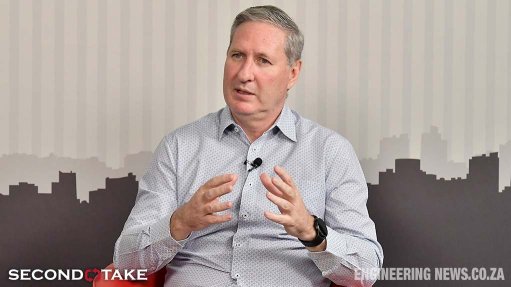
“This is nothing short of a revolution in supply chain planning,” says demand-driven planning advocate and SAPICS senior educator, Ken Titmuss. “This new thinking turns what we believed about planning on its head, yet the logic is sound and the dramatic results speak for themselves.”
Constant volatility is the new normal
According to Titmuss, formal planning systems with MRP at their core are ‘fundamentally broken’. Even most modern ERP systems are based on what is essentially a post World War II ‘push-and-promote’ theory that was formalised during the 1970s when products were fewer, demand was stable and there wasn’t a lot of outsourcing to foreign countries going on.
“Life was simple, so the post-war theory worked well,” he says. “But today things are vastly different.”
A ‘VUCA world’ is how Titmuss describes today’s volatile, uncertain, complex and ambiguous markets. “Buyers get conflicting messages out of their system, which leaves them guessing – and this leads to them making costly mistakes.”
It’s no surprise then that AMR Research in 2007 found inventory buffers to be at an all-time low, forecast errors on the rise, and a “legacy of make-to-stock manufacturing strategies to be crippling the ability of producers to respond to increasing volatility in demand and supply.”
Three effects of such broken planning include unacceptable inventory performance, poor service levels and high expedite related expenses. In fact, a recent survey of 150 companies by beyondmrp.com <http://www.beyondmrp.com> showed 82% of respondents had at least one of these effects to a severe degree.
“There’s no dodging the fact that traditional MRP doesn’t allow companies to define, let alone operate in that sweet spot between the amount of inventory being an asset or becoming a liability,” adds Titmuss, commenting on the fact that companies and supply chains need a way to align their assets more closely with their actual consumption.
“Constant volatility has become the new normal, so we need to respond with an approach that rolls with the punches, instead of allowing small changes at the consumer end to have a bullwhip effect the further they travels back up the supply chain,” he says.
New thinking for a new world
In terms of traditional MRP, if demand for the finished product changes a little, everything else changes a lot. However, the demand-driven approach is different in that it makes each part of the supply chain more independent so that the ripple effect is reduced. It does so by introducing buffers.
“By instituting buffers in terms of stock, time and capacity at various control points in the supply chain, one can reduce the likelihood of small changes on one end becoming a tsunami on the other.”
The beauty of the theory is that it works across industries – even those that aren’t selling products per se. Although one might not implement stock buffers at a bank, capacity buffers would increase when, for example, more than three people are in the queue, and signal for another teller to start operating.
“The introduction of buffers means that we’re not driven by computers but by signals, and once we see a signal we can react on it. By assessing where we’re at more often, we’re able to reduce the variations in supply and demand before they can cause a lot of trouble further up the supply chain.”
A quantum leap
DD MRP – which is fully explained in the revised edition of Orlicky’s Materials Requirement Planning - combines concepts of ‘Lean’, ‘Theory of Constraints’ and ‘Innovation’, with Distribution Requirements Planning (DRP) and MRP. It essentially allows planning for materials to take place in a more demand-driven way on short-term basis.
According to Titmuss, although these concepts have been around for some time, the way that authors Carol Ptak and Chad Smith have put the ideas together is very new. “Perhaps a year or two in, we’re on the edge of this quantum leap. Only around 250 people have taken the classes although many more have read the book and are now signing up for the web-based learning.”
The book details the key steps that need to be taken for a company to migrate towards DD MRP. These are: Strategic inventory positioning > Buffer levels and profiles > Dynamic adjustments > Demand Driven planning and, finally, Visible and collaborative execution.
“DD MRP allows companies to get out of the cycle and penalties of oscillating between too little and too much. It means that they are then able to start operating in the ‘high return on capital employed’ zone that is so critical to sustainable growth.”
One company that’s adopted DD MRP - Oregon Freeze Dry, the largest company of its kind in the US – experienced an increase of 20% in sales after its customer fill rate improved from 79% to 99.6% - and all of this conducted with 66% less inventory. The approach also worked wonders for its raw material requirements: no out of stocks were experienced and the company reported a reduction of $2.5 million for inventory.
“With results like these, DD MRP is definitely a game changer – and something the South African market would do well to get into as quickly as possible,” concludes Titmuss.
DD MRP will be discussed in more detail at the 36th Annual SAPICS Conference & Exhibition to be held 1-3 June 2014 at Sun City. For more information please visit www.sapics.org.za
Article Enquiry
Email Article
Save Article
Feedback
To advertise email advertising@creamermedia.co.za or click here
Research Reports

Projects

Latest Multimedia


Latest News


Showroom

Virtual Gas Network supplies compressed natural gas via a virtual gas distribution network.
VISIT SHOWROOM
Complete range of security sealing solutions including security seals bags and labels.
VISIT SHOWROOM


Press Office
Announcements
What's On
Subscribe to improve your user experience...
Option 1 (equivalent of R125 a month):
Receive a weekly copy of Creamer Media's Engineering News & Mining Weekly magazine
(print copy for those in South Africa and e-magazine for those outside of South Africa)
Receive daily email newsletters
Access to full search results
Access archive of magazine back copies
Access to Projects in Progress
Access to ONE Research Report of your choice in PDF format
Option 2 (equivalent of R375 a month):
All benefits from Option 1
PLUS
Access to Creamer Media's Research Channel Africa for ALL Research Reports, in PDF format, on various industrial and mining sectors
including Electricity; Water; Energy Transition; Hydrogen; Roads, Rail and Ports; Coal; Gold; Platinum; Battery Metals; etc.
Already a subscriber?
Forgotten your password?
Receive weekly copy of Creamer Media's Engineering News & Mining Weekly magazine (print copy for those in South Africa and e-magazine for those outside of South Africa)
➕
Recieve daily email newsletters
➕
Access to full search results
➕
Access archive of magazine back copies
➕
Access to Projects in Progress
➕
Access to ONE Research Report of your choice in PDF format
RESEARCH CHANNEL AFRICA
R4500 (equivalent of R375 a month)
SUBSCRIBEAll benefits from Option 1
➕
Access to Creamer Media's Research Channel Africa for ALL Research Reports on various industrial and mining sectors, in PDF format, including on:
Electricity
➕
Water
➕
Energy Transition
➕
Hydrogen
➕
Roads, Rail and Ports
➕
Coal
➕
Gold
➕
Platinum
➕
Battery Metals
➕
etc.
Receive all benefits from Option 1 or Option 2 delivered to numerous people at your company
➕
Multiple User names and Passwords for simultaneous log-ins
➕
Intranet integration access to all in your organisation