Deep under China's coal basins, PetroChina is unlocking gas from rocks

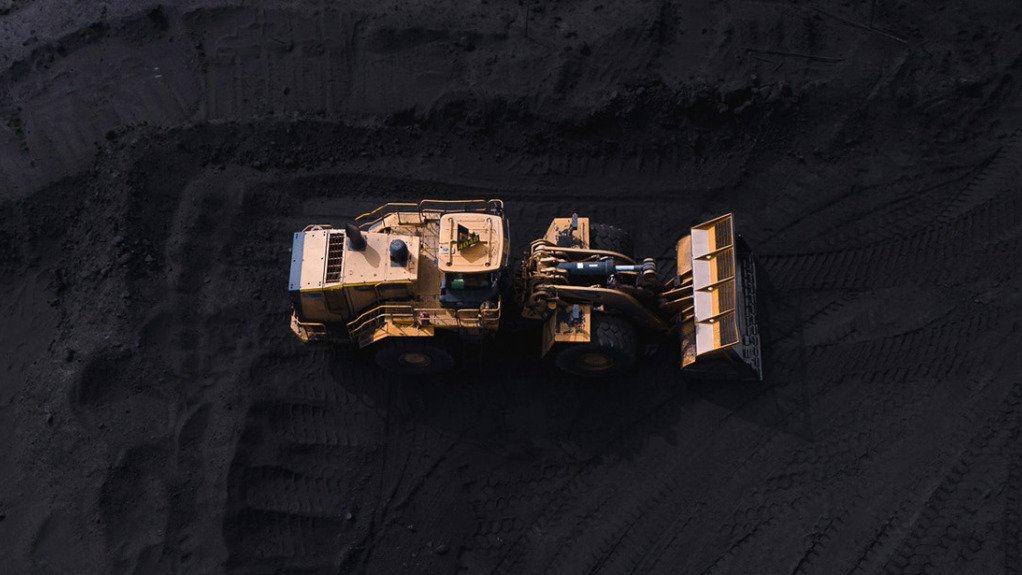


SINGAPORE - Thousands of metres below its vast coal basins, China is tapping an unconventional fuel source in a multi-billion-dollar effort to unleash new supplies of natural gas and further Beijing's goal for energy independence.
State energy giant PetroChina's experts forecast the company could produce 30-billion cubic metres (1.06-trillion cubic feet) of coal rock gas by 2035, topping last year's record shale gas output, which made up 10% of the country's production.
The push to develop coal rock gas is part of Beijing's widening effort to diversify its energy mix and reduce reliance on imports. That strategy, along with China's massive electrification of its vehicle fleet, has insulated it from the worst of the disruptions triggered by the Iran war despite being the world's top energy importer.
Extracting coal rock gas (CRG), which for now is produced commercially only in China, requires horizontal drilling and fracking, a technology that PetroChina, the country's top gas producer, has honed developing shale gas for over a decade.
Found mostly in the Ordos Basin that straddles three provinces, the "strategic next-phase fuel", as the company calls it, could make up more than half of the country's gas output growth.
"CRG currently offers stronger growth potential than alternative domestic gas sources," said Huang Tianshi, principal gas analyst at S&P Global Energy.
China is the world's third-largest gas consumer, with annual usage likely to peak at 600 to 650 bcm by 2040, according to analysts, compared with 430 bcm currently.
Successfully tapping a major new source to offset flagging growth in shale and conventional gas resources would limit China's reliance on imported liquefied natural gas (LNG), whose cost and geopolitical risks have been exposed twice in the last four years by Russia's Ukraine invasion and the Iran war.
It would also ease China's need to pipe gas from Russia and Central Asia and strengthen Beijing's negotiating stance with Moscow, which is pushing a deal to build the Power of Siberia 2 pipeline to bring more Russian gas to China.
"Frequent and severe global geopolitical disruptions over the past five years have underscored that ensuring supply security and flexibility, while sustaining stable economic growth, will remain a long-term strategic priority for China," Huang said.
DEVELOPED FROM DISAPPOINTMENT
Chinese State explorers led by PetroChina developed coal rock gas know-how from decades producing coalbed methane, found in shallower layers of coal mines. However, coalbed methane has disappointed expectations due to high costs and low per-well output, yielding only 5% of China's gas output.
But as PetroChina drilled deeper, it began in 2021 applying shale gas technology known as hydraulic fracturing, or fracking, at the Jishen 6-7 well in the Ordos Basin's Daji field, drilling a 3 00 m-(9 843 ft) horizontal well in rocks 2 200 m below the surface.
Fracking, which involves high-pressure injection of water, sand and chemicals - the same technology that unleashed the U.S. shale oil and gas boom - led to a commercial find at Daji with daily output of 100 000 m3.
That success spawned a drilling campaign leading to the assessment that China's 14 coal basins hold 13-trillion cubic metres (tcm) of technically recoverable reserves in rocks up to 6 000 m deep, according to a China National Petroleum Corporation (CNPC) seminar presentation in 2025 in Beijing reviewed by Reuters. CNPC is PetroChina's parent company.
By the end of last year, China had drilled more than 700 coal rock gas wells and produced 4.2 bcm of gas in 2025, mostly from Daji.
"China is the first and only country that's commercially developing CRG due to the country's unique geology as its traditional coal seam gas development hits a ceiling," Zhang Junfeng, a senior geologist at CNPC's Exploration and Development Institute, told Reuters.
PetroChina also found CRG-rich layers in two appraisal wells drilled last year in the Bowen Basin in Queensland, Australia, where it is producing coal seam gas, hoping to replicate its success globally, CNPC officials said.
HIGH COSTS
A key obstacle to expanding coal rock gas output is the high production cost, reflecting the technical challenges of drilling deep underground. Analysts said it was too early to estimate costs, other than to say they are higher than for shale gas.
The break-even cost for shale gas projects in the southwest Sichuan basin is 1.7 to 1.8 yuan per cubic meter ($6.80 per million Btu) and around 0.60 to 0.80 yuan per cubic meter for conventional gas, said Chen Lin, an analyst at Rystad Energy.
To help manage costs, CRG development in the Ordos Basin could be integrated with tight gas and coalbed methane projects, including drilling deeper from older wells to reach gas-bearing layers of coal rock, CNPC's Zhang said.
Another way to cut costs would be to improve fracking technology to reduce the use of sand and chemicals, or develop new methods such as applying gas and electric pulse stimulation, Jia Chengzhao of the Chinese Academy of Sciences told the official Xinhua news agency last October.
S&P Global Energy analysts expect coal rock gas full-cycle costs to be comparable or lower than for shale gas due to the large resource base and China's extensive gas development infrastructure.
"China already has a mature shale gas supply chain, from rigs to fracturing fleets, and that capability is directly transferable to coal‑rock gas," said Yu Baihui of S&P Global Energy.
For coal rock gas to get to the point where it makes up 10% of China's gas output, projects will require high levels of capital investment, faster technological progress, unified industry standards, expansion in new basins and strong policy support, Yu said.
While coal rock gas is not included in China's subsidy framework for shale gas and coalbed methane, analysts expect support to kick in as more commercial finds are made.
China's Ministry of Natural Resources and the National Development & Reform Commission did not respond to a request for comment on potential subsidies.
Article Enquiry
Email Article
Save Article
Feedback
To advertise email advertising@creamermedia.co.za or click here
Projects

Latest Multimedia
Latest News

Showroom
We partner growth of our select clients through our comprehensive and competitive integrated international logistics, trade finance and information...
VISIT SHOWROOM
Virtual Gas Network supplies compressed natural gas via a virtual gas distribution network.
VISIT SHOWROOM


Press Office
Announcements
What's On
Subscribe to improve your user experience...
Option 1 (equivalent of R125 a month):
Receive a weekly copy of Creamer Media's Engineering News & Mining Weekly magazine
(print copy for those in South Africa and e-magazine for those outside of South Africa)
Receive daily email newsletters
Access to full search results
Access archive of magazine back copies
Access to Projects in Progress
Access to ONE Research Report of your choice in PDF format
Option 2 (equivalent of R375 a month):
All benefits from Option 1
PLUS
Access to Creamer Media's Research Channel Africa for ALL Research Reports, in PDF format, on various industrial and mining sectors
including Electricity; Water; Energy Transition; Hydrogen; Roads, Rail and Ports; Coal; Gold; Platinum; Battery Metals; etc.
Already a subscriber?
Forgotten your password?
Receive weekly copy of Creamer Media's Engineering News & Mining Weekly magazine (print copy for those in South Africa and e-magazine for those outside of South Africa)
➕
Recieve daily email newsletters
➕
Access to full search results
➕
Access archive of magazine back copies
➕
Access to Projects in Progress
➕
Access to ONE Research Report of your choice in PDF format
RESEARCH CHANNEL AFRICA
R4500 (equivalent of R375 a month)
SUBSCRIBEAll benefits from Option 1
➕
Access to Creamer Media's Research Channel Africa for ALL Research Reports on various industrial and mining sectors, in PDF format, including on:
Electricity
➕
Water
➕
Energy Transition
➕
Hydrogen
➕
Roads, Rail and Ports
➕
Coal
➕
Gold
➕
Platinum
➕
Battery Metals
➕
etc.
Receive all benefits from Option 1 or Option 2 delivered to numerous people at your company
➕
Multiple User names and Passwords for simultaneous log-ins
➕
Intranet integration access to all in your organisation