Decarb futures and Santa Marta moment


The Santa Marta conference, held in Colombia from April 24 to 29 and dubbed the first fossil-fuel phase-out conference, must be seen as an important stepping stone and perhaps a necessary riposte to the struggling annual UN climate conferences and Paris Agreement negotiations.
It came at a time when the world faces a super El Niño, which will hit harder than previous El Niños.
Those who attend these annual climate negotiations and the accompanying carnival of side events acknowledge that they are now captured by the fossil fuel industry and have become a platform for noisy posturing rather than meaningful action.
In the minds of the organisers of the Santa Marta event, the not-so-hidden aspiration was for the event to organically turn itself into a fossil fuel phase-out and transition movement. The word ‘transition’ itself is layered with complexities of meaning and geographic specificities. The Santa Marta conference also established its own science panel to counter what organisers see as the watering down of evidence that often happens when the UNFCCC’s official science body, the Intergovernmental Panel on Climate Change, presents its findings to politicians.
Nothing said at Santa Marta is new, but Conferences of the Parties, or COPs, have become choke points (no pun intended) for fossil phase-out progress.
Santa Marta will pose a real challenge to those who are perceived to have captured the climate negotiations.
There have been many Santa Marta-type moments, some of which I have observed myself, whether in climate change negotiations or in other forms of international movement building. They have come and gone, and the question remains: Will Santa Marta make a difference?
It is still early days to fully understand how it will evolve and how it will influence the direction of resources towards implementation of the transition. It is not as if nothing is happening – there have been important building blocks, such as the Nationally Determined Contributions, 2050 pathway analyses, numerous climate commissions, just energy transition partnerships and, last year, the Brazilian COP presidency launched the pioneering Country Platform Hubs to speed up climate investment.
The thematic issues and the range of participants that were convened at Santa Marta were broad. In honeymoon periods, differences between interests, the diversity of groups, and the positions of States and non-State actors are papered over as optics take precedence over substance.
It will be a tall order to shepherd this stream of differing beliefs about a post-carbon world and keep it on course.
Democratic ConsultationThe process of decision-making will rely on democratic consultation. Every interest and its concerns will have to be taken into account. Organisational and participatory practicalities will come into play and can make or break the momentum behind these events. Expectations will be high, and the talk of doing phase-out plans is well and good, but only if they are backed by real resources.
Santa Marta should not reinvent the wheel, but rather find solutions within existing transition processes and identify how others can be practically accelerated.
It is safe to say transitions are a necessity. We have to recognise that the scientific evidence on climate change is compelling and that avoiding catastrophic climate shifts is now one of the biggest challenges that humanity faces. However, not everyone will be in transition mode on equal terms.
This cannot be papered over. And, despite broad alignment on sentiment, ideological differences and the practical realities of getting things done in the real economy can pull different worldviews apart.
Different countries require different approaches. Therefore, there has to be a level of tolerance within transition movements, rather than second-guessing country-led processes through lenses and judgement frameworks that are not rooted in local contexts and a deeper understanding of circumstances.
Transitions will face supply frictions, which will no doubt influence the cost of adoption. As one can see, it’s easy to shout phase-out and phase-down, but the work of transitions requires politics, organisation, capabilities, finance, strong and genuine local participation, access to appropriate technology solutions and the capacity to implement at scale. Most importantly, energy transitions should not break countries’ banks and people’s wallets.
The phase-out debate should also acknowledge the transition debate will take different forms and struggles in different parts of the world. In some places, managing climate risk is far more important than investing disproportionately in decarbonisation.
The Santa Marta’s bias is slanted towards emissions reductions and less towards resilience.
Some countries need to build economic resilience first, as they are subject to multiple external shocks that affect their economic progress and development.
Fossil phase-outs, as one can see, are a multifaceted agenda. The spectrum of challenges cannot be resolved in one go, so we should not get ahead of ourselves. There is still a lot of work to be done.
Article Enquiry
Email Article
Save Article
Feedback
To advertise email advertising@creamermedia.co.za or click here
Research Reports

Projects
Latest Multimedia
Latest News

Showroom
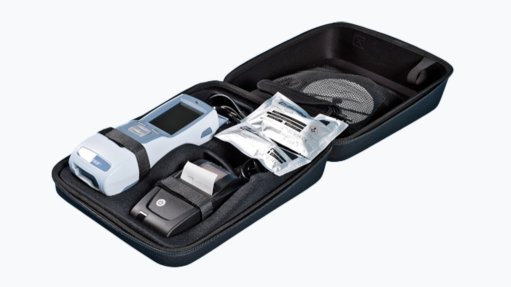
Developed to exceed the latest EN 15964 standards for police breathalysers proving that it will remain accurate and reliable for many years to come.
VISIT SHOWROOM
M and J Mining are leading suppliers of physical support systems as used by the underground mining industry. Our selection of products are not...
VISIT SHOWROOM


Press Office
Announcements
What's On
Subscribe to improve your user experience...
Option 1 (equivalent of R125 a month):
Receive a weekly copy of Creamer Media's Engineering News & Mining Weekly magazine
(print copy for those in South Africa and e-magazine for those outside of South Africa)
Receive daily email newsletters
Access to full search results
Access archive of magazine back copies
Access to Projects in Progress
Access to ONE Research Report of your choice in PDF format
Option 2 (equivalent of R375 a month):
All benefits from Option 1
PLUS
Access to Creamer Media's Research Channel Africa for ALL Research Reports, in PDF format, on various industrial and mining sectors
including Electricity; Water; Energy Transition; Hydrogen; Roads, Rail and Ports; Coal; Gold; Platinum; Battery Metals; etc.
Already a subscriber?
Forgotten your password?
Receive weekly copy of Creamer Media's Engineering News & Mining Weekly magazine (print copy for those in South Africa and e-magazine for those outside of South Africa)
➕
Recieve daily email newsletters
➕
Access to full search results
➕
Access archive of magazine back copies
➕
Access to Projects in Progress
➕
Access to ONE Research Report of your choice in PDF format
RESEARCH CHANNEL AFRICA
R4500 (equivalent of R375 a month)
SUBSCRIBEAll benefits from Option 1
➕
Access to Creamer Media's Research Channel Africa for ALL Research Reports on various industrial and mining sectors, in PDF format, including on:
Electricity
➕
Water
➕
Energy Transition
➕
Hydrogen
➕
Roads, Rail and Ports
➕
Coal
➕
Gold
➕
Platinum
➕
Battery Metals
➕
etc.
Receive all benefits from Option 1 or Option 2 delivered to numerous people at your company
➕
Multiple User names and Passwords for simultaneous log-ins
➕
Intranet integration access to all in your organisation