



Curing Of Concrete Affected By Cement Extenders



This article has been supplied.
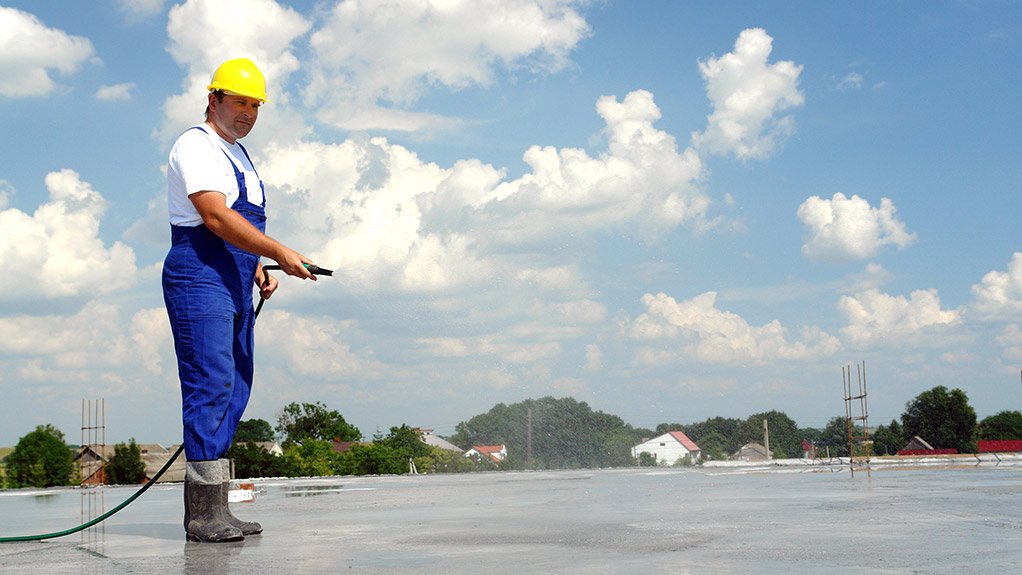
Company Announcement - It is important to consider the effect of cement extenders in a concrete mix when curing concrete, says Bryan Perrie, managing director of The Cement Institute.
Perrie says the use of fillers and pozzolanic and hydraulic cement extenders is now commonplace in SA with a large number of available cements containing materials such as:
* Fly ash (FA), derived from the combustion of pulverised coal in thermal power plants;
* Ground granulated blast-furnace or corex slag (GGBS or GGCS), a secondary product from the iron manufacturing process;
* Condensed silica fume (CSF), a by-product of the smelting process used to produce silicon metal and ferro-silicon alloys; and.
*Finely ground but not chemically processed limestone.
"The use of these by-product or secondary materials has become popular, and encouraged, because of environmental and economic benefits. However, when added to portland cement concrete, these materials affect the physical and chemical properties of the cement paste phase and consequently respond differently to curing conditions. “When these materials are included in the cement at the cement factory, the performance of the cement can be adjusted and is therefore different to cases where extenders are added at a readymix plant or on site. “ "Dealing with the effect of extenders and fillers, briefly and generally, FA and CSF when mixed with cement and water undergo reactions with the calcium hydroxide released when cement hydrates in water. A pozzolanic reaction follows which produces a low density Calcium-Silicate-Hydrate(CSH) gel, contributing to the binding action of the cement phase in the concrete.
"More importantly, however, the hydrates produced in the pozzolanic reaction are deposited in the spaces between the gel formed around the cement particles, thereby reducing the size and the degree of interconnection of the pores. This improves the strength and durability characteristics of the concrete. "In addition to the pozzolanic reaction of FA in concrete, fly ash's particle shape and size aids the compaction and density of the resulting concrete with positive effects on placeability, bleeding and long term strength. Good quality FA also has a fine filler effect in stimulating the hydration of the cement up to 28 days - an important consideration for concretes in which large proportions of the cement is replaced by a cement extender.
"On the other hand, GGBS is considered to be a latent hydraulic material that will hydrate in the same way as cement when mixed with water. So if GGBS is added to a concrete mix together with the cement, the presence of calcium hydroxide and other alkalis accelerates the hydration of the GGBS although the rate of rate of hydration of the GGBS is considerably slower than that of the cement. It is thought that GGBS also participates in a pozzolanic reaction although to a considerably lesser extent than FA and CSF. The extent of its involvement in the reaction appears to depend on the composition of the GGBS.
"Since the major contribution of GGBS to the binding effect of the cement phase is through hydration, GGBS concretes are sensitive to inadequate curing at early ages because of this slow rate of hydration. With normal placement (about 50%), particular care should be taken in curing the concrete during the early period after casting. "CSF, because of its fine particle size, can fill the spaces between cement particles, which results in an increase in the density of the cement paste phase. This boosts impermeability of the concrete and also the durability of the concrete. "With regard to curing, at normal replacements levels - where about 7% of the cement is replaced by CSF - the resulting concrete may be treated in the same way as portland cement concrete, but if the replacement is based on achieving equivalent strength, one part of CSF can be used to replace between three and five parts of portland cement, depending on the strength level. In this case, CSF concrete is considerably more sensitive to initial curing and care should be taken to avoid surface drying," Perrie adds.” “When mixed with portland cement and water, finely ground limestone is chemically virtually inert (although there may be some minor reactions). Depending on its fineness, limestone may however act as “fine filler” in fresh paste. The effect of limestone on the properties of concrete or mortar depends on the specific limestone, whether a grinding aid is used in production, and the fineness of the limestone.”
“In general, extended cements are more sensitive to poor, late or inadequate protection and curing and require more effective curing over longer periods to ensure optimal performance of the concrete.”
Article Enquiry
Email Article
Save Article
Feedback
To advertise email advertising@creamermedia.co.za or click here
Research Reports

Projects


Latest Multimedia


Latest News


Showroom

Sika South Africa is a trusted partner for the nation’s infrastructure, commercial, residential, and industrial sectors.
VISIT SHOWROOM
Complete range of security sealing solutions including security seals bags and labels.
VISIT SHOWROOM



Announcements
What's On
Subscribe to improve your user experience...
Option 1 (equivalent of R125 a month):
Receive a weekly copy of Creamer Media's Engineering News & Mining Weekly magazine
(print copy for those in South Africa and e-magazine for those outside of South Africa)
Receive daily email newsletters
Access to full search results
Access archive of magazine back copies
Access to Projects in Progress
Access to ONE Research Report of your choice in PDF format
Option 2 (equivalent of R375 a month):
All benefits from Option 1
PLUS
Access to Creamer Media's Research Channel Africa for ALL Research Reports, in PDF format, on various industrial and mining sectors
including Electricity; Water; Energy Transition; Hydrogen; Roads, Rail and Ports; Coal; Gold; Platinum; Battery Metals; etc.
Already a subscriber?
Forgotten your password?
Receive weekly copy of Creamer Media's Engineering News & Mining Weekly magazine (print copy for those in South Africa and e-magazine for those outside of South Africa)
➕
Recieve daily email newsletters
➕
Access to full search results
➕
Access archive of magazine back copies
➕
Access to Projects in Progress
➕
Access to ONE Research Report of your choice in PDF format
RESEARCH CHANNEL AFRICA
R4500 (equivalent of R375 a month)
SUBSCRIBEAll benefits from Option 1
➕
Access to Creamer Media's Research Channel Africa for ALL Research Reports on various industrial and mining sectors, in PDF format, including on:
Electricity
➕
Water
➕
Energy Transition
➕
Hydrogen
➕
Roads, Rail and Ports
➕
Coal
➕
Gold
➕
Platinum
➕
Battery Metals
➕
etc.
Receive all benefits from Option 1 or Option 2 delivered to numerous people at your company
➕
Multiple User names and Passwords for simultaneous log-ins
➕
Intranet integration access to all in your organisation
