Creecy urges collaboration, LNG and ports reform at fuels imbizo

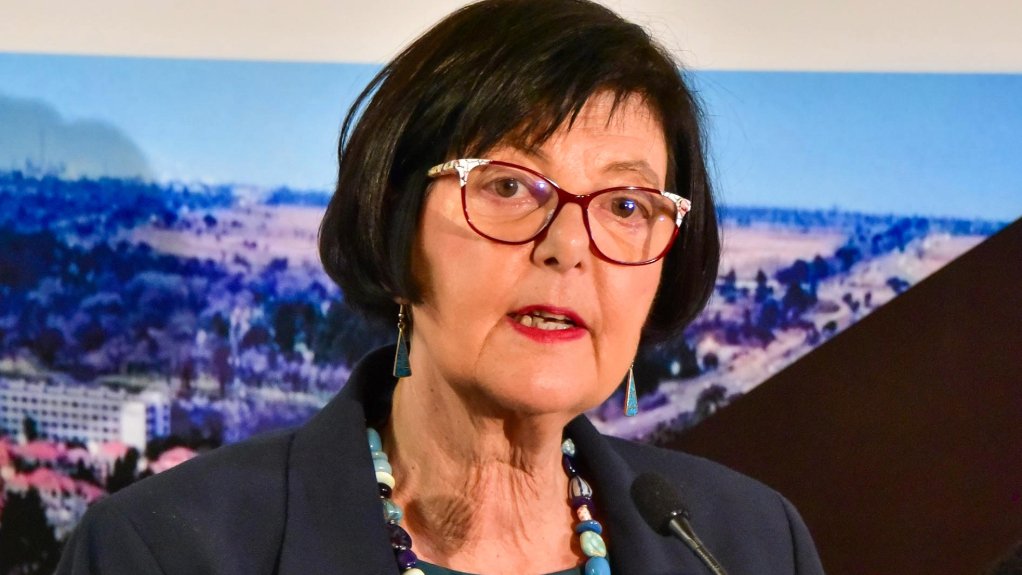


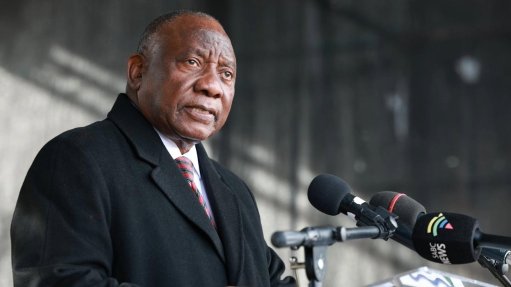
Transport Minister Barbara Creecy has said that South Africa’s logistics recovery and long-term energy security will depend on the closer collaboration between government and the fuels industry, as the country works to reclaim its position as a leading regional transport and logistics hub.
Addressing delegates on the second day of this year’s Fuels Industry Imbizo, hosted by industry organisation the Fuels Industry Association of South Africa, the Minister described the fuels sector as one of the country’s most strategic industries owing to its role in enabling mobility, supporting trade and logistics and underpinning economic activity.
She said government recognised that a resilient and efficient fuel supply chain was key to the functioning of the economy, particularly as South Africa sought to reverse the decline in logistics performance following the Covid-19 period.
“Our primary position as a logistics hub on the subcontinent is now open to competition from our neighbours, who aim to capitalise on our vulnerabilities.
“In this context, we can’t afford to be complacent, and we must ensure that our transport sector has reliable and secure energy reserves that will assist us in resuming our role as the gateway to the continent,” Creecy said.
She added that the Department of Transport was pursuing an ambitious reform programme aligned with the priorities of the Seventh administration, including infrastructure development, improved policy certainty and a stronger oversight of State-owned entities operating in the transport and logistics sectors.
A key focus area is the strengthening of South Africa’s ports and liquid fuels logistics infrastructure, particularly the Island View precinct in the Port of Durban, which serves as the country’s primary liquid bulk handling hub.
Government, together with State-owned rail logistics company Transnet and Transnet National Ports Authority (TNPA), is advancing several initiatives aimed at improving infrastructure planning, operational efficiency and long-term investments within this precinct.
Creecy also reported that significant progress was being made in implementing the Section 79 directive issued under the National Ports Act, with all terminal operator agreements now concluded.
She said the agreements were intended to enhance energy security, promote transformation, increase competition and improve access to strategic liquid bulk infrastructure.
Additionally, Creecy highlighted developments linked to the government’s broader energy security strategy, including progress on liquified natural gas (LNG) infrastructure projects.
She noted the recent signing ceremony between TNPA and the Ukwanda LNG project, comprising the Tamasa Energy Group and the Strategic Fuel Fund at the Port of Ngqura, describing it as the beginning of a new chapter in the evolution of South Africa’s energy and logistics sectors.
“It demonstrates confidence in the strategic value of this initiative and in the capability of our institutions to deliver infrastructure that meets national needs,” Creecy said.
She further pointed to the progress being made at the Richards Bay LNG Terminal project, including an agreement between special purpose vehicle Zululand Energy Terminal and State-owned power utility Eskom to support the country’s gas-to-power programme.
She said the planned terminal, targeted for commercial operation by the middle of 2030, could play a key role in addressing the country’s anticipated “gas cliff”.
Beyond LNG, Creecy said government was also examining opportunities linked to sustainable aviation fuels (SAFs) as part of broader decarbonisation efforts in the transport sector.
She revealed that a business implementation study developed through the International Civil Aviation Organisation focused on using domestically produced sugar as a feedstock for SAFs and also assessed the feasibility of using the Mossel Bay refinery for fuel production.
“The draft study has been well received by my counterparts at Agriculture and Minerals and Petroleum, and this is the type of cross-sector collaboration that will help to secure our energy leads as we adjust to meeting our energy emissions obligations,” Creecy explained.
She concluded by reaffirming government’s commitment to working with industry to create a transport and logistics environment that was efficient, competitive and sustainable.
Article Enquiry
Email Article
Save Article
Feedback
To advertise email advertising@creamermedia.co.za or click here
Research Reports

Projects

Latest News

Showroom

Virtual Gas Network supplies compressed natural gas via a virtual gas distribution network.
VISIT SHOWROOM
Announcements
What's On
Subscribe to improve your user experience...
Option 1 (equivalent of R125 a month):
Receive a weekly copy of Creamer Media's Engineering News & Mining Weekly magazine
(print copy for those in South Africa and e-magazine for those outside of South Africa)
Receive daily email newsletters
Access to full search results
Access archive of magazine back copies
Access to Projects in Progress
Access to ONE Research Report of your choice in PDF format
Option 2 (equivalent of R375 a month):
All benefits from Option 1
PLUS
Access to Creamer Media's Research Channel Africa for ALL Research Reports, in PDF format, on various industrial and mining sectors
including Electricity; Water; Energy Transition; Hydrogen; Roads, Rail and Ports; Coal; Gold; Platinum; Battery Metals; etc.
Already a subscriber?
Forgotten your password?
Receive weekly copy of Creamer Media's Engineering News & Mining Weekly magazine (print copy for those in South Africa and e-magazine for those outside of South Africa)
➕
Recieve daily email newsletters
➕
Access to full search results
➕
Access archive of magazine back copies
➕
Access to Projects in Progress
➕
Access to ONE Research Report of your choice in PDF format
RESEARCH CHANNEL AFRICA
R4500 (equivalent of R375 a month)
SUBSCRIBEAll benefits from Option 1
➕
Access to Creamer Media's Research Channel Africa for ALL Research Reports on various industrial and mining sectors, in PDF format, including on:
Electricity
➕
Water
➕
Energy Transition
➕
Hydrogen
➕
Roads, Rail and Ports
➕
Coal
➕
Gold
➕
Platinum
➕
Battery Metals
➕
etc.
Receive all benefits from Option 1 or Option 2 delivered to numerous people at your company
➕
Multiple User names and Passwords for simultaneous log-ins
➕
Intranet integration access to all in your organisation