


Control Instruments' revenue flat, profit rises 17.5%

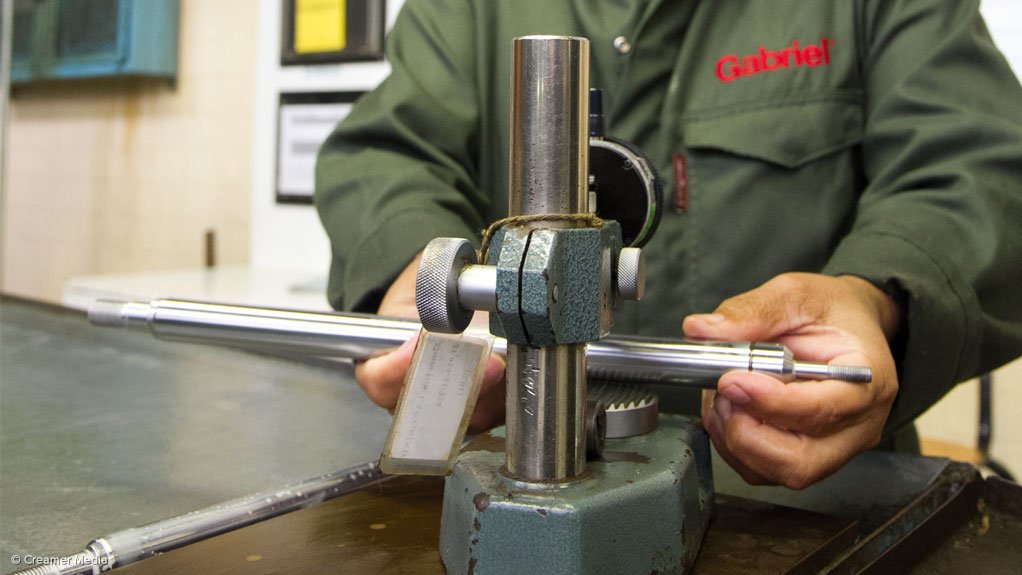


Although JSE-listed Control Instruments’ (CI’s) revenue for the first half of 2013 remained flat at R268.91-million, the company was satisfied with its performance, CEO Sean Rogers said on Monday.
The results for the six months to June 30 represented the first reporting period following the repositioning of CI during 2012 as a focused automotive aftermarket business.
“Aspects such as the state of the economy, the pressure that consumers are under, the exchange rate and vehicle sales have to be taken into account when evaluating CI’s performance. While we would like to do much better, we are satisfied with the profitability of the business as a result of being able to control our expenses,” Rogers told Engineering News Online.
CI on Monday reported that it had increased its operating profit by 4.2% to R13.85-million for the six months to June 2013, compared with R13.29-million for the same period in 2012. The company’s after-tax profit increased by 17.5% to R7.97-million.
Further, earnings a share for the six months improved to 5.8c compared with a loss of 37.81c a share a year earlier. Headline earnings a share came to 5.74c, compared with 3.24c during the previous corresponding period.
The most significant challenge CI faced during the six-month period was a volatile exchange rate, Rogers said, adding that the marketplace tended to slow when the exchange rate put prices under pressure.
However, despite the weakening rate of exchange and the inflationary impact on the cost of materials, CI managed to improve its current profit margins to 31.77%, while gross profit for the period increased by 3.37% year-on-year to R85.43-million.
The increase in net expenses, which included an 8.22% increase in the investment in marketing, was well contained at 3.2%.
Increased marketing expenses could, in part, be attributed to the launch of the Textar brand in the South African market and the investment in the expansion of the sales, marketing and technical teams required to support the brand in the distribution channel. The focus on operational efficiencies and cost management has resulted in operating expenses being curtailed.
“A significant contributor to this subdued revenue performance can be attributed to the pressure CI came under as distributors decreased inventory levels in the supply chain over the first half of the year. This was partially off the back of CI’s increased in-fill rates and reduced lead times,” he said.
“While the results are satisfactory, the operating profit margin of 5.14%, while up on the same period last year, is still below the group’s short-term expectations,” Rogers said.
He added that CI continued to invest in its sales and marketing strategies, creating a receptive market for its primary brands – Gabriel, Echlin, VDO and the newly launched Textar range of friction products.
“This investment has continued to strengthen the group’s strategic relationships with its primary customers and distributors,” he said.
Gabriel’s sell-through volumes into the market are an indicator that real growth increased marginally over the period. The successful launch of Textar, the Germany-based brake friction product, in the second quarter and the uptake of the brand in the market was insufficient to counter a drop off in revenue, he added.
Meanwhile, Rogers stated that weaker consumer spending coupled with the likelihood of strike action could impact on the second half of the year, which had traditionally been a stronger period for sales in the automotive market.
“While past industrial action has not been crippling, with an average of only about 10 days of production lost, the current environment is different than that of previous years in that it is much more unpredictable, he said.
Rogers pointed out that CI did have contingency plans in place, and was building up inventory to secure supply.
“Therefore, if the unrest experienced in the second half of this year is in line with that of previous years, we will be well positioned to handle it; however, should the industrial action be prolonged or have other knock-on effects, it is unclear what the impact on our business will be,” he concluded.
Article Enquiry
Email Article
Save Article
Feedback
To advertise email advertising@creamermedia.co.za or click here
Research Reports

Projects


Latest Multimedia


Latest News

Showroom

Rooted in the hearts of South Africans, combining technology and a quest for perfection to bring you a battery of peerless standing. Willard...
VISIT SHOWROOM
The Steel Tube Export Association of South Africa was established to develop sustainable, internationally competitive carbon steel tube and pipe...
VISIT SHOWROOM



Announcements
What's On
Subscribe to improve your user experience...
Option 1 (equivalent of R125 a month):
Receive a weekly copy of Creamer Media's Engineering News & Mining Weekly magazine
(print copy for those in South Africa and e-magazine for those outside of South Africa)
Receive daily email newsletters
Access to full search results
Access archive of magazine back copies
Access to Projects in Progress
Access to ONE Research Report of your choice in PDF format
Option 2 (equivalent of R375 a month):
All benefits from Option 1
PLUS
Access to Creamer Media's Research Channel Africa for ALL Research Reports, in PDF format, on various industrial and mining sectors
including Electricity; Water; Energy Transition; Hydrogen; Roads, Rail and Ports; Coal; Gold; Platinum; Battery Metals; etc.
Already a subscriber?
Forgotten your password?
Receive weekly copy of Creamer Media's Engineering News & Mining Weekly magazine (print copy for those in South Africa and e-magazine for those outside of South Africa)
➕
Recieve daily email newsletters
➕
Access to full search results
➕
Access archive of magazine back copies
➕
Access to Projects in Progress
➕
Access to ONE Research Report of your choice in PDF format
RESEARCH CHANNEL AFRICA
R4500 (equivalent of R375 a month)
SUBSCRIBEAll benefits from Option 1
➕
Access to Creamer Media's Research Channel Africa for ALL Research Reports on various industrial and mining sectors, in PDF format, including on:
Electricity
➕
Water
➕
Energy Transition
➕
Hydrogen
➕
Roads, Rail and Ports
➕
Coal
➕
Gold
➕
Platinum
➕
Battery Metals
➕
etc.
Receive all benefits from Option 1 or Option 2 delivered to numerous people at your company
➕
Multiple User names and Passwords for simultaneous log-ins
➕
Intranet integration access to all in your organisation
