



Carbon tax repeal does not take emission reduction off the table – Deloitte

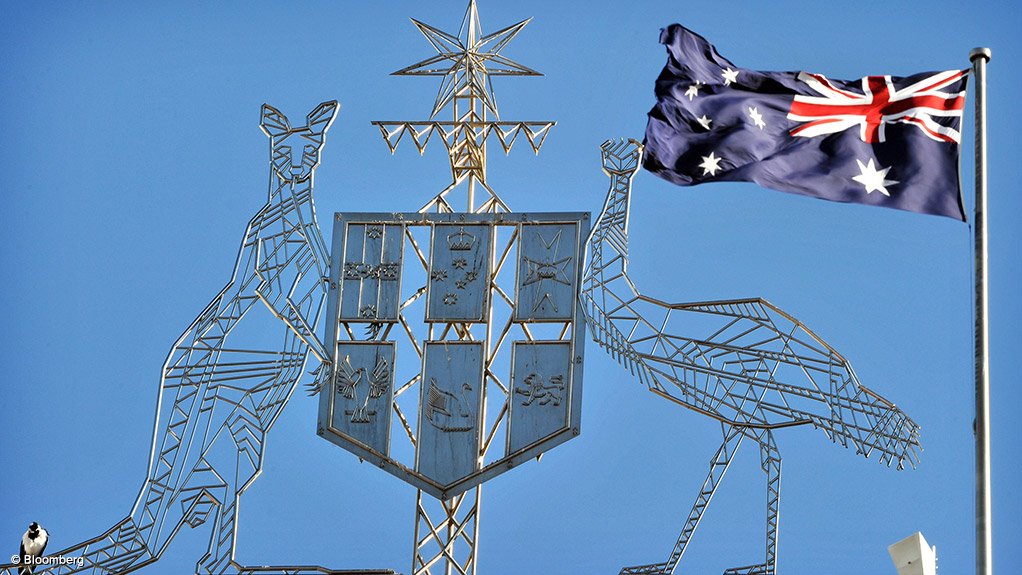


PERTH (miningweekly.com) – The repeal of Australia’s carbon tax would mean little change for businesses over the short term, advisory firm Deloitte has warned.
The Senate this week voted 39 to 32 in favour of killing the tax, a move that had been welcomed by the minerals and petroleum industry.
However, Deloitte lead partner for sustainability Paul Dobson said that while many companies might breathe an immediate sigh of relief, the bottom line was that this issue was not going away.
“As the government looks to implement its Direct Action policy and the Emission Reduction Fund (ERF), there will be an increased focus on emission reduction projects and activities, including energy efficiency. With this in mind companies need to develop a strategic approach to these sustainability issues aligned with their business strategy to accommodate the changing policy landscape.”
Dobson said that in the wake of the carbon tax repeal, there were three immediate considerations for business, the first of which was to manage "the long tail of compliance" imposed by the carbon tax. The second area of focus was preparing for the Direct Action policy and ERF, while the third would be to recognise that reporting through the National Greenhouse and Energy Reporting (NGER) scheme would remain in place.
With referance to the carbon tax having a long tail of compliance, Dobson said even though it is back-dated to July 1, 2014, companies still had reporting obligations in October 2014, with final payments due in February 2015, with noncompliance penalties continuing to apply.
“Businesses need to make sure they report their liable emissions accurately for the year ended June 2014 and comply with audit requirements as well as ‘true-up’ their free permits.
“In addition, companies should review their contractual arrangements, pricing and supply chains to ensure that the effect of the carbon pricing removal flows through appropriately – particularly in the energy sector.”
He noted that the government had released a White Paper and draft legislation on its Direct Action policy centre piece, the ERF, and while the precise timing of the introduction of all elements remained uncertain at present, it was likely that key components of the ERF would start in the latter part of 2014.
The ERF will operate through three key elements, including crediting emission reductions, purchasing emission reductions, and safeguarding emission reductions.
There were a wide range of emissions reduction and abatement projects that companies will be able to consider under the ERF, which could include upgrading commercial buildings, improving the energy efficiency of industrial facilities, capturing landfill gas, reducing coal mine waste gas, reforesting and vegetating marginal lands.
“Organisations should start reviewing their activities and consider potential projects and determine how to best take advantage of the ERF and the potential funding on offer,” said Dobson.
“Planning should start now so that organisations can be in position to have registered projects for participation in the first round of auctions, in the second half of this year.”
Dobson said that the NGER reporting regime would also remain in place for all large companies, which meant that organisations would need to continue to report their carbon emissions, energy consumption and energy production. This was particularly important as the NGER data would be used as part of the safeguarding mechanism under the ERF going forward.
“Despite the political debate around the carbon tax and the best mechanism to achieve carbon reductions, there is bipartisan agreement to reduce emissions. While it will be challenging to navigate the changing regulatory environment, organisations should focus on the opportunities presented by emission reduction and energy efficiency projects in order to extract business benefits and at the same time contribute to Australia’s carbon reduction targets,” he added.
Article Enquiry
Email Article
Save Article
Feedback
To advertise email advertising@creamermedia.co.za or click here
Research Reports

Projects


Latest Multimedia


Latest News


Showroom

For over 60 years, VEGA has provided industry-leading products for the measurement of level, density, weight and pressure. As the inventor of the...
VISIT SHOWROOM
Iritron delivers advanced automation, control, and optimisation solutions to the Mining, Minerals & Metals, Consumer Package Goods and...
VISIT SHOWROOM



Press Office
Announcements
What's On
Subscribe to improve your user experience...
Option 1 (equivalent of R125 a month):
Receive a weekly copy of Creamer Media's Engineering News & Mining Weekly magazine
(print copy for those in South Africa and e-magazine for those outside of South Africa)
Receive daily email newsletters
Access to full search results
Access archive of magazine back copies
Access to Projects in Progress
Access to ONE Research Report of your choice in PDF format
Option 2 (equivalent of R375 a month):
All benefits from Option 1
PLUS
Access to Creamer Media's Research Channel Africa for ALL Research Reports, in PDF format, on various industrial and mining sectors
including Electricity; Water; Energy Transition; Hydrogen; Roads, Rail and Ports; Coal; Gold; Platinum; Battery Metals; etc.
Already a subscriber?
Forgotten your password?
Receive weekly copy of Creamer Media's Engineering News & Mining Weekly magazine (print copy for those in South Africa and e-magazine for those outside of South Africa)
➕
Recieve daily email newsletters
➕
Access to full search results
➕
Access archive of magazine back copies
➕
Access to Projects in Progress
➕
Access to ONE Research Report of your choice in PDF format
RESEARCH CHANNEL AFRICA
R4500 (equivalent of R375 a month)
SUBSCRIBEAll benefits from Option 1
➕
Access to Creamer Media's Research Channel Africa for ALL Research Reports on various industrial and mining sectors, in PDF format, including on:
Electricity
➕
Water
➕
Energy Transition
➕
Hydrogen
➕
Roads, Rail and Ports
➕
Coal
➕
Gold
➕
Platinum
➕
Battery Metals
➕
etc.
Receive all benefits from Option 1 or Option 2 delivered to numerous people at your company
➕
Multiple User names and Passwords for simultaneous log-ins
➕
Intranet integration access to all in your organisation
