Car sales numbers not as healthy as they seem, Toyota’s Kirby warns

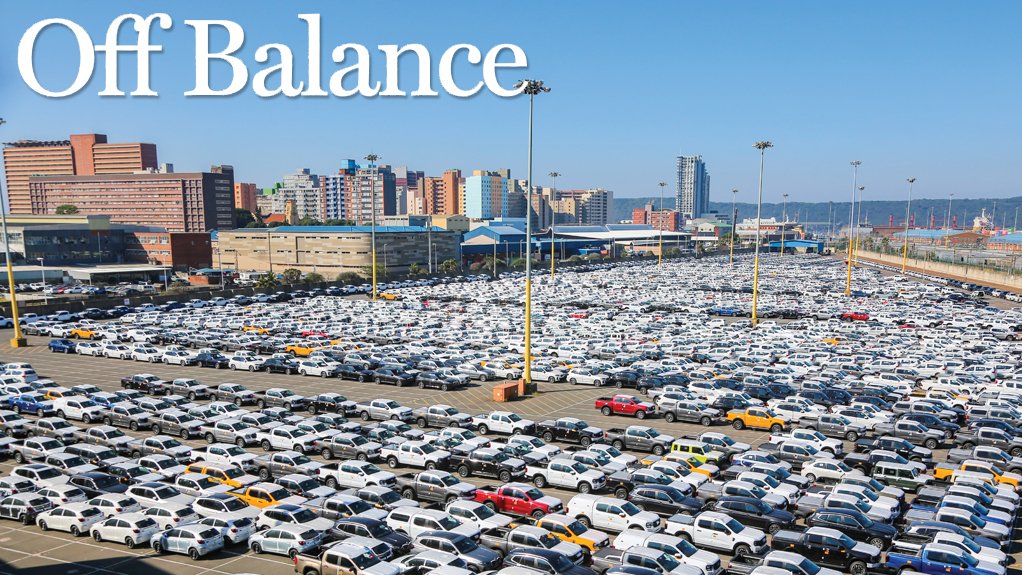


The 15.7% growth in new-vehicle sales in South Africa last year is not all that it seems, warns Toyota South Africa Motors (TSAM) president and CEO Andrew Kirby.
Kirby is also manufacturing VP at industry body naamsa | The Automotive Business Council. South Africa hosts seven light- vehicle assembly plants and a number of component manufacturers.
New-vehicle sales in the domestic market reached 597 000 units in 2025, compared with 516 000 units in 2024.
A net increase in sales of 15.7%, in a situation where prices remained the same, would have required around 3.5% economic growth in the South African economy. However, South Africa is stuck at 1.2% growth, says Kirby.
“So, where did this come from?”
The answer is that the country’s entry-level market expanded rapidly. Also, when considering all the new-car sales segments, it was the very bottom of each segment that saw the most growth.
Cheaper cars, in other words.
Cheaper imports, actually, explains Kirby.
“If you look at the true value of the market, we did not grow by 15.7% at all. And this shows you just how constrained consumer spending really is.”
While 2025’s sharp move upwards is a pleasing result, with the market finally at pre-Covid levels, it was not nearly as high as the 2006 level of 703 000 units, adds Kirby.
“It is, in fact, a fairly pedestrian market. We really lack scale in South Africa. If you consider South Africa’s population size, our mobility needs and the quality of public transport, the market should be a lot bigger than this.”
At least it is moving in the right direction, he notes.
“But we now have to think carefully how we can move this to the next level, on a scale that can support our industry.”
Here ‘industry’ refers to the local automotive assembly industry. And, when looking at production numbers, it is clear the industry did not share in the spoils of last year’s growing new-car market.
Sharp Decline in Made-in-SA Sales
Within the 2025 local sales numbers, vehicles assembled in South Africa as completely knockdown (CKD) units made up 33% of sales.
In other words, only 33% of the vehicles sold locally last year were made here, says Kirby.
This is down from 56% in 2006.
“We expect this to be a lot more severe in 2026,” says Kirby.
CKD refers to local assembly with significant locally made parts content – currently at around 40%, on average.
South Africa’s domestic market currently faces the same challenge as many markets abroad – a flood of new entrants, especially from China. (As a sidenote: the Chinese government in February banned car makers from pricing vehicles below cost, intensifying its crackdown on a persistent price war in that market.)
Kirby says he has nothing against imports.
“Imports are very important in creating a vibrant market. We cannot expect to produce everything in South Africa. That would be unrealistic for our size market.
“Even as manufacturers, we import a range of vehicles, but the question is: Do we have the right balance?
“Thirty-three per cent is not really enough.”
The idea of sustaining the local automotive assembly industry through exports is also not the solution, despite domestic car makers exporting a record-breaking 411 000 units last year, up from 388 000 units in 2024.
Last year’s export numbers boosted total local production to 609 000 units, up from 594 000 units in 2024. This, however, is still short of 2019’s pre-Covid production tally of 627 000 units.
And, of the 609 000 units made locally last year, only 198 000 were sold in South Africa, says Kirby.
Also, while the 411 000 export units are reason for applause, he adds, the problem is that 81% of this number were shipped to a single market – the UK/EU.
In 2006, South Africa’s export portfolio was much more balanced, notes the Toyota boss, with Europe making up 21% of exports, Africa 19%, Australia 23% and Asia 29%.
Last year’s export numbers mean that South Africa’s assembly industry is “extremely vulnerable” to movements in the UK/EU market – most notably the move in the EU to limit internal combustion engine (ICE) sales in 2035 to only 10% of the market, with the UK to ban ICE sales in 2030 and hybrid sales in 2035 in favour of zero- emission vehicles.
South Africa’s car makers produce only a handful of hybrid (HEV) and plug-in hybrid (PHEV) models, with many of these vehicles destined for the export market.
No manufacturer assembles battery electric vehicles (BEVs).
“We cannot say ‘it’s fine, we won’t sell in South Africa, we’ll just export everything to the EU’,” says Kirby. “That 411 000 is going to change. To rely on this environment, with these changes, means it is going to be very difficult to sustain export volumes going forward.
“We’ll most likely in the next five years see a significant decline in exports to the EU and UK.”
The rest of Africa is also not yet really a viable alternative export market, as most of the continent still relies largely on grey used imports, despite efforts to build an African automotive ecosystem.
NEV Production Not Yet Competitive
In order to retain the EU/UK export market, it is clear that South Africa must up its new- energy vehicle production (NEV) numbers.
NEVs is a combined term for BEVs, PHEVs and hybrids.
Kirby believes, however, that South Africa cannot yet produce NEVs competitively.
“We don’t really sell a lot of them locally, so we haven’t localised the components. For us to be competitive as manufacturers, we need scale, so that we can localise these components.”
Kirby would like to see the South African government intervene to support the increased sale of NEVs, similar to what has happened in markets abroad, through the use of penalties and incentives.
“There is no natural progression [to NEVs], simply because the value proposition is not there yet.”
In other words, NEVs, especially BEVs, are too expensive.
Opting out of the energy transition is also not an option, warns Kirby.
“We cannot be left behind as a country and say we cannot afford the energy transition. Then we are effectively saying that we are giving up on exports, and then we become a rear-guard manufacturer of old, conventional technology. That is not the way we have been working in South Africa over the past 100 years.”
South Africa has been assembling vehicles for more than a century.
Kirby adds that Toyota – the world’s number one vehicle manufacturer – expects a dramatic acceleration in PHEV and BEV sales worldwide. Globally, 44% of Toyota’s current sales are hybrids.
In South Africa, NEV sales in 2025 numbered only 2.8% of the local market, and only 4% of these were made in South Africa, with the majority coming from China and the EU.
The number of NEV cars being introduced locally are, however, growing at a heady pace, up from around ten models present in the market in 2019, to just short of 70 in 2025.
“There is a strong movement to introducing NEVs, but we are not seeing the movement to produce these vehicles locally,” reiterates Kirby. “We need to adapt to this quickly.”
Lack of Coherent Policy
But why does local production, or manufacturing value-addition (MVA), matter?
(MVA measures the net economic contribution of the manufacturing sector to a country’s economy.)
“When we look at South Africa and compare ourselves to our peer countries over the last 24 years, we were doing really well at the start,” says Kirby. “We had an average MVA per person of $720.
“This has dropped all the way down to $640. We slipped behind because we have not had a coherent, well-managed industrial policy.”
South Africa’s peers, such as Türkiye – “with its intentional industrial policy” – have grown from $868 to more than $2 500 per capita.
“We are deindustrialising prematurely,” says Kirby. “As a country, we are now starting to see the early signs of this happening in the automotive sector, and the automotive sector is viewed as a very important catalyst for industrialisation.”
The Dam That Toyota Built
It is not only a lack of appropriate industrial policy and global market shifts that are affecting the local auto industry.
Vehicle and parts assembly in South Africa face many structural challenges, says Kirby.
Electricity prices have increased by up to 400% over the last 16 years – this on top of load-shedding being prevalent in many of those years.
Labour costs are growing at a rate higher than inflation.
“This used to be a significant competitive advantage for South Africa, but this has now dissipated,” notes Kirby.
Water security has also become a major issue.
“In our plant in Durban, we had to build a dam just to ensure that we have water security and production continuity.
“This is a serious concern to us.”
Toyota produces the Hilux, Corolla Cross, Fortuner and a number of other models at its domestic plant.
Logistics also remain a challenge, especially rail, notes Kirby.
“We transport a lot of high-value goods, so this is a key competitive element [for] us.
“We have also seen an erosion of our supply base, such as steel and tyre plants closing, and we need to find a way to bring them back.”
So, What is the Plan?
Kirby believes there are solutions to the current conundrum.
The first is to strengthen the competitiveness of CKD manufacturing in South Africa.
“Our automotive-specific policy has, over decades, provided us with certainty; it has been well thought through, but our world has changed and we need to adapt.”
Kirby does not want policy changes that would see locally built vehicle sales dominate the local market, but believes that they must come back to a level of between 40% and 50% of local sales.
“We need to have a dynamic import portion of the market, but we need to have the right balance, so we can generate jobs, skills and forex.
“We cannot just be an import replacement market. Quite frankly, the country cannot afford it . . . the forex impact is enormous.
“How do we then take a thoughtful approach to support local manufacturing in a fiscally neutral approach?
“We are not suggesting a big, blunt instrument to correct his,” explains Kirby.
“We are saying you can make some small tweaks on a variety of different elements to improve competitiveness and create a solid manufacturing base.”
Tweaking ad valorem tax – luxury tax on vehicles – has, for example, been put forward as one way to help shift that balance in favour of locally assembled vehicles.
“We also need to transition to NEVs quickly,” adds Kirby.
“We need specific government support and incentives to support investment in low-scale NEV production – because we have low scale at the moment.
“And we need to support the customer transition, as the value proposition is not yet there.”
Kirby says it is equally important to look after South Africa’s export markets.
“We are very privileged that over the past 100 years we have built a deep level of manufacturing in South Africa. We export to first-world markets with high expectations and we meet them all.
“But we can see what is coming and we are going to be at risk if we rely on one market. We need some interventions; we need some decisive leadership.
“We deal with a three- to four-year timeframe to make investments. If we conclude [all of this] in 2026, we’ll only be impacting 2029, 2030 investments, and the world will be very different by then.
“The speed and importance of responding now is absolutely crucial.”
These interventions also need to be at an inter-governmental level.
In order to retain exports to the EU and the UK as these markets move to NEVs from 2030 onwards, South Africa must meet the rules-of-origin requirements set out in the various preferential trade agreements with these markets, explains Kirby.
“When you import a full battery pack from outside South Africa, we cannot achieve that hurdle rate.
“This is a clear policy negotiation issue between the South Africa government and the UK and EU governments.”
Kirby indicates that these talks have already started.
All in all, he describes the local auto assembly industry as facing a “very uncertain time”.
Let’s Grow . . .
It is, however, important that South Africa’s auto sector not only defends and protects its market, but also moves into offensive mode, says Kirby.
“I am fairly confident that the South African market should, and could, exceed 700 000 vehicle sales a year.
“I’m very confident South African production could, and should, exceed 720 000 units a year.
“If we make the right, small changes in the right way, creating the right investor confidence, we have the potential to increase the [number of locally made] vehicles sold in the local market by 20% and to increase exports by 20%.
“That could create R21-billion in MVA to the South African economy, and we would create 14 500 direct jobs.”
Kirby says he is encouraged by the current heightened level of engagement between the auto sector and government, with the latter varying from Parliament to the office of the President and the Department of Trade, Industry and Competition.
“We are having very open, frank discussions – but we do need to act now.”
Kirby says the engagements with government have already taken almost two years.
He adds that “the onus is on industry to present a very well thought-through pragmatic solution that is plausible and easy for government to implement. We cannot go there with open hands and say give us more. We are working to find a way to balance the books for government.”
• Kirby delivered the keynote address at TSAM’s yearly State of the Motor Industry event held in Gauteng in February.
Article Enquiry
Email Article
Save Article
Feedback
To advertise email advertising@creamermedia.co.za or click here
Research Reports

Projects

Latest Multimedia



Showroom

ALBIS FLANGES — founded in 1965 — is a petro-chemical approved manufacturer of flanges and fittings in most grades of steel, listed with Sasol,...
VISIT SHOWROOM
The Steel Tube Export Association of South Africa was established to develop sustainable, internationally competitive carbon steel tube and pipe...
VISIT SHOWROOM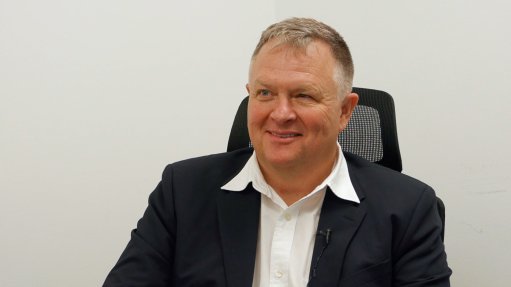

Press Office
Announcements
What's On
Subscribe to improve your user experience...
Option 1 (equivalent of R125 a month):
Receive a weekly copy of Creamer Media's Engineering News & Mining Weekly magazine
(print copy for those in South Africa and e-magazine for those outside of South Africa)
Receive daily email newsletters
Access to full search results
Access archive of magazine back copies
Access to Projects in Progress
Access to ONE Research Report of your choice in PDF format
Option 2 (equivalent of R375 a month):
All benefits from Option 1
PLUS
Access to Creamer Media's Research Channel Africa for ALL Research Reports, in PDF format, on various industrial and mining sectors
including Electricity; Water; Energy Transition; Hydrogen; Roads, Rail and Ports; Coal; Gold; Platinum; Battery Metals; etc.
Already a subscriber?
Forgotten your password?
Receive weekly copy of Creamer Media's Engineering News & Mining Weekly magazine (print copy for those in South Africa and e-magazine for those outside of South Africa)
➕
Recieve daily email newsletters
➕
Access to full search results
➕
Access archive of magazine back copies
➕
Access to Projects in Progress
➕
Access to ONE Research Report of your choice in PDF format
RESEARCH CHANNEL AFRICA
R4500 (equivalent of R375 a month)
SUBSCRIBEAll benefits from Option 1
➕
Access to Creamer Media's Research Channel Africa for ALL Research Reports on various industrial and mining sectors, in PDF format, including on:
Electricity
➕
Water
➕
Energy Transition
➕
Hydrogen
➕
Roads, Rail and Ports
➕
Coal
➕
Gold
➕
Platinum
➕
Battery Metals
➕
etc.
Receive all benefits from Option 1 or Option 2 delivered to numerous people at your company
➕
Multiple User names and Passwords for simultaneous log-ins
➕
Intranet integration access to all in your organisation