



SA restricts citrus exports to Europe


In the instalment of this column published in the September 13 edition, titled ‘EU’s citrus black spot move a cause for concern for SA’, I wrote that the European Union (EU) had imposed a five-interception cutoff point for citrus black spot (CBS) in citrus consignments originating from South Africa during the 2013 season. At the time of writing, on August 28, the fifth CBS interception had occurred.
At the time of writing this column, on September 27, media reports had started appearing, indicating that the South African citrus industry had ended its exporting season prematurely, specifically for citrus from CBS-infested areas. This followed the EU’s interception of ten consignments of CBS-infected citrus.
According to the Citrus Growers Association of Southern Africa, South Africa exported more than 570 000 t of citrus to the EU during the 2013 season, which started in mid-April. For the corresponding period last year, it exported more than the 555 000 t. The industry was expecting another month of exports before the end of the season. Irrespective of the increased volumes, this action, essentially a voluntary export restraint, is still expected to have financial consequences for the industry. On the positive side, this action is intended to signal to the EU the South African industry’s seriousness in finding a way to redress CBS. It is expected that the South African authorities and the EU will constructively engage in discussion in an effort to find a solution before the next season starts – in seven months’ time.
Although South Africa may well find alternative markets for its citrus exports, the EU market is too significant to ignore. It is simply not financially feasible to do so in the short term. An export diversity strategy would be a favoured strategy. Another consideration would be to establish and develop a domestic market for citrus products. A recent United Nations Conference on Trade and Development report identified as one of the key drivers of a country’s growth is the development of the domestic market for its produce or products.
Coated Paper Provisional Antidumping Duty
On September 27, the South African Revenue Service (Sars) informed of the imposition of provisional antidumping duties (provisional payment) on paper and paperboard imported from or originating in the Republic of Korea (South Korea) and the People’s Republic of China (China). The provisional payment is imposed up to and including March 14, 2014. The notice refers to tariff ‘subheading 48.10’, but it should have been ‘tariff heading’. The notice initiating the investigation was published on January 26 in respect of tariff subheading 4810.19.90.
The provisional payment for South Korea is 17.25% and the notice reads: “Paper and paper- board, coated on one or both sides with kaolin (China clay) or other inorganics substances, with or without a binder, and with no other coating, whether or not surface- coloured, surface decorated or printed, in rolls or rectangular (including square) sheets or any size, of a kind used for writing, printing or other graphic purposes, not containing fibres obtained by a mechanical or chemi-mechanical process or of which not more than 10% by mass of the total fibre content consists of such fibres, with a mass of 70g/m2 or more but not exceeding 400g/m2 (including that manufactured by Moorim Paper, Moorim SP and Moorim P&P but excluding that manufactured by Hansol Paper and Artone Paper).”
The provisional payment for China is 14.145% and the notice reads: “Paper and paperboard, coated on one or both sides with kaolin (China clay) or other inorganics substances, with or without a binder, and with no other coating, whether or not surface-coloured, surface decorated or printed, in rolls or rectangular (including square) sheets or any size, of a kind used for writing, printing or other graphic purposes, not containing fibres obtained by a mechanical or chemi-mechanical process or of which not more than 10% by mass of the total fibre content consist of such fibres, with a mass of 70g/m2 or more but not exceeding 400g/m2.”
Article Enquiry
Email Article
Save Article
Feedback
To advertise email advertising@creamermedia.co.za or click here
Research Reports

Projects


Latest Multimedia


Latest News
Showroom
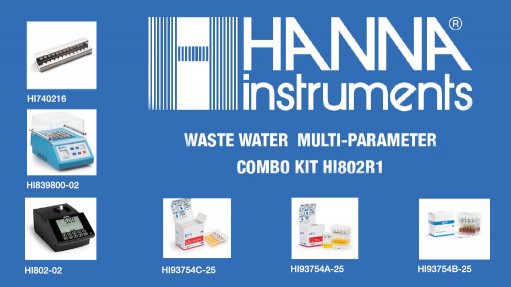
We supply customers with practical affordable solutions for their testing needs. Our products include benchtop, portable, in-line process control...
VISIT SHOWROOM
We at Hawk High Pressure Pumps specialise in industrial pumps and pumping systems. Our high pressure washing equipment is locally manufactured and...
VISIT SHOWROOM



Announcements
What's On
Subscribe to improve your user experience...
Option 1 (equivalent of R125 a month):
Receive a weekly copy of Creamer Media's Engineering News & Mining Weekly magazine
(print copy for those in South Africa and e-magazine for those outside of South Africa)
Receive daily email newsletters
Access to full search results
Access archive of magazine back copies
Access to Projects in Progress
Access to ONE Research Report of your choice in PDF format
Option 2 (equivalent of R375 a month):
All benefits from Option 1
PLUS
Access to Creamer Media's Research Channel Africa for ALL Research Reports, in PDF format, on various industrial and mining sectors
including Electricity; Water; Energy Transition; Hydrogen; Roads, Rail and Ports; Coal; Gold; Platinum; Battery Metals; etc.
Already a subscriber?
Forgotten your password?
Receive weekly copy of Creamer Media's Engineering News & Mining Weekly magazine (print copy for those in South Africa and e-magazine for those outside of South Africa)
➕
Recieve daily email newsletters
➕
Access to full search results
➕
Access archive of magazine back copies
➕
Access to Projects in Progress
➕
Access to ONE Research Report of your choice in PDF format
RESEARCH CHANNEL AFRICA
R4500 (equivalent of R375 a month)
SUBSCRIBEAll benefits from Option 1
➕
Access to Creamer Media's Research Channel Africa for ALL Research Reports on various industrial and mining sectors, in PDF format, including on:
Electricity
➕
Water
➕
Energy Transition
➕
Hydrogen
➕
Roads, Rail and Ports
➕
Coal
➕
Gold
➕
Platinum
➕
Battery Metals
➕
etc.
Receive all benefits from Option 1 or Option 2 delivered to numerous people at your company
➕
Multiple User names and Passwords for simultaneous log-ins
➕
Intranet integration access to all in your organisation
