



Business mostly positive on medium-term budget

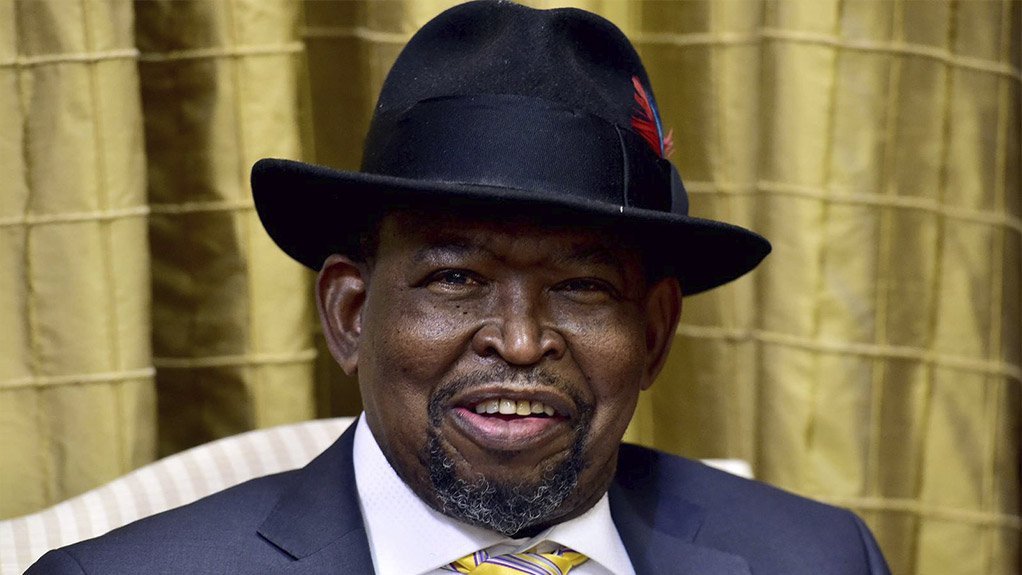



The Medium Term Budget Policy Statement (MTBPS), which was delivered by Finance Minister Enoch Godongwana on November 11, has been welcomed by the business sector, but concerns remain about the high public sector wage bill and how government will go about dealing with high debt servicing costs.
Industry organisations the Agricultural Business Chamber (Agbiz) and Agri SA say the Minister has shown continuity with the prior Finance Minister in that growth and reform is a key theme of the budget policy statement.
Asset manager Stanlib agrees on this, saying Godongwana has reassured markets of his determination to restore fiscal discipline and continue the policy framework of his predecessor.
Stanlib also lauded, along with Business Leadership South Africa (BLSA), the MTBPS showing a R120-million improvement in tax revenue collection, compared with the projection provided in the 2021 Budget, albeit with help from booming commodity prices.
Business Unity South Africa (Busa), meanwhile, echoes the view that Godongwana has been clear on the critical issue for the country being to create an environment for investment and growth and that the country can no longer afford to commit to any unaffordable expenditure.
Financial planning company PPS Investments, for one, welcomes the Minister clamping down on State-owned enterprise (SOE) bailouts and the National Treasury’s commitment to only support strategic SOEs.
Agbiz and Agri SA hope that Treasury will intervene with the Land Bank, which faces liquidity challenges, as well as that Transnet Freight Rail will make good on its objective to allow third-party access to the freight rail network by the end of 2022.
Busa, meanwhile, is holding thumbs that expediting mining exploration licences and other immediately actionable initiatives will also be prioritised, alongside the MTBPS’s listing of port cooperation, spectrum release, renewable energy, digital migration and water as critical areas of implementation.
The industry organisation, alongside the South African Insurance Association, welcomes the additional R11-billion allocation announced to Sasria, to enable it to meet insurance claims as a result of the vandalism that occurred during public unrest in two provinces in July.
Busa also welcomes the R74-billion allocation to be made to public sector employment programmes in the 2022 Budget, but warns that this does not replace the need for tough decisions to remove red tape and inappropriate regulations that impede the private sector from growing businesses.
Financial services giant FNB says the fact that there were no meaningful tax changes is positive.
“Continued tight expense management does tend to be equity negative since lower government spending tends to detract from growth. However, there was not anything new in terms of spending cuts and limitations and the Minister’s emphasis on growth-positive structural reforms may be positively perceived by equity investors,” the bank notes.
THE CONCERNS
The MTBPS sparked alarm in that it speaks to the possibility of taking funds from the Infrastructure Fund to cover shortfalls in the Budget, which are largely as a result of public sector wage agreements, which are currently still being negotiated.
Busa notes that the Budget ceiling has been breached by R20.5-billion as a result of the public sector wage bill and that this comes at a time when growth-enhancing infrastructure spend is critical for economic growth and job creation.
The Banking Association of South Africa (Basa) says government will have no choice but to truly accelerate economic growth, if it is ever to lower the budget deficit and sustainable pay off its debt service costs – which amount to R1-trillion over 2022/23 to 2024/25.
The association says the better-than-expected fiscal position, compared with projections made in the 2021 Budget, is mainly a result of a tax windfall from the spike in commodity prices, which is not sustainable over the long term.
“The improvement in the country’s finances is not because of vital economic reforms having been implemented,” Basa says, adding that much of the necessary red tape reductions and other policy initiatives can be done at little cost to Treasury.
Accountancy firm Mazars says pressures on the government wage bill ceiling could undermine fiscal consolidation measures, adding that the poor financial conditions of several SOEs remains a large contingent risk. The firm also highlights the fact that the government debt stabilisation earmarked at 78.1% of GDP by 2025/26 is still “uncomfortably high”.
Basa also points out that ever-increasing social support without inclusive growth becomes unaffordable. The association hopes that between now and the 2022 Budget, Cabinet is able to develop evidence-based social security policies that are sustainable over the long term.
BLSA highlights that the system for approving private-public partnerships needs to be streamlined, since it is currently inefficient.
The industry organisation is particularly disappointed with the MTBPS’s lack of progress on reform for the financial sector and exchange control, especially as South Africa can be positioned as a financial hub for the continent. BLSA has called for these reforms to be finalised in the 2022 Budget.
The industry organisation also hopes that government will realise its infrastructure commitments, which includes spend of R500-billion over the next three years.
Weighing in on the gross domestic product (GDP) growth rate, North West University Business School economist Professor Raymond Parsons comments that, although the MTBPS expects a robust growth rate of 5.1% this year, thanks to a unique combination of factors, its average GDP growth rate forecast over the next three years is only 1.7%.
“This will continue to present South Africa with challenges at several levels, especially in expediting the implementation of necessary structural reforms to underpin and enhance future job-rich growth.”
Nedbank says downside risks to forecast 5.1% GDP growth this year, and the 1.8% growth rate forecast for the new year, include new Covid-19 outbreaks, higher inflation (particularly for food and energy), changes to monetary policy and a possible fall in commodity prices.
And, of course, electricity supply constraints will remain a drag on the country’s economic growth aspirations, says professional services firm PricewaterhouseCoopers.
However, the firm is seeing many industries reporting better-than-expected company revenues.
Nonprofit business organisation Sakeliga says the Budget is further confirmation of the need for businesses and communities to State-proof themselves as much as possible.
Sakeliga is gravely concerned about government committing to incur at least R350-billion worth of new debt every year into the foreseeable future, which it says is a moral failure on government’s part and a structural risk to social stability.
Against the backdrop of Covid-19, the persistent erratic electricity supply, increasing cost of living and local steel prices and the increase in fuel prices poses challenges to economic recovery. Therefore, more work needs to be done as it would take time before the economy can be turned around, the Steel and Engineering Industries Federation of Southern Africa says.
The federation believes infrastructure investment is at the heart of economic growth and expects government to prioritise it accordingly.
BLSA CEO Busi Mavuso concludes that, overall, the Minister has done a good job in really difficult circumstances. She believes that if, through Operation Vulindlela, efforts are renewed to accelerate other key reforms, it will restore much confidence among businesses and investors, locally and internationally, that South Africa is on the right economic trajectory, one that grows at a rate fast enough to create jobs and increase per capita income levels.
“Delivery remains critical,” she stresses.
Article Enquiry
Email Article
Save Article
Feedback
To advertise email advertising@creamermedia.co.za or click here
Research Reports

Projects

Latest Multimedia
Latest News
Showroom
ALBIS FLANGES — founded in 1965 — is a petro-chemical approved manufacturer of flanges and fittings in most grades of steel, listed with Sasol,...
VISIT SHOWROOM
Sulzer South Africa, established in 1922, partners with critical industries like power, oil & gas, water, mining, and chemicals to boost...
VISIT SHOWROOM


Press Office
Announcements
What's On
Subscribe to improve your user experience...
Option 1 (equivalent of R125 a month):
Receive a weekly copy of Creamer Media's Engineering News & Mining Weekly magazine
(print copy for those in South Africa and e-magazine for those outside of South Africa)
Receive daily email newsletters
Access to full search results
Access archive of magazine back copies
Access to Projects in Progress
Access to ONE Research Report of your choice in PDF format
Option 2 (equivalent of R375 a month):
All benefits from Option 1
PLUS
Access to Creamer Media's Research Channel Africa for ALL Research Reports, in PDF format, on various industrial and mining sectors
including Electricity; Water; Energy Transition; Hydrogen; Roads, Rail and Ports; Coal; Gold; Platinum; Battery Metals; etc.
Already a subscriber?
Forgotten your password?
Receive weekly copy of Creamer Media's Engineering News & Mining Weekly magazine (print copy for those in South Africa and e-magazine for those outside of South Africa)
➕
Recieve daily email newsletters
➕
Access to full search results
➕
Access archive of magazine back copies
➕
Access to Projects in Progress
➕
Access to ONE Research Report of your choice in PDF format
RESEARCH CHANNEL AFRICA
R4500 (equivalent of R375 a month)
SUBSCRIBEAll benefits from Option 1
➕
Access to Creamer Media's Research Channel Africa for ALL Research Reports on various industrial and mining sectors, in PDF format, including on:
Electricity
➕
Water
➕
Energy Transition
➕
Hydrogen
➕
Roads, Rail and Ports
➕
Coal
➕
Gold
➕
Platinum
➕
Battery Metals
➕
etc.
Receive all benefits from Option 1 or Option 2 delivered to numerous people at your company
➕
Multiple User names and Passwords for simultaneous log-ins
➕
Intranet integration access to all in your organisation
