BMI lower 2026 steel price forecast, owing to weaker demand


Market research and analysis company BMI has lowered its 2026 forecast for the global steel price slightly to $620/t, down from $625/t in its previous forecast, owing to weaker expected steel demand outside Mainland China following the deterioration in the global macroeconomic backdrop since March.
As a result of the US-Iran conflict, BMI's Macro team has lowered its 2026 global growth forecast to 2.4%, down from 2.8% before the conflict began.
China's crude steel production is forecast to fall by 4% to 922-million tonnes for this year as Chinese authorities rein in excess steel capacity. This follows an estimated 4.4% decline in 2025 to 960-million tonnes, which was the first time China's steel production has fallen below one-billion tonnes since 2019.
China’s official manufacturing PMI index held at or above the expansion threshold from March to May, but the new orders subindex fell back into contraction in May, indicating that activity has held up better than demand.
This combination is consistent with ongoing pressure on industrial margins rather than a clear improvement in end-use demand, BMI says.
BMI forecasts a 1% year-on-year decrease in global steel production this year owing to weaker output from China, as well as from Iran due to the US-Iran conflict.
However, steel production in emerging markets such as India, which is the world's second-largest producer of crude steel, will show robust growth.
Downside risks are still present, as the deteriorated global industrial and economic outlook will weigh on steel production, as will the imposed 50% tariffs on US steel imports.
While a deal has now been reached between the US and Iran, the conflict in the year to date has worsened the macroeconomic outlook across several steel-consuming markets, even if protectionism and policy support continue to support pricing in parts of Europe and North America, the firm notes.
BMI now expects global steel production to grow at a 1% compound annual growth rate (CAGR) over 2026 to 2035, with global steel production, excluding China’s output, forecast to grow by a 2.7% CAGR.
It also sees production growth tapering off towards the end of the 2035 forecast period, as the steel intensity of GDP in large markets decreases.
Global steel consumption is expected to rise by 0.4% year-on-year, with strong demand growth in India offsetting some of the downward pressure caused by the US-Iran conflict elsewhere.
Simultaneously, global steel consumption remains weak, with the manufacturing sector continuing to drag on growth in major markets.
While the steel intensity of GDP in large markets may decrease, decarbonisation, elevated infrastructure investment in developed markets such as the US and stronger growth in India, could offset the peak of demand in China and its expected stagnation and decline after 2026, BMI says.
Additionally, the ongoing climate agenda to decarbonise steel will create opportunities for the steel sector as end markets shift towards greener steel.
Higher rates of recycling and the adoption of new technologies for steelmaking are anticipated in response to electric vehicle adoption and urbanisation, it notes.
Meanwhile, over the longer term, BMI expects global steel prices to trend lower, as China’s construction cycle matures and its role as the marginal source of demand diminishes, with stronger steel use in India and rising global defence spending only partially offsetting this decline.
In its latest ‘Global Steel Overview’ report, BMI forecasts that the average steel price will drop by 7.3% to $575/t in 2027, with another drop of 4.3% to $550/t forecast for 2028.
However, steel production is forecast to increase by 0.9% to 1.84-billion tonnes in 2027 and by 1.6% to 1.87-billion tonnes in 2028.
Further, BMI forecasts that steel consumption will rise by 0.4% to 1.82-billion tonnes in 2027, and by 0.9% to 1.84-billion tonnes in 2028.
Article Enquiry
Email Article
Save Article
Feedback
To advertise email advertising@creamermedia.co.za or click here
Research Reports

Projects


Latest Multimedia

Latest News
Showroom

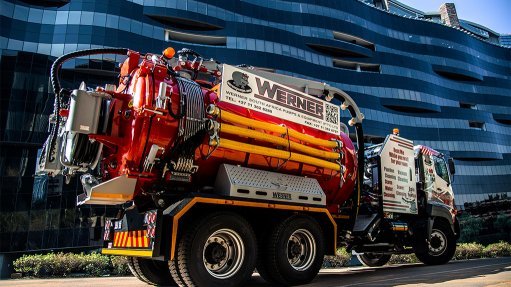
For over 30 years, Werner South Africa Pumps & Equipment (PTY) LTD has been designing, manufacturing, supplying and maintaining specialist...
VISIT SHOWROOM


Announcements
What's On
Subscribe to improve your user experience...
Option 1 (equivalent of R125 a month):
Receive a weekly copy of Creamer Media's Engineering News & Mining Weekly magazine
(print copy for those in South Africa and e-magazine for those outside of South Africa)
Receive daily email newsletters
Access to full search results
Access archive of magazine back copies
Access to Projects in Progress
Access to ONE Research Report of your choice in PDF format
Option 2 (equivalent of R375 a month):
All benefits from Option 1
PLUS
Access to Creamer Media's Research Channel Africa for ALL Research Reports, in PDF format, on various industrial and mining sectors
including Electricity; Water; Energy Transition; Hydrogen; Roads, Rail and Ports; Coal; Gold; Platinum; Battery Metals; etc.
Already a subscriber?
Forgotten your password?
Receive weekly copy of Creamer Media's Engineering News & Mining Weekly magazine (print copy for those in South Africa and e-magazine for those outside of South Africa)
➕
Recieve daily email newsletters
➕
Access to full search results
➕
Access archive of magazine back copies
➕
Access to Projects in Progress
➕
Access to ONE Research Report of your choice in PDF format
RESEARCH CHANNEL AFRICA
R4500 (equivalent of R375 a month)
SUBSCRIBEAll benefits from Option 1
➕
Access to Creamer Media's Research Channel Africa for ALL Research Reports on various industrial and mining sectors, in PDF format, including on:
Electricity
➕
Water
➕
Energy Transition
➕
Hydrogen
➕
Roads, Rail and Ports
➕
Coal
➕
Gold
➕
Platinum
➕
Battery Metals
➕
etc.
Receive all benefits from Option 1 or Option 2 delivered to numerous people at your company
➕
Multiple User names and Passwords for simultaneous log-ins
➕
Intranet integration access to all in your organisation