



Beyond funding: What’s really limiting South Africa’s entrepreneurs?



This article has been supplied.
By Nhlanhla Zama, Head of Empowerment at uMngeni-uThukela Water.
Nedbank Pitch & Polish, one of South Africa’s most consistent engines of entrepreneurial growth, has opened entries for its 16th season alongside long-standing headline partner Nedbank.
Entrepreneurs are widely recognised as the engine of South Africa’s economy, with SMMEs contributing significantly to employment and local economic activity. Yet despite this, too many businesses remain informal, stuck in survival mode, or unable to scale beyond subsistence.
Funding is often cited as the primary obstacle, limited capital, constrained cash flow and a shortage of investors are commonly seen as the barriers holding entrepreneurs back. However, from a funder’s perspective, the issue is more nuanced.
South Africa’s economic context only compounds these pressures. Entrepreneurs must navigate infrastructure bottlenecks, procurement complexity and compliance demands that expect a level of commercial maturity from day one.
Many entrepreneurs believe that funding will enable them to build a better business. In reality, funders are far more likely to back businesses that have already demonstrated discipline, structure, and the ability to execute.
Entrepreneurs often believe that funding will enable them to build a better business. In reality, funders are far more likely to back businesses that have already demonstrated discipline, structure, and the ability to execute. From a funding perspective, consistent performance, a clear understanding of financials, and the ability to deliver on plans are critical – without these fundamentals, even strong ideas become difficult to support.
The real constraint: capability, not capital
While capital remains a constraint, the deeper challenge lies in execution. Studies suggest that over 96% of small businesses fail within their first 10 years (Michael E. Gerber – The E-Myth Revisited), with limited management capability, not funding – identified as a primary reason. Many founders are technically skilled but lack the leadership, financial understanding and strategic clarity required to scale a business.
This gap shows up in practical ways, including weak pricing models, poor cash flow management, limited forecasting, and an underdeveloped sales pipeline. Without these fundamentals in place, growth stalls and access to funding remains out of reach.
As Allon Raiz explains, this is where many otherwise promising businesses begin to falter: “Founders often struggle with leadership and management gaps, and this is what limits strategic execution. Even where funding opportunities exist, a lack of financial literacy, planning and operational systems can restrict access to capital.”
Market access further compounds the challenge. Many SMMEs remain confined to saturated local ecosystems, competing on thin margins. Breaking into larger supply chains requires governance, consistency and the ability to meet procurement standards that early-stage businesses are often not yet structured for.
Skills shortages, particularly in areas such as digital adoption and operational planning, add another layer of constraint. Without systems and reliable data, decision-making remains reactive, limiting both resilience and long-term growth.
Over time, these factors create a structural trap. Many businesses rely heavily on personal savings and informal funding, while being unable to meet the collateral, compliance and trading-history requirements of formal lenders.
From funding to execution
If funding is not the root constraint, then increasing access to capital alone will not solve the problem. What is required is structured business development that strengthens the underlying capability of entrepreneurs to build sustainable, scalable businesses.
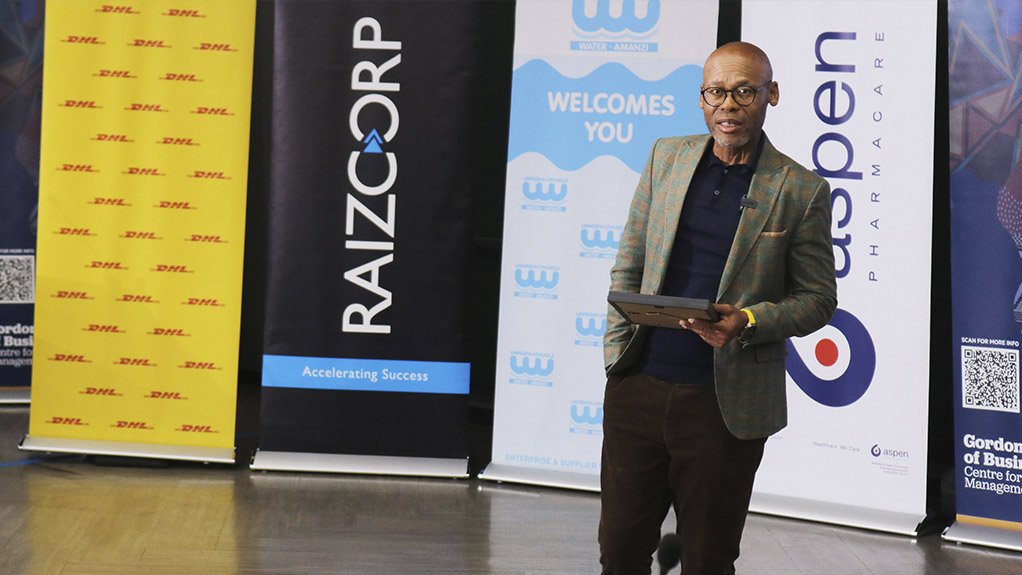
Now in its 16th season, Nedbank Pitch & Polish, backed by headline sponsor Raizcorp and Gold sponsor uMngeni-uThukela Water, is designed precisely around this need. Rather than rewarding pitch performance alone, the programme is built to help entrepreneurs develop better businesses.
“We know that many entrepreneurs have the drive and ideas to succeed, but often lack the structured support needed to translate that potential into sustainable growth. Strengthening how businesses operate, make decisions and respond to opportunity is critical to long-term success,” says Nhlanhla Zama, Head of Empowerment at uMngeni-uThukela Water.
“As a Gold sponsor of Nedbank Pitch & Polish, we are committed to supporting initiatives that focus on building this capability. By investing in the development of more resilient and prepared entrepreneurs, we are helping to unlock businesses that can grow sustainably, create jobs and contribute meaningfully to local economic development.”
While audiences engage with the high-stakes competition on screen, behind the scenes, contestants are taken through a rigorous, structured learning journey, designed around this very approach. The focus is not on producing more polished presenters, but more capable founders.
Participants are supported across multiple rounds with targeted interventions that address the realities of running and scaling a business. This includes refining product-market fit, strengthening pricing and financial models, building sales processes, and improving operational systems.
This learning is reinforced through one-on-one mentorship, where entrepreneurs are challenged to confront weaknesses, pressure-test assumptions and defend their commercial decisions in real time.
Crucially, progress, not perfection, is what determines success. Contestants are not eliminated for delivering an imperfect pitch, but for a lack of growth. They are assessed on how effectively they absorb feedback, adapt their thinking and strengthen their businesses under pressure. This reflects the reality of entrepreneurship itself: success is rarely about getting it right the first time, but about learning quickly and executing better each time.
Entrepreneurs still compete for a prize package worth R1 million, including R650 000 in cash and a R350 000 bursary for a two-year incubation programme. However, the more significant value lies in the capability developed through the process, which improves access to funding, strengthens market readiness and supports long-term sustainability for every contestant, no matter where they place in the final ranking.
Building businesses that can scale
Entrepreneurship remains central to South Africa’s growth ambitions. But ambition without capability does not translate into scale.
Sustainable businesses are built on strong leadership, financial discipline, operational systems and credible access to markets. If the goal is meaningful economic inclusion and job creation, then strengthening execution capacity, not just increasing access to funding, must sit at the centre of South Africa’s entrepreneurship agenda.
Article Enquiry
Email Article
Save Article
Feedback
To advertise email advertising@creamermedia.co.za or click here
Research Reports

Projects


Latest Multimedia


Latest News

Showroom

The Steel Tube Export Association of South Africa was established to develop sustainable, internationally competitive carbon steel tube and pipe...
VISIT SHOWROOM
Rentech provides renewable energy products and services to the local and selected African markets. Supplying inverters, lithium and lead-acid...
VISIT SHOWROOM



Press Office
Announcements
What's On
Subscribe to improve your user experience...
Option 1 (equivalent of R125 a month):
Receive a weekly copy of Creamer Media's Engineering News & Mining Weekly magazine
(print copy for those in South Africa and e-magazine for those outside of South Africa)
Receive daily email newsletters
Access to full search results
Access archive of magazine back copies
Access to Projects in Progress
Access to ONE Research Report of your choice in PDF format
Option 2 (equivalent of R375 a month):
All benefits from Option 1
PLUS
Access to Creamer Media's Research Channel Africa for ALL Research Reports, in PDF format, on various industrial and mining sectors
including Electricity; Water; Energy Transition; Hydrogen; Roads, Rail and Ports; Coal; Gold; Platinum; Battery Metals; etc.
Already a subscriber?
Forgotten your password?
Receive weekly copy of Creamer Media's Engineering News & Mining Weekly magazine (print copy for those in South Africa and e-magazine for those outside of South Africa)
➕
Recieve daily email newsletters
➕
Access to full search results
➕
Access archive of magazine back copies
➕
Access to Projects in Progress
➕
Access to ONE Research Report of your choice in PDF format
RESEARCH CHANNEL AFRICA
R4500 (equivalent of R375 a month)
SUBSCRIBEAll benefits from Option 1
➕
Access to Creamer Media's Research Channel Africa for ALL Research Reports on various industrial and mining sectors, in PDF format, including on:
Electricity
➕
Water
➕
Energy Transition
➕
Hydrogen
➕
Roads, Rail and Ports
➕
Coal
➕
Gold
➕
Platinum
➕
Battery Metals
➕
etc.
Receive all benefits from Option 1 or Option 2 delivered to numerous people at your company
➕
Multiple User names and Passwords for simultaneous log-ins
➕
Intranet integration access to all in your organisation
