BESS solutions become financially viable

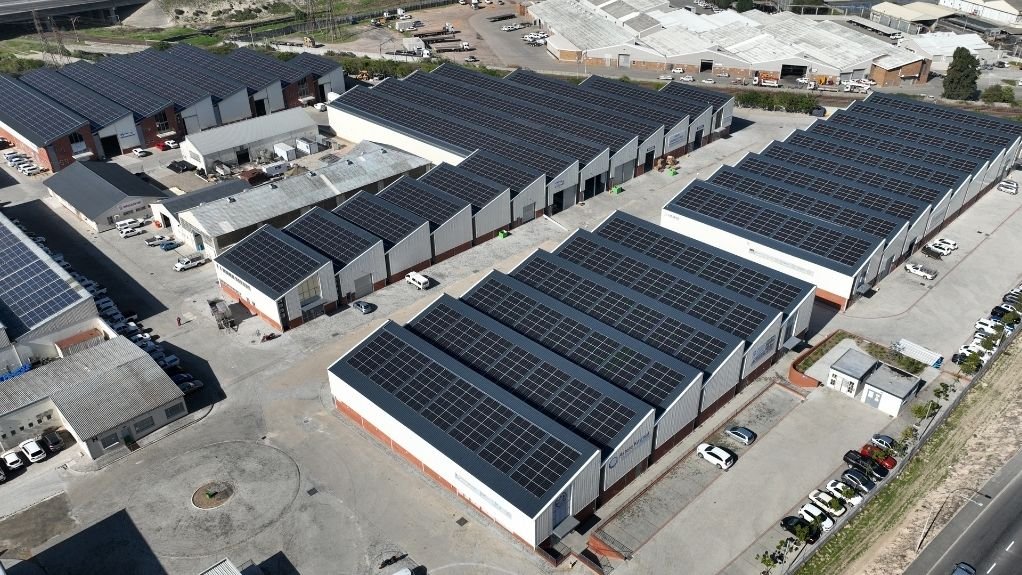
THE FUTURE IS BESS Solar-plus-storage is emerging as the default choice for mines, manufacturers and multi-site corporates seeking reliable and affordable power


The clear and accelerating pivot from solar-only to hybrid energy solutions across sub-Saharan Africa is owed to cost-effective battery energy storage systems (BESS) making hybrid financially viable, notes energy company RenEnergy.
As diesel prices soar, grids falter under increased strain and electricity tariffs escalate, the solution for much of the commercial and industrial sectors in sub-Saharan Africa is a shift to hybrid systems.
Solar-plus-storage is emerging as the default choice for mines, manufacturers and multi-site corporates seeking reliable and affordable power, RenEnergy MD Claude Peters comments.
He adds that, even as hybrid systems gain traction, three critical barriers are stalling projects before they reach financial close, namely grid constraints; regulatory inconsistencies; and wheeling, tariff and commercial structuring barriers.
Grid constraints are the first chokepoint, with developers citing limited capacity, unpredictable connection timelines and a lack of transparency from utilities. Additionally, “grid studies and approvals drag on for months, and sometimes years even, despite the engineering being sound”.
Regarding regulatory inconsistency and permitting complexity, Peters argues that policy shifts faster than implementation. “Licencing thresholds change, and various approvals processes are split between national and municipal bodies.”
Consequently, “projects do not fail compliance checks, they fail because the path to compliance is unclear or applied unevenly”.
He adds that while wheeling and commercial frameworks are improving in pockets, they remain patchy across the region. Challenges around tariff structures, bankability offtakers and the ability to move power across the grid, limit projects’ scalability.
Changes in Direction
Despite the barriers, Peters attributes the shift to solar-plus-storage to the high cost of grid-supplied electricity, especially given the comparatively lower costs of turnkey hybrid solutions.
He cites three critical tipping points that have proven to be the catalysts to install solar and adopt BESS solutions.
The first is when diesel costs are consistently above R7.50/kWh to R10/kWh, including operational costs. When diesel is used beyond emergency backup, businesses see the cost-saving opportunity offered by solar hybrids, which deliver a significantly lower cost per kilowatt hour.
Further, South Africa’s ageing and poorly maintained infrastructure hinders grid reliability and increases instability, outages and equipment failure. The downtime, in turn, affects companies’ production, operations and profitability. This demonstrates that solar-plus-storage is more of an operational necessity than a luxury.
Finally, with above-inflation tariff hikes becoming the norm, particularly in South Africa, clients are losing the ability to forecast and make allowances for grid-based energy costs. “Solar-plus-storage systems allow businesses to lock in a portion of their energy costs and reduce exposure to future increases,” Peters points out.
These considerations are why energy-intensive commercial and industrial clients are leading the transition; they require consistent, high quantities of power at the best possible prices.
Technical Considerations
Peters argues that local manufacturing and skills development will be integral to the growth of the renewable-energy sector.
“While local capability continues to improve, most projects still rely on imported components to meet quality, technical, due diligence and volume requirements. These are not just engineering requirements but are also imposed by financial institutions,” he states.
Continued investment in local manufacturing would help to strengthen project certainty, reduce supply chain risk and build a more resilient industry overall.
Another aspect to consider is battery health and performance management. “In high-temperature or weak-grid environments, extending a BESS’s life comes down to disciplined thermal management, intelligent cycling and conservative operating parameters,” Peters emphasises.
He adds that actively controlling temperature through proper system design, ventilation and, where required, liquid- or forced-air cooling, is critical as sustained heat is one of the fastest ways to degrade battery cells.
Equally important is limiting the depth of discharge and avoiding constant full charge or depletion cycles. When combined with high-quality components, battery management systems and precise system sizing aligned to actual load profiles, these strategies significantly improve life, performance and long-term return on investment.
Misalignment and Misconceptions
RenEnergy believes the single biggest non-technical reason that hybrid projects fail to reach financial close in 2026 is misalignment between stakeholders on commercial structure and risk allocation.
“Many otherwise viable projects stall because clients, landlords, funders and energy partners are not aligned on which entity runs the asset, how savings are shared and where long-term performance and contractual risk is carried,” Peters notes.
This is compounded by uncertainty around offtaker creditworthiness and long-term energy pricing assumptions. The projects that reach financial close are those where the structure is simple, transparent and aligned with each party’s incentives from the outset.
At Enlit Africa 2026, taking place from May 19 to 21, RenEnergy wants to address this topic and common misconceptions, including that hybrid systems are primarily designed for backup.
He concludes that, in South Africa’s energy landscape, the cost of waiting to implement solar and energy storage is no longer neutral, it is actively eroding business value.
Article Enquiry
Email Article
Save Article
Feedback
To advertise email advertising@creamermedia.co.za or click here
Research Reports

Projects


Latest Multimedia

Latest News

Showroom
CSIR International Convention Centre (CSIR ICC) - the leading conference and events venue in Pretoria/Tshwane.
VISIT SHOWROOM

Press Office
Announcements
What's On
Subscribe to improve your user experience...
Option 1 (equivalent of R125 a month):
Receive a weekly copy of Creamer Media's Engineering News & Mining Weekly magazine
(print copy for those in South Africa and e-magazine for those outside of South Africa)
Receive daily email newsletters
Access to full search results
Access archive of magazine back copies
Access to Projects in Progress
Access to ONE Research Report of your choice in PDF format
Option 2 (equivalent of R375 a month):
All benefits from Option 1
PLUS
Access to Creamer Media's Research Channel Africa for ALL Research Reports, in PDF format, on various industrial and mining sectors
including Electricity; Water; Energy Transition; Hydrogen; Roads, Rail and Ports; Coal; Gold; Platinum; Battery Metals; etc.
Already a subscriber?
Forgotten your password?
Receive weekly copy of Creamer Media's Engineering News & Mining Weekly magazine (print copy for those in South Africa and e-magazine for those outside of South Africa)
➕
Recieve daily email newsletters
➕
Access to full search results
➕
Access archive of magazine back copies
➕
Access to Projects in Progress
➕
Access to ONE Research Report of your choice in PDF format
RESEARCH CHANNEL AFRICA
R4500 (equivalent of R375 a month)
SUBSCRIBEAll benefits from Option 1
➕
Access to Creamer Media's Research Channel Africa for ALL Research Reports on various industrial and mining sectors, in PDF format, including on:
Electricity
➕
Water
➕
Energy Transition
➕
Hydrogen
➕
Roads, Rail and Ports
➕
Coal
➕
Gold
➕
Platinum
➕
Battery Metals
➕
etc.
Receive all benefits from Option 1 or Option 2 delivered to numerous people at your company
➕
Multiple User names and Passwords for simultaneous log-ins
➕
Intranet integration access to all in your organisation