



Raising local content key to SA’s future auto-production competitiveness

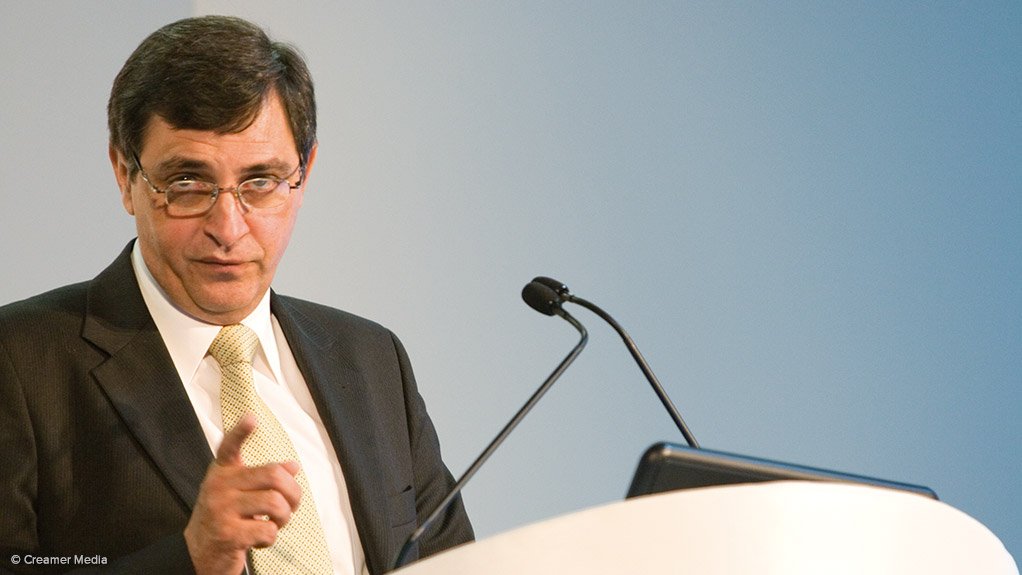
JOHAN VAN ZYL South Africa’s automotive industry will never be a cheap labour industry
Photo by Duane Daws



South Africa will never become a low-cost vehicle producer, “that space” having been taken, says National Association of Automobile Manufacturers of South Africa (Naamsa) president and Toyota South Africa Motors president and CEO Dr Johan van Zyl.
“Based on our history, this will never work. We will never be a cheap labour industry.”
Van Zyl compares South Africa’s production of metal pressings to India’s, noting that India’s production came in at a labour cost 222% cheaper than South Africa’s.
This means, however, the country has “huge work” ahead of it to improve its cost competitiveness on other levels.
Van Zyl says South Africa’s automotive industry is not competitive enough, largely owing to low productivity, a strongly fluc-tuating rand, logistics costs, low local content on vehicles, low production volumes and an often negative mindset.
One of the ways to improve competitiveness is to increase the local parts on vehicles produced in South Africa.
Local content averaged 54% in 2012. This needs to increase to 70% for volume pro-ducers in South Africa, such as Toyota and Volkswagen, and 30% for premium car pro-ducers, such as BMW and Mercedes-Benz, says Van Zyl.
It makes little sense for parts to be flown in from all around the world, only to export the completed vehicle.
“There is no reason to assemble vehicles here, if we do not have high local content. The logistics costs are too high.”
Van Zyl adds that the recent seven-week strike in the automotive industry points to the collective bargaining process requiring structural reform, with all stakeholders cur-rently looking at ways to achieve this.
He says a review of the collective bargaining process – which this year could not prevent a strike at assemblers, followed immediately by a strike at component makers – is necessary as it is “not very productive” to still have “50 items to talk about” after three months of negotiations.
Van Zyl says the review process asks, for example, if arbitration should not be an option once it is clear that the parties disagree. It may also be prudent to agree on what the consumer price index (inflation) is before negotiations start.
“Do we need different consumer price indexes for people on various income levels in South Africa?”
An initiative to source “local material at better prices” will also serve as another boost to the competitiveness of South Africa’s auto-motive industry.
If it is possible, for example, for South African catalytic converter producers to buy platinum at a price cheaper than on the global market, “we could dominate this market, instead of having a 15% share”, says Van Zyl.
It will also aid the industry if the manu-facturers of vehicle brands currently being imported into South Africa start local assembly.
“We need to encourage more manufacturers to assemble vehicles in South Africa,” notes Van Zyl.
He also highlights a number of positives which are boosting the local industry’s competitiveness, such as a reduction in port costs, an increase in port capacity, and the R500-million investment by Transnet to build new automotive wagons for its railway lines, at around 14 a week.
“We are now on 180 new wagons.”
There has also been a stable policy frame-work for the automotive industry in South Africa in recent times, a stable economic policy, in general, and continued investment flow from vehicle and vehicle manufacturers into South Africa.
It is the aim of the local industry and government to produce 1.2-million vehicles a year by 2020.
Around 540 000 vehicles were produced in 2012.
“Government is steering in the right direc-tion, but all the rowers must row in the same direction,” emphasises Van Zyl.
In order to achieve the 1.2-million goal, total local vehicle sales will have to grow by roughly 7% a year every year – taking into account that only a portion of vehicles sold in South Africa are locally produced – with the export market to grow by 190%, from the current 277 000 vehicles a year to 800 000 vehicles exported yearly.
“This is a challenging task, but we cannot give up on this. It is an important part of the industrialisation of the South African economy,” says Van Zyl.
Article Enquiry
Email Article
Save Article
Feedback
To advertise email advertising@creamermedia.co.za or click here
Research Reports

Projects
Latest Multimedia
Latest News
Showroom

We supply customers with practical affordable solutions for their testing needs. Our products include benchtop, portable, in-line process control...
VISIT SHOWROOM
We at Hawk High Pressure Pumps specialise in industrial pumps and pumping systems. Our high pressure washing equipment is locally manufactured and...
VISIT SHOWROOM


Announcements
What's On
Subscribe to improve your user experience...
Option 1 (equivalent of R125 a month):
Receive a weekly copy of Creamer Media's Engineering News & Mining Weekly magazine
(print copy for those in South Africa and e-magazine for those outside of South Africa)
Receive daily email newsletters
Access to full search results
Access archive of magazine back copies
Access to Projects in Progress
Access to ONE Research Report of your choice in PDF format
Option 2 (equivalent of R375 a month):
All benefits from Option 1
PLUS
Access to Creamer Media's Research Channel Africa for ALL Research Reports, in PDF format, on various industrial and mining sectors
including Electricity; Water; Energy Transition; Hydrogen; Roads, Rail and Ports; Coal; Gold; Platinum; Battery Metals; etc.
Already a subscriber?
Forgotten your password?
Receive weekly copy of Creamer Media's Engineering News & Mining Weekly magazine (print copy for those in South Africa and e-magazine for those outside of South Africa)
➕
Recieve daily email newsletters
➕
Access to full search results
➕
Access archive of magazine back copies
➕
Access to Projects in Progress
➕
Access to ONE Research Report of your choice in PDF format
RESEARCH CHANNEL AFRICA
R4500 (equivalent of R375 a month)
SUBSCRIBEAll benefits from Option 1
➕
Access to Creamer Media's Research Channel Africa for ALL Research Reports on various industrial and mining sectors, in PDF format, including on:
Electricity
➕
Water
➕
Energy Transition
➕
Hydrogen
➕
Roads, Rail and Ports
➕
Coal
➕
Gold
➕
Platinum
➕
Battery Metals
➕
etc.
Receive all benefits from Option 1 or Option 2 delivered to numerous people at your company
➕
Multiple User names and Passwords for simultaneous log-ins
➕
Intranet integration access to all in your organisation
