AI could unlock discoveries if geologists stay in control


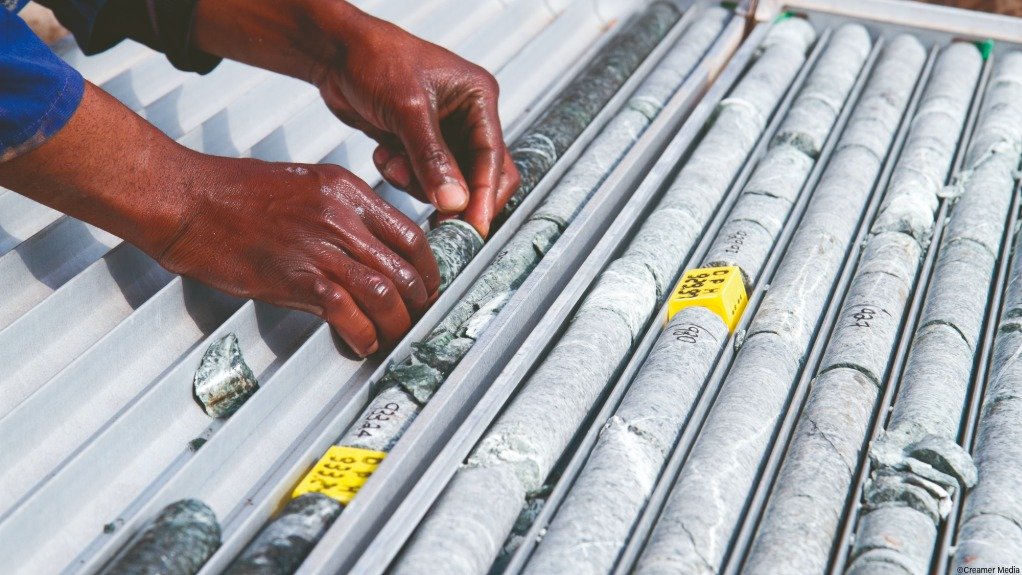

BENEFICIAL OPPORTUNITY South Africa sits on the foundation of the AI economy, with 88% of global platinum group metals which are essential for fuel cells, sensors and AI hardware, however, only 3% of its production is beneficiated locally
Photo by Creamer Media
WomHub CIO and co-founder Naadiya Moosajee




The increasing uptake of AI in many spheres of life has also extended to geology, where it has found several applications with varying degrees of success, although there are myriad ethical, safety and environmental implications that geologists must be cognisant of.
This was highlighted by speakers at the Geological Society of South Africa’s (GSSA’s) ‘AI in Geology’ conference, held last month.
Mining software solutions company Micromine geology senior product specialist Tracy Cornellissen pointed out that as datasets become bigger and more complex, geologists need faster, data-driven decision- making tools.
Machine learning methods can uncover complex, multidimensional patterns that might be difficult to detect using traditional analytical approaches, but in providing objective insights, revealing hidden patterns, validating interpretations and supporting new discoveries, AI complements geological expertise, she said.
WSP water resources graduate engineer Swapnil Gautam expanded on this common thread during the discussions. AI should complement, rather than replace, skilled geologists and/or processes to ensure accountability and trustworthy outcomes.
AI is not a replacement for hydrogeology, geology, physical understanding, site investigation or expert judgement. It is also unreliable when applied in conditions outside those it is “trained in”. Instead, it is effective for pattern recognition in large, multi-source datasets, identifying nonlinear relationships that are difficult to model manually, and is especially valuable when observations are incomplete.
Moreover, “AI is only as good as the data and the geological questions guiding it”, Gautam elaborated.
The results of seven case studies of AI use in African mining operations showed that it had been applied in unintended ways, with varying results, said consulting, advisory and training company EcoPartners director Dr Neale Baartjes.
He said that, despite AI being used in different applications across different mines and commodities, a common pattern emerged: “The lessons from these cases are not that AI works everywhere. The lesson is that AI works differently, depending on the amount of uncertainty present and the degree of control available to the organisation.”
What determines success is reliable data, clear problem definition, organisational readiness, management expectations and alignment of the technology with the operating environment. AI performs best where uncertainty is understood and operational control is high, as “most failures are organisational before they are technical”, Baartjes explained.
Most AI projects fail because the surrounding system is not ready, rather than because the algorithm is incorrect: “Data, people, processes and expectations determine outcomes,” he said.
Ethical Considerations
Robert Gordon University information science and technology professor Paul Cleverley delved into some of the risks of using large language models (LLMs), including the anthropomorphising of outputs, which can lead to over-trust and premature acceptance.
Geoscience is interpretive, working from sparse data across deep geological time and space and punctuated by rare, high- magnitude events, with uncertainty considered key by geoscientists. By contrast, LLMs can be opaque and display excessive confidence in some of the results they suggest.
He also warned that using LLMs without a critical mindset can undermine geoscientists’ public trust and reputation, as LLMs sometimes fabricate citations and are prone to hallucinations.
Other threats include autonomous agents, or agentic AI, where errors can be compounded without necessarily being transparent. Bias in training data can also over- or under- represent certain countries, communities and geological regimes.
There are also privacy concerns, as geological data may contain proprietary or confidential information, and uploaded content can be used without informed consent, with surveys showing that 45% to 50% of employees admit to inputting confidential data into LLMs.
Cleverley also touched on environmental considerations, noting that model size and the supporting infrastructure are the two main determinants of an AI model’s environmental footprint. He said geoscientists should take this into consideration when determining which model to use.
He advised that geoscientists should use AI responsibly by aspiring to “do no harm” to individuals, communities and ecosystems, and emphasised the concept of consequential irreversibility. This refers to a qualified geoscientist needing to remain accountable for oversight and/or sign-off, as algorithms are not accountable, and geoscientific work has a direct impact on resources and people.
Cleverley also advocated for geoscientists to promote transparency and explainability, including disclosing AI tool use, the limitations and risks of the models they create, and building trust and traceability from AI-generated insights.
Consideration should also be given to informed consent, including whether tools are really “free” or provided at the expense of data, the use of local-hosted or open-weight models where appropriate, and geopolitics, as this can impact on data sovereignty and have implications such as algorithmic colonisation.
He echoed the strong sentiment from several speakers that the uncritical use of LLMs is likely to lead to unethical outcomes.
AI in Geology, and Geology in AI
A different angle was offered by Boutique incubator WomHub CIO and co-founder Naadiya Moosajee regarding the intersection of AI and critical minerals, and how the country’s mining industry can leverage opportunities this presents in the race for AI leadership.
In her presentation, titled ‘The resources utilised behind the scenes for AI generated content’, she pointed out that every AI query and smart sensor has a geological footprint, as “the stack begins not in a data centre – it begins in a mine”.
With critical minerals at the start of the AI value chain, there is a need to secure and use these resources.
Moosajee advocates for South Africa to capitalise on its critical minerals resources rather than pursue the development of local LLMs. The latter would be an extremely costly undertaking, and would also have ethical ramifications, owing to the significant amount of energy and water needed to run and cool AI data centres, particularly in light of the country’s water and energy challenges.
She said that “South Africa sits on the foundation of the AI economy”, with 88% of global platinum group metals (PGMs), which are essential for fuel cells, sensors and AI hardware, and 80% of manganese reserves – a critical input for battery storage and steel.
However, only 3% of South Africa’s PGMs production is beneficiated locally into finished goods like auto-catalysts or fuel cells, while only 14% of the country’s manganese is processed locally. Therefore, high-value refining margins, specialised jobs and geopolitical leverage all flow to China, the US and Europe.
Manufacturing capabilities and processing capabilities created to provide opportunities especially for young South Africa, should thus also be considered in policy papers and legislation regarding AI.
Upgrading three local plants to electronic- grade silica purity would cost less than one month of coal export revenue, and while national mineral resource organisation Mintek’s proven fly-ash rare earth elements extraction process requires about R2-billion to reach industrial scale, there is no budget allocation for either programme, she lamented.
“We supply the world’s AI hardware supply chain – and capture almost none of its value,” she said.
South Africa is missing a hardware opportunity in the glass substrate gap because the entire chip industry is migrating from silicon to glass core substrates, as they are flatter, thermally stable and reduce energy losses by half. A pilot glass substrate line costs just 1% of the about R1-trillion cost of a silicon fabrication plant, making it an accessible entry point.
However, despite the country being perfectly positioned to capitalise on this, the opportunity “is not even on the radar”, Moosajee continued, with no such programme in the country’s draft AI policy, which has since been recalled, ironically owing to AI use in its drafting.
Companies such as Consol and PG Group already boast precision metallurgy expertise and high-purity silica deposits, meaning that all the required elements are available.
There is also an opportunity for the country to sell telemetry instead of ore, as global AI laboratories have “scraped the Internet dry” and subsequently require real-world physical telemetry, with South Africa boasting unparalleled assets in this regard, she explained.
Citing deep-mine seismic data as an example, Moosajee highlighted South Africa’s “billions of hours” of unique acoustic and seismic telemetry from deep-level mining operations – a dataset that is unique to the country. A sovereign analogue-to-digital data vault could license such data to global laboratories in exchange for computing credits, hardware or technology transfer, she suggested.
Global supply chains and governance standards are being locked in, with a predicted window of about two years, and the countries that shape these frameworks will be the ones that capture the value, while those that wait will inherit the constraints.
In terms of governance, South Africa should enact a binding non-human identity framework before its digital public infrastructure is built on an unprotected foundation, she added.
“The AI revolution is not coming – it is here. The GSSA has a critical role to play in making sure we are architects – not just the quarry,” Moosajee stressed.
Article Enquiry
Email Article
Save Article
Feedback
To advertise email advertising@creamermedia.co.za or click here
Research Reports

Projects
Latest Multimedia
Latest News


Showroom

Developed to exceed the latest EN 15964 standards for police breathalysers proving that it will remain accurate and reliable for many years to come.
VISIT SHOWROOM
M and J Mining are leading suppliers of physical support systems as used by the underground mining industry. Our selection of products are not...
VISIT SHOWROOM


Press Office
Announcements
What's On
Subscribe to improve your user experience...
Option 1 (equivalent of R125 a month):
Receive a weekly copy of Creamer Media's Engineering News & Mining Weekly magazine
(print copy for those in South Africa and e-magazine for those outside of South Africa)
Receive daily email newsletters
Access to full search results
Access archive of magazine back copies
Access to Projects in Progress
Access to ONE Research Report of your choice in PDF format
Option 2 (equivalent of R375 a month):
All benefits from Option 1
PLUS
Access to Creamer Media's Research Channel Africa for ALL Research Reports, in PDF format, on various industrial and mining sectors
including Electricity; Water; Energy Transition; Hydrogen; Roads, Rail and Ports; Coal; Gold; Platinum; Battery Metals; etc.
Already a subscriber?
Forgotten your password?
Receive weekly copy of Creamer Media's Engineering News & Mining Weekly magazine (print copy for those in South Africa and e-magazine for those outside of South Africa)
➕
Recieve daily email newsletters
➕
Access to full search results
➕
Access archive of magazine back copies
➕
Access to Projects in Progress
➕
Access to ONE Research Report of your choice in PDF format
RESEARCH CHANNEL AFRICA
R4500 (equivalent of R375 a month)
SUBSCRIBEAll benefits from Option 1
➕
Access to Creamer Media's Research Channel Africa for ALL Research Reports on various industrial and mining sectors, in PDF format, including on:
Electricity
➕
Water
➕
Energy Transition
➕
Hydrogen
➕
Roads, Rail and Ports
➕
Coal
➕
Gold
➕
Platinum
➕
Battery Metals
➕
etc.
Receive all benefits from Option 1 or Option 2 delivered to numerous people at your company
➕
Multiple User names and Passwords for simultaneous log-ins
➕
Intranet integration access to all in your organisation