Africa urged to strengthen frameworks through BRICS, AU


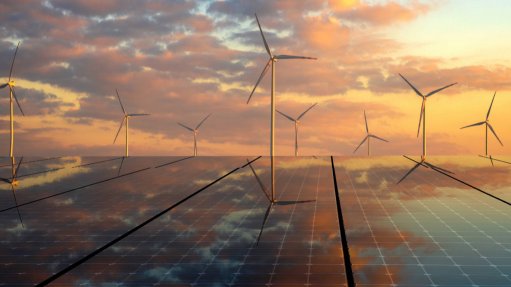
Africa must strengthen its agency in global energy governance and green industrialisation as shifting geopolitical dynamics and accelerating energy transitions reshape global trade and investment systems, says research organisation South African Institute of International Affairs (SAIIA).
During the launch last month of two SAIIA research papers examining BRICS energy governance and African Union (AU) green industrialisation strategies, SAIIA Futures Programme head Dr Deon Cloete said Africa had a critical window to define its own development trajectory instead of remaining a “passive recipient” of external decisions.
Decisions taken in major global economies, including those of BRICS member States and the global north, would significantly influence how Africa’s industrialisation and green industrialisation unfolded over the coming decades.
Cloete said the research had been undertaken with the African Energy Commission, the AU Development Agency-New Partnership for Africa’s Development and Egypt-based Synergies International for Strategic Studies to explore how Africa could shape sovereign, equitable and investable energy transitions.
He added that the reports sought to provide practical pathways for governments, financiers and policymakers to navigate the complex intersections between climate transitions, industrial development, finance and geopolitical competition.
The discussions reflected broader trends shaping Africa’s evolving trade and investment landscape.
The research found that BRICS climate and energy transitions were driven primarily by geostrategic, economic and technological considerations, rather than simply sustainability objectives, said SAIIA senior researcher Dr Njeri Mwagiru.
“The expanded BRICS bloc represents more than half of global emissions and about 60% of the world’s population while . . . becoming an increasingly influential actor in renewable energy and clean technology value chains,” he noted.
The research identifies contestations within BRICS, where ambitious climate rhetoric often coexists with continued fossil fuel expansion and competing national priorities.
Mwagiru noted that China remained the structural pivot within the BRICS energy system, owing to its dominance in renewable energy supply chains and clean technology manufacturing, while countries such as South Africa and Brazil were attempting to position themselves as normative entrepreneurs advocating for just transitions and developmental approaches.
However, these countries continue to face domestic fossil fuel dependence, implementation gaps and financing constraints, with contradictions between climate ambitions and existing industrial structures.
“The research proposes a BRICS Climate and Energy Compass to help policymakers navigate these tensions and identify pathways towards distributed energy sovereignty, circular industrialisation and more localised climate finance systems.”
Mwagiru added that one of the framework’s priorities was to promote a shift away from energy systems controlled by State utilities and large corporations towards more decentralised and community-owned renewable-energy systems.
The framework also promotes regional beneficiation, circular economy models and stronger local participation in renewable energy value chains to reduce dependency on extractive production models and external financing systems.
She further emphasised the need for reforms to global and intra-BRICS financial systems to improve access to transition finance for developing economies and support investment into hard-to-abate industrial sectors, commenting that the research highlighted the importance of localising climate finance and strengthening subnational governance structures to enable smaller actors to participate more effectively in energy transitions.
Meanwhile, SAIIA senior programme manager and researcher Letitia Jentel said the AU-focused research examined how the continental body could support harmonised green industrialisation strategies across its 55 member States.
The framework has been developed through futures workshops and stakeholder engagements with AU institutions and regional stakeholders to better understand the systemic barriers affecting renewable-energy industrialisation across Africa.
It focuses on areas such as energy democracy, local innovation, technology sovereignty, circular industrial systems, inclusive financing and adaptive governance structures.
“The research also highlights the importance of critical mineral supply chain mapping, recycling systems and regional resource planning to support long-term green industrialisation and renewable energy manufacturing ambitions on the continent,” Jentel elaborated.
Although many renewable-energy innovations are emerging in niche spaces, they often struggle to scale sustainably within existing economic and governance systems.
The framework, therefore, calls for stronger support for local innovation ecosystems, community-owned renewables projects and more inclusive industrial development models that embed social equity and energy access considerations into the transition process.
Article Enquiry
Email Article
Save Article
Feedback
To advertise email advertising@creamermedia.co.za or click here
Research Reports

Projects

Latest Multimedia
Latest News
Showroom

ATI systems comprises five divisions: electrical assemblies, drives and controls, feedback sensors, enclosures, and strip guiding.
VISIT SHOWROOM
As a reticulator, Egoli Gas provides natural gas to homes and businesses via underground pipes.
VISIT SHOWROOM
Press Office
Announcements
What's On
Subscribe to improve your user experience...
Option 1 (equivalent of R125 a month):
Receive a weekly copy of Creamer Media's Engineering News & Mining Weekly magazine
(print copy for those in South Africa and e-magazine for those outside of South Africa)
Receive daily email newsletters
Access to full search results
Access archive of magazine back copies
Access to Projects in Progress
Access to ONE Research Report of your choice in PDF format
Option 2 (equivalent of R375 a month):
All benefits from Option 1
PLUS
Access to Creamer Media's Research Channel Africa for ALL Research Reports, in PDF format, on various industrial and mining sectors
including Electricity; Water; Energy Transition; Hydrogen; Roads, Rail and Ports; Coal; Gold; Platinum; Battery Metals; etc.
Already a subscriber?
Forgotten your password?
Receive weekly copy of Creamer Media's Engineering News & Mining Weekly magazine (print copy for those in South Africa and e-magazine for those outside of South Africa)
➕
Recieve daily email newsletters
➕
Access to full search results
➕
Access archive of magazine back copies
➕
Access to Projects in Progress
➕
Access to ONE Research Report of your choice in PDF format
RESEARCH CHANNEL AFRICA
R4500 (equivalent of R375 a month)
SUBSCRIBEAll benefits from Option 1
➕
Access to Creamer Media's Research Channel Africa for ALL Research Reports on various industrial and mining sectors, in PDF format, including on:
Electricity
➕
Water
➕
Energy Transition
➕
Hydrogen
➕
Roads, Rail and Ports
➕
Coal
➕
Gold
➕
Platinum
➕
Battery Metals
➕
etc.
Receive all benefits from Option 1 or Option 2 delivered to numerous people at your company
➕
Multiple User names and Passwords for simultaneous log-ins
➕
Intranet integration access to all in your organisation