Why the circular economy needs a new generation of systems thinkers


This article has been supplied and will be available for a limited time only on this website.
By: Shabeer Jhetam - CEO of The Glass Recycling Company
South Africa's transition to a circular economy is no longer simply an environmental conversation. It is increasingly becoming an economic one. As the country grapples with rising unemployment, resource constraints and growing pressure on landfill capacity, the question is no longer whether we should recycle more, but how we can redesign our economy to keep valuable materials in circulation, unlock new industries and create sustainable jobs.
This shift in thinking was evident at the Green Youth Indaba, where discussions extended well beyond traditional conversations about recycling and waste management. As a panelist in the discussion, "Beyond Recycling: Building Circular Economies That Create Jobs," The Glass Recycling Company (TGRC) was proud to contribute to a dialogue focused on one of South Africa's most pressing challenges: how we transition from a from a linear to a circular economy where resources are kept in use for as long as possible, creating environmental, social and economic value.
That transition begins with changing how we define the circular economy. Too often, we think of recycling as the end of a product's life, a bottle is used, discarded, collected and recycled. But a truly circular economy begins much earlier. It starts with how products are designed, how materials are valued, how businesses operate and how industries work together to ensure that resources remain in use for as long as possible.
Simply put, a linear economy follows a 'take, make and dispose' model. Raw materials are extracted, turned into products, used and then discarded, often ending up in landfill. A circular economy takes a different approach. It keeps materials in use for as long as possible by recovering, repairing, remanufacturing and recycling them, reducing waste while creating ongoing economic value. South Africa is making encouraging progress through initiatives such as Extended Producer Responsibility (EPR), greater industry collaboration and increased investment in recycling infrastructure, but there is still significant work to do to fully embed circular thinking across the economy.
In other words, the recycling is not the beginning of the circular economy. It is only one part of a much bigger system.
A recurring theme throughout the discussion was that circular economies create opportunities far beyond the recycling sector itself. From product design and manufacturing to logistics, technology, repair services and material recovery, circular thinking has the potential to support entrepreneurship and create jobs across multiple industries. The challenge is not simply to recycle more, but to design systems that extract greater value from the resources already in circulation.
Glass packaging provides a practical example of the circular economy in action. A glass bottle or jar is not simply a product that is used and discarded; it is a resource that retains value beyond its first use. When recovered and returned to the manufacturing cycle, it supports economic activity across a network of collectors, transporters, processors and manufacturers while reducing waste and keeping materials in circulation. However, that outcome depends on a broad network of stakeholders working together, including producers, retailers, Producer Responsibility Organisations (PROs), collectors, processors, municipalities, government and consumers.
The circular economy is therefore not the responsibility of one sector. It is a shared economic system. That was a recurring theme throughout our discussions at the Green Youth Indaba. Building a circular economy will require stronger partnerships between government, industry, Producer Responsibility Organisations (PROs) and communities. No single organisation can create circularity on its own.
Young people have an especially important role to play. Not because they should simply recycle more, but because they are uniquely positioned to rethink how value is created.
One of the most encouraging aspects of the Green Youth Indaba was seeing how many young South Africans already view sustainability through an entrepreneurial lens. Increasingly, young innovators are identifying opportunities not only to address environmental challenges, but also to build businesses that recover materials, improve resource efficiency and create economic value from waste streams.
The next generation of entrepreneurs will not only build businesses that collect recyclable materials; they will develop technologies that improve material recovery, create innovative products from recycled resources, design more sustainable packaging and identify new ways to keep materials in productive use for longer.
The opportunity is not limited to environmental careers. It extends to engineering, logistics, manufacturing, technology, design, data, marketing and entrepreneurship. The circular economy is increasingly becoming an economy-wide opportunity rather than a standalone environmental sector.
This is why conversations like those at the Green Youth Indaba are so important. They encourage young South Africans to see waste differently, not as something to dispose of, but as a resource that retains value long after its first use.
Changing this mindset is perhaps the biggest challenge ahead. For decades, economic growth has largely followed a linear model: take, make and dispose. Yet our future competitiveness will depend on building systems that recover materials, reduce waste and make better use of finite resources. Businesses that embrace resource efficiency and circular thinking will be better positioned to innovate, manage costs and respond to evolving consumer and regulatory expectations.
The circular economy is not simply an environmental aspiration. It has become a business imperative.
As South Africa continues to pursue a more inclusive and resilient economy, we should measure success not only by the tons of glass, paper, plastics or metals that are recycled, but by how effectively we redesign our systems to eliminate waste, keep valuable materials in circulation and unlock long-term economic value.
That is the conversation we should continue beyond the Green Youth Indaba, because the future of the circular economy will not be determined by what we throw away. It will be determined by how intelligently we choose to use what we already have.
TGRC remains committed to working alongside industry, policymakers and the next generation of changemakers to turn that vision into a reality.
Article Enquiry
Email Article
Save Article
Feedback
To advertise email advertising@creamermedia.co.za or click here
Projects


Latest Multimedia
Latest News
Showroom
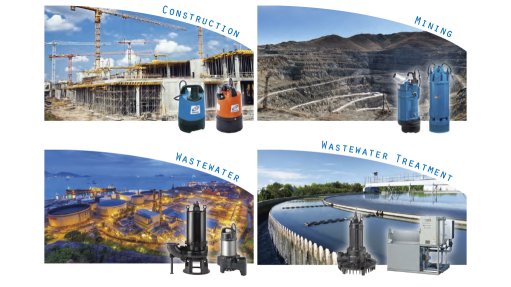
Tsurumi Pumps Africa is a specialist supplier of Japanese-engineered submersible pumping solutions, serving customers across the African continent.
VISIT SHOWROOM
Stewarts & Lloyds is a leading steel, tube, and engineering product supplier in South Africa.
VISIT SHOWROOM


Announcements
What's On
Subscribe to improve your user experience...
Option 1 (equivalent of R125 a month):
Receive a weekly copy of Creamer Media's Engineering News & Mining Weekly magazine
(print copy for those in South Africa and e-magazine for those outside of South Africa)
Receive daily email newsletters
Access to full search results
Access archive of magazine back copies
Access to Projects in Progress
Access to ONE Research Report of your choice in PDF format
Option 2 (equivalent of R375 a month):
All benefits from Option 1
PLUS
Access to Creamer Media's Research Channel Africa for ALL Research Reports, in PDF format, on various industrial and mining sectors
including Electricity; Water; Energy Transition; Hydrogen; Roads, Rail and Ports; Coal; Gold; Platinum; Battery Metals; etc.
Already a subscriber?
Forgotten your password?
Receive weekly copy of Creamer Media's Engineering News & Mining Weekly magazine (print copy for those in South Africa and e-magazine for those outside of South Africa)
➕
Recieve daily email newsletters
➕
Access to full search results
➕
Access archive of magazine back copies
➕
Access to Projects in Progress
➕
Access to ONE Research Report of your choice in PDF format
RESEARCH CHANNEL AFRICA
R4500 (equivalent of R375 a month)
SUBSCRIBEAll benefits from Option 1
➕
Access to Creamer Media's Research Channel Africa for ALL Research Reports on various industrial and mining sectors, in PDF format, including on:
Electricity
➕
Water
➕
Energy Transition
➕
Hydrogen
➕
Roads, Rail and Ports
➕
Coal
➕
Gold
➕
Platinum
➕
Battery Metals
➕
etc.
Receive all benefits from Option 1 or Option 2 delivered to numerous people at your company
➕
Multiple User names and Passwords for simultaneous log-ins
➕
Intranet integration access to all in your organisation