When corruption becomes government


Every so often, Africa unveils a corruption scandal so audacious that even the most seasoned investigators momentarily lose the plot: one official pays millions for goods that never existed, another awards contracts to an entity whose offices turn out to be someone’s living room, and, somewhere else, billions disappear through a subsidy meant to help the poor.
Imagine inventing a government agency that does not exist, persuading officials to allocate it public money, securing office space for it inside the equivalent of the Union Buildings in South Africa, opening bank accounts in its name and even meeting foreign diplomats under its banner.
This may sound like the plot of an over-the-top political satire, but it is the scandal currently convulsing Nigeria, where investigators are trying to figure out how a fictitious agency, the so-called Presidential Foreign Intervention Promotion Council, allegedly found its way into the country’s 2026 budget with an allocation of N1.3-billion ($950 000) before the deception unravelled.
The alleged mastermind, Adeniyi Adeyemi Matthews, did not merely dream up an impressive-sounding government body. He is said to have forged appointment letters and official documents, appropriated the signature of President Bola Tinubu’s chief of staff, convinced the Accountant-General’s office to open accounts for the phantom agency at the central bank and at several commercial banks, acquired office space inside Nigeria’s Federal Secretariat in Abuja, and reportedly held meetings with ambassadors and development partners as though he were a genuine Presidential appointee.
The house of cards began to wobble only after officials at the legitimate Nigerian investment promotion body reportedly noticed that an organisation that bore a suspiciously similar name and claimed comparable responsibilities was operating in plain sight. That discovery prompted the President’s chief of staff to issue a public disclaimer, insisting that no such council existed and that its purported director-general had never been appointed by Tinubu.
By the time the Independent Corrupt Practices and Other Related Offences Commission launched a comprehensive investigation this month, the story had become less about one alleged imposter and more about the astonishing number of checkpoints that failed to ask elementary questions. How does a bogus agency acquire office accommodation, open bank accounts, and secure official recognition and a line in the national budget without anyone asking to see its legal birth certificate?
At the time of writing, a police manhunt was under way for Matthews, who had gone to ground.
But this extraordinary affair is not simply a Nigerian story; it exposes a truth that should unsettle Africa’s taxpayers: corruption on the continent is no longer solely about stealing from the State but is increasingly becoming the State itself – or at least looking official long enough for nobody to notice the difference.
South Africans don’t need to be reminded of this. The phrase ‘State Capture’ was popularised in the country during Jacob Zuma’s Presidency precisely because it described something far more sinister than conventional corruption. The phenomenon was not merely about officials accepting bribes but about private individuals allegedly influencing Cabinet appointments, directing procurement decisions, and bending key State-owned enterprises to serve private rather than public interests.
The cost to citizens was huge. The Zondo Commission of Inquiry estimated that about R57-billion in public expenditure was tainted by State Capture, while the broader economic damage must have been several multiples higher through lost growth, weakened institutions and declining investor confidence.
Mozambique offers another cautionary tale. In that country, what came to be known as the “hidden debt” scandal saw about $2-billion in secret government-backed loans arranged through State-owned companies in the mid-2010s without proper Parliamentary approval. The affair plunged Mozambique into a sovereign debt crisis, triggered the suspension of donor support, devastated public finances, and left ordinary citizens paying for liabilities they didn’t authorise through their elected representatives.
Angola, too, has travelled down this road. An investigation into the country’s 1990s debt restructuring found that politically connected intermediaries extracted at least $338-million from the transaction, while the State may have overpaid by between $823-million and $1-billion. As in the other cases, corruption was no longer merely exploiting the State. Instead, it had become woven into the State’s financial decision-making.
So, what’s unfolding in Nigeria is not an aberration but the latest mutation in corruption’s evolutionary journey, where the corrupt do not just steal public money but also create parallel bureaucracies, manufacture officialdom and forge legitimacy.
Article Enquiry
Email Article
Save Article
Feedback
To advertise email advertising@creamermedia.co.za or click here
Research Reports
Projects
Latest News

Showroom
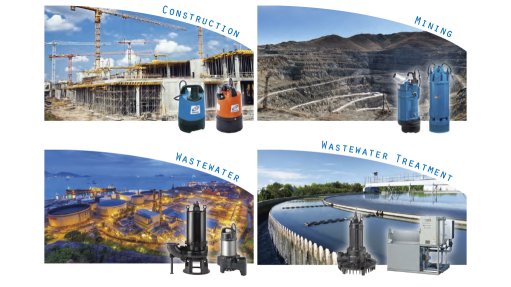
Tsurumi Pumps Africa is a specialist supplier of Japanese-engineered submersible pumping solutions, serving customers across the African continent.
VISIT SHOWROOM
Astore Keymak is one of South Africa’s leading suppliers of high-quality Thermoplastic Pipeline Systems, with branches in the major provinces.
VISIT SHOWROOM
Press Office
Announcements
What's On
Subscribe to improve your user experience...
Option 1 (equivalent of R125 a month):
Receive a weekly copy of Creamer Media's Engineering News & Mining Weekly magazine
(print copy for those in South Africa and e-magazine for those outside of South Africa)
Receive daily email newsletters
Access to full search results
Access archive of magazine back copies
Access to Projects in Progress
Access to ONE Research Report of your choice in PDF format
Option 2 (equivalent of R375 a month):
All benefits from Option 1
PLUS
Access to Creamer Media's Research Channel Africa for ALL Research Reports, in PDF format, on various industrial and mining sectors
including Electricity; Water; Energy Transition; Hydrogen; Roads, Rail and Ports; Coal; Gold; Platinum; Battery Metals; etc.
Already a subscriber?
Forgotten your password?
Receive weekly copy of Creamer Media's Engineering News & Mining Weekly magazine (print copy for those in South Africa and e-magazine for those outside of South Africa)
➕
Recieve daily email newsletters
➕
Access to full search results
➕
Access archive of magazine back copies
➕
Access to Projects in Progress
➕
Access to ONE Research Report of your choice in PDF format
RESEARCH CHANNEL AFRICA
R4500 (equivalent of R375 a month)
SUBSCRIBEAll benefits from Option 1
➕
Access to Creamer Media's Research Channel Africa for ALL Research Reports on various industrial and mining sectors, in PDF format, including on:
Electricity
➕
Water
➕
Energy Transition
➕
Hydrogen
➕
Roads, Rail and Ports
➕
Coal
➕
Gold
➕
Platinum
➕
Battery Metals
➕
etc.
Receive all benefits from Option 1 or Option 2 delivered to numerous people at your company
➕
Multiple User names and Passwords for simultaneous log-ins
➕
Intranet integration access to all in your organisation