Value chains in focus as ESG pressures mount for SA firms

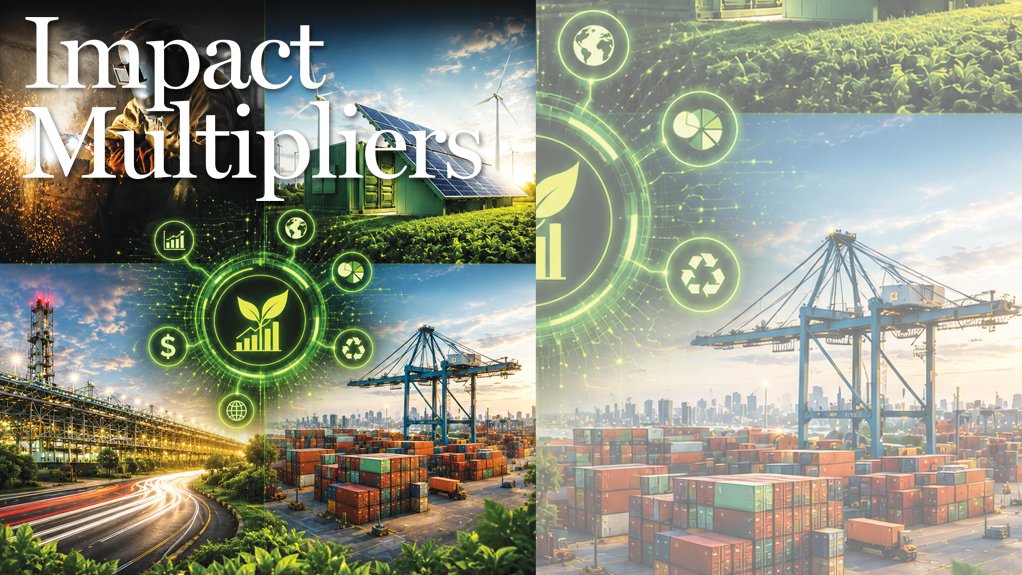

LASTING IMPACT As the world increasingly emphasises the importance of ESG, South African companies face mounting pressure to embed ESG into their daily operations and create meaningful impact



With increasing emphasis globally on the adoption of environmental, social and governance (ESG) principles, South African companies are urged to creatively embed ESG practices in their everyday operations.
This shift is particularly evident within value chains, with companies under increasing pressure to demonstrate responsible sourcing, reduce carbon intensity and ensure greater transparency across their operations and supplier networks.
As the EU implements carbon border adjustments, South Africa’s Climate Change Act takes effect and investors’ and banks’ expectations intensify, decarbonisation has, for instance, become imperative for corporations.
“Decarbonisation is no longer a matter of just avoiding or minimising your carbon taxes; it's actually material to you remaining operational because there are now pressures that are pushing corporates to ensure that they decarbonise. It is now an imperative to doing business,” noted Rand Merchant Bank (RMB) sustainable finance and ESG advisory transactor Tshepo Ntsane during Creamer Media’s recent ESG webinar.
Facilitated by Genesis shared value and impact practice principal Mark Robertson, panellists participating in the discussion explored how businesses are integrating ESG considerations into procurement, production and operational systems, as well as turning sustainability ambitions into measurable action.
Joining Robertson on the panel were Ntsane, Implats sustainable development executive Dr Tsakani Mthombeni, Pele Green Energy environmental and social specialist Tshifhiwa Dzhaudzhau, and SLR Consulting associate director Johan Oosthuizen.
During the discussion, panellists unpacked how companies are embedding ESG across their value chains and looking at the various factors shaping ESG implementation.
Mthombeni highlighted the importance of understanding the materiality, applicability and relevance of ESG systems to the business environment.
Oosthuizen highlighted the need to balance ESG ambitions with the material situation of the business. He emphasised the importance of measuring ESG outcomes and using comprehensive data collection to create meaningful impact, rather than “doing ESG for the sake of ESG”.
Oosthuizen said local businesses often underestimate their exposure to Scope 3 risks, but noted that companies needlessly treat value chains as simply risk amplifiers.
He noted that businesses often implement management systems that do not extend beyond the boundary of the business, thereby limiting opportunity.
Against this background, he highlighted the importance of understanding and managing Scope 3 emissions driven by the legislative push but also a shift from placing responsibility solely on suppliers, to companies being co-curators of impact.
Also emphasised was the opportunity to generate impact through supply chains, leveraging local suppliers and supporting women-led entrepreneurs, for example.
He therefore encouraged companies to look beyond risk and grasp opportunities to start using value chains as impact multipliers.
“What we put in is double, triple, quadruple what we get out, so if you put the right emphasis into your supply chains or value chains, you're going to get four times, five times as much out of it. It's really about understanding the leverage you have and then using that for positive impact down the line.”
Echoing Oosthuizen’s views, Dzhaudzhau argued that social impact should not be treated merely as a compliance exercise but could be designed to create lasting value and allow communities to participate in projects over the long term.
He noted that implementing community ownership structures, local procurement opportunities and skills development allows communities to be included in projects. He also emphasised the importance of implementation and of measuring outcomes, rather than measuring activities.
Meaning social impact, Dzhaudzhau argued, stems from consistency, transparency and long-term participation throughout a project’s lifecycle, rather than from isolated interventions.
“ESG is not a one-off initiative; it must be embedded throughout the lifecycle of the project if it's going to deliver a meaningful and sustainable outcome. It cannot be a one-off implementation,” he said.
For an energy company such as Pele Green Energy, Dzhaudzhau explained that ESG is about managing how the company implements its projects – from development to execution and operation, as well as when appointing contractors.
Meanwhile, from a mining perspective, Mthombeni explained that markets and stakeholders are now seeking more intentionality with regard to ESG, as well as greater integration into business strategies.
He noted that mining companies are now focusing on material risks for the business and stakeholders, including communities.
Financial Considerations
From a financing perspective, Ntsane said that ESG integration improves corporate bankability. He explained that banks look favourably on ESG-mature entities and those seen to be implementing ESG strategies.
He highlighted the importance for companies assessing their ESG risks and opportunities by conducting a materiality assessment.
Once a company’s baseline and footprint and understood, Ntsane said, it can then set forward-looking company targets which can be attained through initiatives and projects.
“The principle that underlines ESG is actually ‘double materiality’,” he said, explaining that companies should be aware of how their activities impact on the environment and on society, as well as understand how sustainability-related risks and opportunities affect their organisation.
“That integration . . . then ensures that corporates are ideally suited for an ESG-mature future,” he added.
Ntsane noted that commercial benefits for corporates that are ESG mature or working towards improving their ESG credentials include broader access to capital and liquidity.
He said development finance institutions are often willing to offer better rates and longer tenures, as well as free technical support.
Moreover, Ntsane explained that many credit rating agencies now incorporate ESG factors into their assessments.
Therefore, if a company is seen to be underperforming with regard to ESG, this could negatively affect its credit rating and, in turn, its cost of capital.
“All of these things are actually quite important and make it very imperative for corporates to then take ESG credentials seriously, either from a product perspective, pricing, access to liquidity, access to funding . . . There are various pull and push factors that direct corporates into the right direction.”
Ntsane thus encouraged corporates to leverage their existing, built-in sustainability teams or to contact an ESG consultant to assist with understanding their materiality and putting systems in place to help measure relevant metrics.
Looking Ahead
During the discussion, Dzhaudzhau shared some insights for companies trying to strengthen their ESG performance through their value chain.
“If you are starting to implement ESG, don’t try to do everything at once; it will overcomplicate what you are trying to implement,” he advised, reiterating the importance of understanding what is material to the business, such as energy needs or waste management issues.
“A simple register, a basic supply assessment process and few meaningful performance indicators can often deliver greater value than trying to implement everything at once.”
Looking ahead, Ntsane said he expects that ESG will become embedded in decision-making and in how businesses operate, rather than being solely driven by regulatory requirements.
“I think it’s going to come to a situation where it is going to be a default setting for every corporate to outline their ESG strategy and communicate the implementation thereof; as customers, stakeholders, suppliers and the likes will expect this to be part of business as usual.”
Relatedly, he said he expects further innovation in ESG reporting.
Oosthuizen said a shift, whereby ESG will no longer merely be seen as a compliance burden, is under way.
“I think people are going to realise the value that we have within our organisations to start leveraging the traditional ESG metrics as levers for impact; levers for generating the intent that you want to see out of your business.”
PULL-OUT QUOTE
Companies must be aware of how their activities impact on the environment and on society
Tshepo Ntsane
Article Enquiry
Email Article
Save Article
Feedback
To advertise email advertising@creamermedia.co.za or click here
Research Reports

Projects



Latest News
Showroom

ATI systems comprises five divisions: electrical assemblies, drives and controls, feedback sensors, enclosures, and strip guiding.
VISIT SHOWROOM
For over 30 years, Werner South Africa Pumps & Equipment (PTY) LTD has been designing, manufacturing, supplying and maintaining specialist...
VISIT SHOWROOM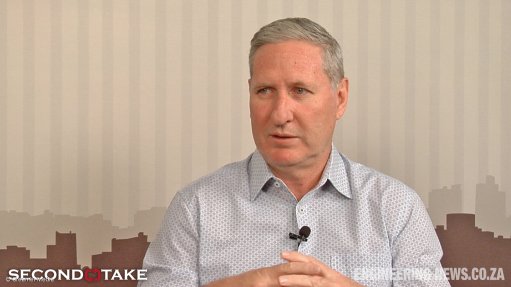


Announcements
What's On
Subscribe to improve your user experience...
Option 1 (equivalent of R125 a month):
Receive a weekly copy of Creamer Media's Engineering News & Mining Weekly magazine
(print copy for those in South Africa and e-magazine for those outside of South Africa)
Receive daily email newsletters
Access to full search results
Access archive of magazine back copies
Access to Projects in Progress
Access to ONE Research Report of your choice in PDF format
Option 2 (equivalent of R375 a month):
All benefits from Option 1
PLUS
Access to Creamer Media's Research Channel Africa for ALL Research Reports, in PDF format, on various industrial and mining sectors
including Electricity; Water; Energy Transition; Hydrogen; Roads, Rail and Ports; Coal; Gold; Platinum; Battery Metals; etc.
Already a subscriber?
Forgotten your password?
Receive weekly copy of Creamer Media's Engineering News & Mining Weekly magazine (print copy for those in South Africa and e-magazine for those outside of South Africa)
➕
Recieve daily email newsletters
➕
Access to full search results
➕
Access archive of magazine back copies
➕
Access to Projects in Progress
➕
Access to ONE Research Report of your choice in PDF format
RESEARCH CHANNEL AFRICA
R4500 (equivalent of R375 a month)
SUBSCRIBEAll benefits from Option 1
➕
Access to Creamer Media's Research Channel Africa for ALL Research Reports on various industrial and mining sectors, in PDF format, including on:
Electricity
➕
Water
➕
Energy Transition
➕
Hydrogen
➕
Roads, Rail and Ports
➕
Coal
➕
Gold
➕
Platinum
➕
Battery Metals
➕
etc.
Receive all benefits from Option 1 or Option 2 delivered to numerous people at your company
➕
Multiple User names and Passwords for simultaneous log-ins
➕
Intranet integration access to all in your organisation