Tech-driven project management key to bridging infrastructure gap



GERHARD NEL By applying production management principles to capital projects, lean construction creates more reliable workflows, systematically removes constraints and enables continuous improvement throughout execution
SKY HIGH AMBITIONS Africa’s infrastructure ambitions require consistently delivering projects with greater certainty, productivity and confidence




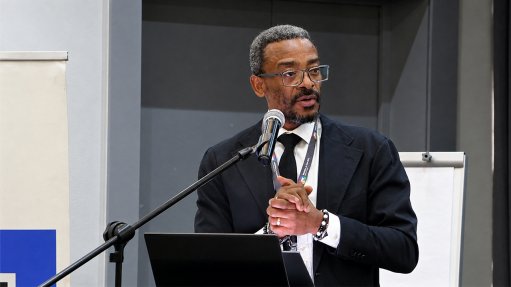
While the African continent has a significant infrastructure project pipeline, as well as access to capital, the continent struggles to consistently turn investment into completed projects delivered on time, on budget and to specification, says business management consultancy McKinsey and Company Johannesburg partner Gerhard Nel.
With projects spanning the energy transition, critical minerals, water security, transport infrastructure and rapid urbanisation, Africa’s development depends on the ability to deliver increasingly complex capital projects successfully, says Nel.
While significant investment is required, Nel assures that international development finance institutions, sovereign wealth funds and private investors have demonstrated a growing willingness to finance these opportunities.
Despite this, around 80% of infrastructure projects in Africa fail during the feasibility stage and fewer than 10% reach financial close, with these projects often struggling to meet their cost, schedule and performance commitments.
This trend is mirrored in South Africa where the Auditor-General’s 2023/24 assessment found that 64% of national and provincial infrastructure projects were delayed by an average of 34 months, while 82% experienced either cost overruns or schedule delays.
Nel points out that investors are increasingly backing organisations that can demonstrate a track record of delivering complex projects successfully.
Given this, he asserts that Africa’s infrastructure ambitions will be realised not simply through greater investment, but through consistently delivering projects with greater certainty, productivity and confidence.
“The project management industry already has many of the building blocks required to transform delivery. Lean construction provides the operating systems, digital technologies create transparency and real-time visibility, and AI strengthens decision-making, productivity and delivery certainty,” Nel says, adding that leading organisations have already changed their approach to project delivery.
Historically, many owners delegated responsibility to engineering, procurement and construction management (EPCM) contractors, however, owners are now increasingly building stronger internal delivery capability and taking direct accountability for outcomes.
Nel assures that rather than reducing the role of consulting engineers or EPCM partners, this approach creates stronger partnerships involving owners and engineering expertise working together to improve project performance.
Transforming Delivery
Among various shifts occurring in project delivery, Nel highlights a growing recognition that projects should be managed as production systems, ultimately reshaping how capital projects are planned, governed and delivered.
Acknowledging that the next generation of capital project delivery requires a fundamentally different operating model, McKinsey has developed its Capital Projects 5.0 framework.
Centred on a lean construction approach, the framework shifts from managing projects as collections of activities to leading them as integrated production systems.
“By applying production management principles to capital projects, lean construction creates more reliable workflows, systematically removes constraints before work begins and enables continuous improvement throughout execution.”
It also creates the structured operating environment and reliable data that digital technologies and AI require to generate meaningful value. By applying this framework, project executives are able to reduce project cost and mitigate cost overruns while improving delivery times.
Nel notes that “cost overruns rarely stem from a single issue. More often, they are the result of multiple weaknesses that emerge early in a project and compound over time.”
These weaknesses typically include inadequate front-end loading, optimistic cost and schedule assumptions, procurement delays, fragmented delivery models and poor coordination across the project ecosystem.
“Organisations often manage cost and schedule separately, when in reality they are inseparable. Every schedule delay has financial consequences and every commercial decision has implications for delivery,” says Nel.
He adds that many projects rely on deterministic estimates that create a false sense of certainty, presenting budgets as single-point figures rather than reflecting the genuine range of outcomes.
He highlights that organisations that are achieving the greatest improvements recognise that cost certainty is a function of delivery certainty, therefore, they are shifting from reactive cost reporting to proactive cost certainty.
This entails quantitative risk-based estimating, using confidence ranges such as P50 and P90, which gives investors and project sponsors a far more realistic picture of delivery uncertainty. Additionally, real-time contingency management allows leadership to intervene before cost pressures become material through tools such as predictive cost analytics.
Further, AI-enabled contract management can be used to identify compensation events, contractual risks and improvement opportunities significantly earlier than traditional review processes, reducing claims and disputes.
Consequently, Nel explains, going forward, capital delivery organisation will be leaner, more integrated and increasingly AI-enabled, bringing strategy, EPC and operations together through a central Capital Delivery Control Centre, supported by a common digital operating model.
With elements of this model already being deployed across mining, energy and industrial projects, Nel predicts that a full shift will occur in stages.
Currently, AI is automating repetitive administrative tasks such as document preparation, reporting and data consolidation which will move to augmenting engineering and project management judgement by evaluating design alternatives, analysing trade-offs and supporting faster decision-making.
This will then result in the emergence of agentic AI, where intelligent systems coordinate workflows across multiple disciplines to create increasingly self-optimising delivery systems.
“Organisations will only realise the full value of agentic AI if they first establish disciplined delivery systems. AI amplifies good operating models, but it cannot compensate for poor ones,” Nel warns.
Article Enquiry
Email Article
Save Article
Feedback
To advertise email advertising@creamermedia.co.za or click here
Research Reports

Projects

Latest Multimedia
Latest News

Showroom

North Ridge Pumps is an independent manufacturer of pumps. We have a proven track record for product support and customer service throughout the...
VISIT SHOWROOM
Multotec, recognised industry leaders in metallurgy and process engineering help mining houses across the world process minerals more efficiently,...
VISIT SHOWROOM


Press Office
Announcements
What's On
Subscribe to improve your user experience...
Option 1 (equivalent of R125 a month):
Receive a weekly copy of Creamer Media's Engineering News & Mining Weekly magazine
(print copy for those in South Africa and e-magazine for those outside of South Africa)
Receive daily email newsletters
Access to full search results
Access archive of magazine back copies
Access to Projects in Progress
Access to ONE Research Report of your choice in PDF format
Option 2 (equivalent of R375 a month):
All benefits from Option 1
PLUS
Access to Creamer Media's Research Channel Africa for ALL Research Reports, in PDF format, on various industrial and mining sectors
including Electricity; Water; Energy Transition; Hydrogen; Roads, Rail and Ports; Coal; Gold; Platinum; Battery Metals; etc.
Already a subscriber?
Forgotten your password?
Receive weekly copy of Creamer Media's Engineering News & Mining Weekly magazine (print copy for those in South Africa and e-magazine for those outside of South Africa)
➕
Recieve daily email newsletters
➕
Access to full search results
➕
Access archive of magazine back copies
➕
Access to Projects in Progress
➕
Access to ONE Research Report of your choice in PDF format
RESEARCH CHANNEL AFRICA
R4500 (equivalent of R375 a month)
SUBSCRIBEAll benefits from Option 1
➕
Access to Creamer Media's Research Channel Africa for ALL Research Reports on various industrial and mining sectors, in PDF format, including on:
Electricity
➕
Water
➕
Energy Transition
➕
Hydrogen
➕
Roads, Rail and Ports
➕
Coal
➕
Gold
➕
Platinum
➕
Battery Metals
➕
etc.
Receive all benefits from Option 1 or Option 2 delivered to numerous people at your company
➕
Multiple User names and Passwords for simultaneous log-ins
➕
Intranet integration access to all in your organisation