Surging imports threaten local sugar producers’ survival – SA Canegrowers

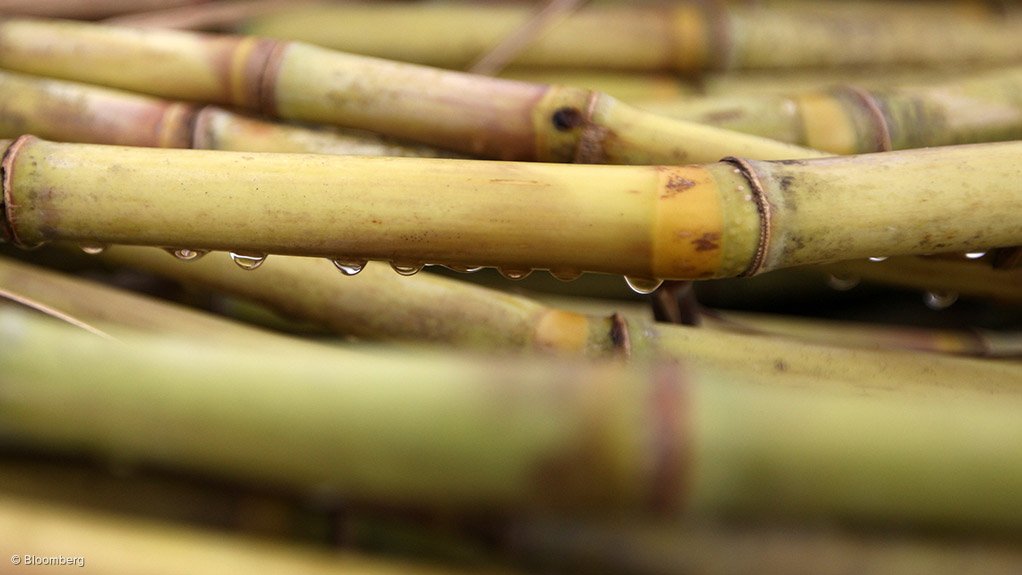



Industry organisation SA Canegrowers is urgently calling on Trade, Industry and Competition Minister Parks Tau to intervene and finalise the update to the sugar import tariff mechanism to reflect current local sugar market realities.
This call comes amid South Africa’s sugar industry reaching a decisive stage, with new data revealing that sugar imports in the first five months of this year nearly doubled what they were in the same period last year, displacing locally produced sugar from shelves while food and beverage producers buy increasing quantities of imported sugar.
SA Canegrowers notes that the International Trade Administration Commission of South Africa is assessing whether sugar tariffs are at the correct level, after an application was submitted by the sugar industry more than 18 months ago.
The organisation adds that the impact of sugar imports on local sales is concerning as figures tracked by industry body the South Africa Sugar Association for the period April 1 to June 30 show local sales of 255 015 t, thereby representing a collapse of more than 45 000 t compared to the same period in 2025.
Further, SA Canegrowers highlights that, before the tariff framework was eroded, local sales for the same period reached recent highs of 428 422 t, and that in the space of a few seasons, nearly 175 000 t of local sales have been lost for growers and millers.
“According to South African Revenue Service data, 94 984 t of sugar were imported between January and May, compared with 55 213 t over the same period in 2025. Last year already saw unprecedented imports owing to weak local tariff protection. In 2022, only 1 491 t of sugar were imported between January and May, showcasing how rapidly the current tariff regime has fallen out of step with global sugar market realities.
“Every tonne of locally produced sugar displaced by an import is a direct hit to a grower’s income, a mill’s viability, and a rural community’s stability. The scale of what we are seeing is nothing short of a crisis,” says SA Canegrowers chairperson Higgins Mdluli.
Meanwhile, he notes that the imports flooding South Africa’s sugar market originate predominantly from Brazil, India and Thailand, where growers benefit from generous State subsidies and integrated ethanol regimes that effectively allow surplus sugar to be offloaded onto global markets at prices below what it costs South African growers to produce sugar.
Moreover, Mdluli adds that import agents buy this cheap sugar abroad and sell it locally at prices comparable to domestically produced sugar, “pocketing” the margin while South African growers, mill workers and the rural economies of KwaZulu-Natal and Mpumalanga suffer the consequences of lower domestically produced sugar sales.
He argues that, under South Africa’s sugar industry agreement, sugar that is left unsold in South Africa must be exported, while also highlighting that South African sugar sales in the already distorted global sugar market lead to further losses.
“This is further eroding the local industry’s ability to recoup value from crushed and milled sugarcane – contributing to a projected price a tonne that is more than 10% lower than last year at roughly R6 600/t as of July this year.
“South Africa’s sugar industry supports more than one-million livelihoods, most of them in rural KwaZulu-Natal and Mpumalanga, where sugarcane farming is often the only source of stable income and economic activity for entire communities. Allowing it to be hollowed out by unfair imports, for want of an administrative tariff adjustment, would be unconscionable,” Mdluli concludes.
Article Enquiry
Email Article
Save Article
Feedback
To advertise email advertising@creamermedia.co.za or click here
Research Reports

Projects



Latest News

Showroom

At Airshrink - CiP, we surpass customer expectations with innovative MV and LV cable accessories, including heat shrink joints, terminations,...
VISIT SHOWROOM
FLANDERS Southern Africa provides integrated solutions for mining and industrial operations, covering field services, automation, electrification,...
VISIT SHOWROOM



Announcements
What's On
Subscribe to improve your user experience...
Option 1 (equivalent of R125 a month):
Receive a weekly copy of Creamer Media's Engineering News & Mining Weekly magazine
(print copy for those in South Africa and e-magazine for those outside of South Africa)
Receive daily email newsletters
Access to full search results
Access archive of magazine back copies
Access to Projects in Progress
Access to ONE Research Report of your choice in PDF format
Option 2 (equivalent of R375 a month):
All benefits from Option 1
PLUS
Access to Creamer Media's Research Channel Africa for ALL Research Reports, in PDF format, on various industrial and mining sectors
including Electricity; Water; Energy Transition; Hydrogen; Roads, Rail and Ports; Coal; Gold; Platinum; Battery Metals; etc.
Already a subscriber?
Forgotten your password?
Receive weekly copy of Creamer Media's Engineering News & Mining Weekly magazine (print copy for those in South Africa and e-magazine for those outside of South Africa)
➕
Recieve daily email newsletters
➕
Access to full search results
➕
Access archive of magazine back copies
➕
Access to Projects in Progress
➕
Access to ONE Research Report of your choice in PDF format
RESEARCH CHANNEL AFRICA
R4500 (equivalent of R375 a month)
SUBSCRIBEAll benefits from Option 1
➕
Access to Creamer Media's Research Channel Africa for ALL Research Reports on various industrial and mining sectors, in PDF format, including on:
Electricity
➕
Water
➕
Energy Transition
➕
Hydrogen
➕
Roads, Rail and Ports
➕
Coal
➕
Gold
➕
Platinum
➕
Battery Metals
➕
etc.
Receive all benefits from Option 1 or Option 2 delivered to numerous people at your company
➕
Multiple User names and Passwords for simultaneous log-ins
➕
Intranet integration access to all in your organisation