Crisis prompts tariff hikes, calls for State-led revival plan

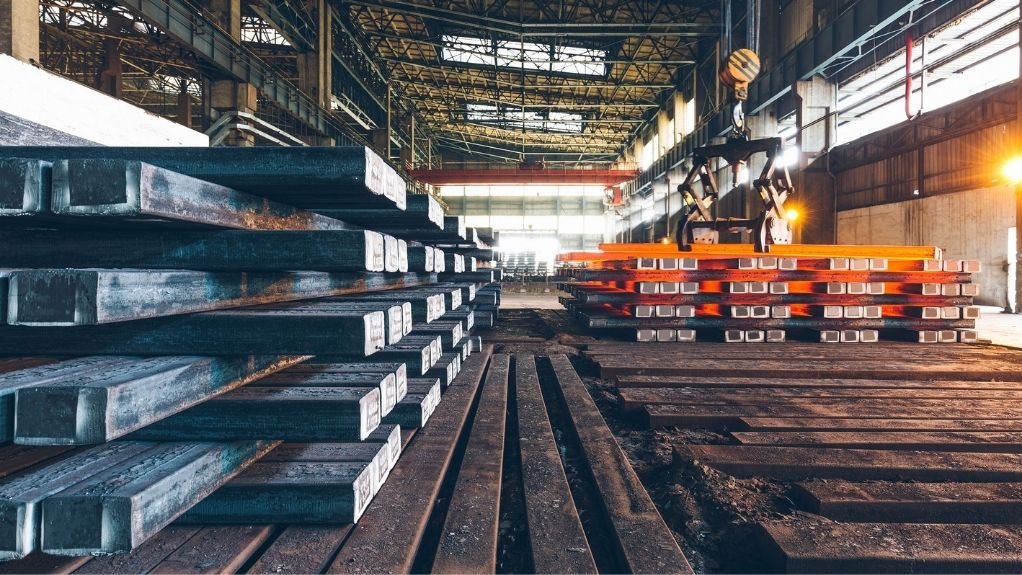
IMPORTS TARGETED Rebate provisions will also allow duty-free imports of steel products not manufactured locally, including certain rails, wire rods, pipes and heavy structural steel


South Africa’s steel industry is facing an “emergency situation” driven by global overcapacity, surging low-cost imports and collapsing domestic production, which has led to government and Parliament pushing parallel interventions to stabilise the sector and protect thousands of jobs.
Authority responsible for trade remedies the International Trade Administration Commission (Itac) gazetted proposed tariff increases, rebate provisions and import-control measures following a steel tariff review that began in March 2025. Itac chief commissioner Ayabonga Cawe said the review underscored the severity of the crisis.
“It’s a sign of the seriousness with which the government broadly engages with the challenges confronting the steel sector. The people who have responded to this review themselves have indicated that it is akin to an emergency situation,” he said.
Itac’s findings pointed to global steel overcapacity, cheap imports from China and India, trade diversion as other countries raised duties, weak domestic demand, high energy and logistics costs and widespread customs fraud. He added that the commission observed a “massive price injury” in the form of cheap steel products landing in South Africa below a comparable cost of production.
Cawe stated that conditions warrant consideration of emergency safeguard measures under the General Agreement on Tariffs and Trade and that global supply had piled up without a matching rise in demand, while China, India and Türkiye have expanded production over the past two decades.
“The [EU] is transitioning its rolling safeguards to a 50% duty.”
Locally, the impact has been stark. “In 2005 we produced over nine-million tonnes of steel in South Africa. We produce at this point probably around half or less than half of that,” Cawe said. Employment in the basic iron and steel sector has also more than halved, from over 50 000 people at the end of 2009 to less than half that number by the end of 2025.
Itac received more than 150 submissions during the review and while some firms requested tariff hikes of up to 65.55%, the commission recommended raising customs duties to their respective World Trade Organisation (WTO) bound rates to address import surges, price undercutting and duty circumvention.
Rebate provisions would also allow duty-free imports of steel products not manufactured locally, including certain rails, wire rods, pipes and heavy structural steel. “We don’t want to unnecessarily burden downstream fabricators,” Cawe commented.
Itac further proposed an import permit and surveillance system to combat customs fraud, under-invoicing and circumvention with industry groups, backed by stricter controls and called for price benchmarks and mandatory declarations.
However, automotive manufacturers including BMW South Africa and Ford Motor Company warned that higher input costs could hurt vehicle export competitiveness. Cawe acknowledged this and cautioned that trade measures alone are insufficient.
“Yes, tariffs alone are a blunt instrument, but you’ve got to see this as a symphony of instruments. Energy costs, logistics inefficiencies and infrastructure constraints also needed addressing. You can’t afford inertia or indecision or no response,” he reported.
That view was echoed by the Portfolio Committee on Trade, Industry and Competition, which last month called for urgent government intervention to save the sector. During a follow-up engagement with the Department of Trade, Industry and Competition (dtic) and steel and metal fabrication stakeholders, the committee assessed progress on sector challenges and proposed further interventions.
Stakeholders flagged continued decline owing to global competition, policy misalignment, weak demand, poor logistics, high electricity costs and declining investment. The shift, amid excess global supply, to imported steel has increased demand for low-carbon processes, while local production remains carbon-intensive, which has accelerated job losses.
Concerns were also raised about the distortionary impact of the Preferential Pricing System and export controls on scrap metal recycling and waste pickers’ livelihoods.
Proposals tabled include binding local public procurement to boost demand, especially through infrastructure spend and State-owned enterprise supplier development, and targeted support for subsectors such as wire and scrap metal. Stakeholders urged that electricity pricing and rail-freight inefficiencies be resolved, while calling for development financing and tax incentives for downstream industries. A rail reindustrialisation compact led by the Presidency has been mooted, along with stronger enforcement of trade remedies to block illicit and under-priced imports.
The committee welcomed the dtic’s progress on trade remedies and electricity price negotiations, but it said a clear, coordinated, State-led strategy is needed.
The dtic was further urged to work with counterparts to enforce localisation and public procurement policies and tighten import enforcement.
Portfolio Committee on Trade, Industry and Competition chairperson Mzwandile Masina said decisive action is non-negotiable.
“The steel sector must be saved. However, this requires holistic government support and industry investment to ensure that a modern and competitive sector can emerge. Therefore, the dtic and its entities should prioritise the review of the Master Plan and affected interventions.”
Article Enquiry
Email Article
Save Article
Feedback
To advertise email advertising@creamermedia.co.za or click here
Research Reports
Projects

Latest News


Showroom
Tsurumi Pumps Africa is a specialist supplier of Japanese-engineered submersible pumping solutions, serving customers across the African continent.
VISIT SHOWROOM
Astore Keymak is one of South Africa’s leading suppliers of high-quality Thermoplastic Pipeline Systems, with branches in the major provinces.
VISIT SHOWROOM
Press Office
Announcements
What's On
Subscribe to improve your user experience...
Option 1 (equivalent of R125 a month):
Receive a weekly copy of Creamer Media's Engineering News & Mining Weekly magazine
(print copy for those in South Africa and e-magazine for those outside of South Africa)
Receive daily email newsletters
Access to full search results
Access archive of magazine back copies
Access to Projects in Progress
Access to ONE Research Report of your choice in PDF format
Option 2 (equivalent of R375 a month):
All benefits from Option 1
PLUS
Access to Creamer Media's Research Channel Africa for ALL Research Reports, in PDF format, on various industrial and mining sectors
including Electricity; Water; Energy Transition; Hydrogen; Roads, Rail and Ports; Coal; Gold; Platinum; Battery Metals; etc.
Already a subscriber?
Forgotten your password?
Receive weekly copy of Creamer Media's Engineering News & Mining Weekly magazine (print copy for those in South Africa and e-magazine for those outside of South Africa)
➕
Recieve daily email newsletters
➕
Access to full search results
➕
Access archive of magazine back copies
➕
Access to Projects in Progress
➕
Access to ONE Research Report of your choice in PDF format
RESEARCH CHANNEL AFRICA
R4500 (equivalent of R375 a month)
SUBSCRIBEAll benefits from Option 1
➕
Access to Creamer Media's Research Channel Africa for ALL Research Reports on various industrial and mining sectors, in PDF format, including on:
Electricity
➕
Water
➕
Energy Transition
➕
Hydrogen
➕
Roads, Rail and Ports
➕
Coal
➕
Gold
➕
Platinum
➕
Battery Metals
➕
etc.
Receive all benefits from Option 1 or Option 2 delivered to numerous people at your company
➕
Multiple User names and Passwords for simultaneous log-ins
➕
Intranet integration access to all in your organisation