Square Kilometre Array (SKA) project, South Africa/Australia

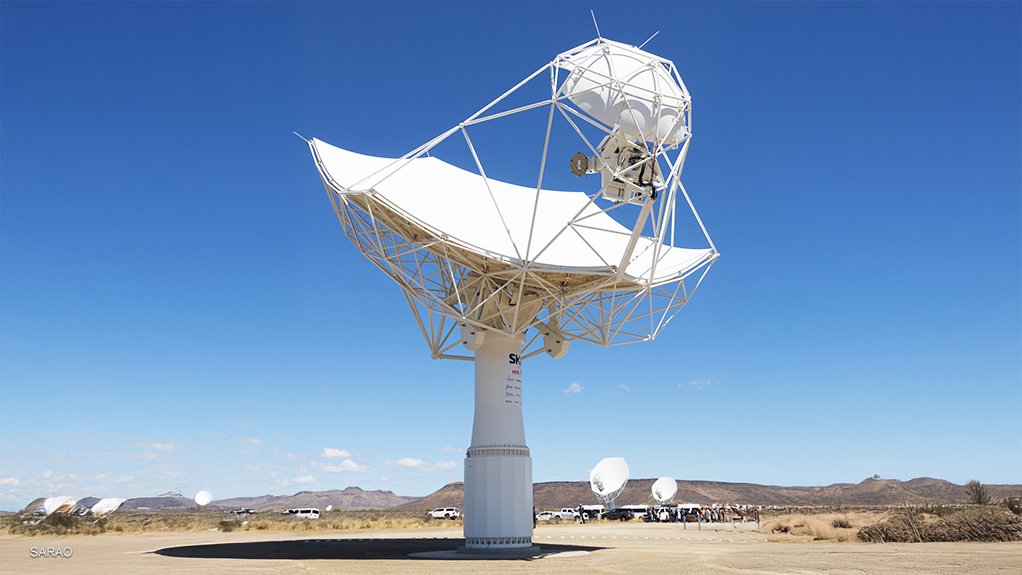
Photo by SKAO


Name of the Project
Square Kilometre Array (SKA) project.
Location
South Africa’s Karoo region and Western Australia’s Murchison Shire have been chosen as co-hosting locations.
South Africa’s Karoo will host the core of the high- and mid-frequency dishes, ultimately extending over the African continent. Australia’s Murchison Shire will host the low-frequency antennas.
Project Owner/s
SKA Observatory (SKAO) comprising Australia, China, Italy, the Netherlands, Portugal, South Africa and the UK, with others expected to join in due course.
France became the international organisation’s fourteenth member in June 2026. French President Emmanuel Macron signed the documents of accession in March, and the country’s membership has now come into effect. With the accession of France, the membership of the SKAO has increased by 100% since it was established in 2021.
Project Description
The SKA will provide a collecting area of one-million square metres. This will make the SKA the biggest radio telescope array ever built.
The project will use three types of antennas (radio-wave receptors) – dishes, midfrequency aperture arrays and low-frequency aperture arrays – to provide continuous frequency coverage from 70 MHz to 10 GHz. Combining the signals from the antennas will create a telescope with a collecting area equivalent to a dish with an area of about 1 km2.
The project will comprise two radio telescope arrays, currently designated SKA-Mid and SKA-Low.
The South African instrument, known as SKA–Mid, will comprise ) dishes and operate in the 350 MHz to 15.4 GHz frequency range. The Australian instrument, known as SKA–Low, will comprise 131 072 dipole antennas and will operate in the 50 MHz to 350 MHz frequency range.
SKA–Mid will include the 64 dishes of the South African precursor to the SKA, the MeerKAT radio telescope array. Australia’s precursor, the Australian SKA Pathfinder (better known as Askap) will serve as surveying instrument for the SKA.
The central regions, in Australia and in South Africa, will contain cores, each 5 km in diameter – one for each antenna type. Fifty per cent of the collecting area will be within the central cores. The aperture array antennas will extend to about 200 km from the core regions. In Africa, the dishes will be positioned at distant stations that are 3 000 km from the core regions.
The construction of the SKA will be phased, which means that the SKA can start operating before construction is completed.
Potential Job Creation
Five-hundred engineers from 100 institutions across 20 countries are involved in the design of the SKA telescopes.
More than 1 000 scientists from 40 countries are involved in the development of the science case for the SKA telescopes.
Capital Expenditure
The overall design commitment for funding is €2-billion, under 2021 economic conditions. With every passing year, this number increases by the inflation rate.
Planned Start/End Date
The entire array is expected to start early operations by July 2028.
Latest Developments
France has established the Extreme Computing Lab for Astronomical Telescopes (ECLAT), to handle the significant computing challenges that will encountered by the huge data streams the SKAO will generate.
ECLAT is a research and development lab that combines public and private partners. France is actively participating in the SKA technical group, known as SCOOP, which is devoted to minimising the energy consumption of Science Data Processing (SDP) computational processes. French scientific institutions are already represented in 13 of the 14 SKA Science Working Groups, including co-chairing two of them.
The French industry was awarded its first SKA construction contract – to computing specialist Bull for producing SDP hardware for the telescope – last year. This will process and reduce the great data volumes from the telescope arrays to produce detailed sky images. The first installations of this hardware will take place in Australia later this year.
Key Contracts, Suppliers and Consultants
About 70 contracts will be placed by the SKAO within its member States, with competitive bidding taking place in the countries.
Contracts awarded to date: Astron – Netherlands Institute for Radio Astronomy, CGI Netherlands, TriOpSys, S[&]T – Science and Technology Corporation, Vivo Technical, Interaction Design Solutions, International Centre for Radio Astronomy Research, Guangzhou University, Commonwealth Scientific and Industrial Research Organisation, Fourier Space, Observatory Sciences, CGI IT UK, The Numerical Algorithms Group, Persistent Systems, Covnetics, The National Institute for Astrophysics, ALTAR Innovation, Faculdade de Ciências da Universidade do Porto, Critical Software (software development); Zutari (MID infra professional services); SARAO (professional services); AVNET Silica (SPS FPGAs); Sanitas EG (SPS iTPM & Subracks); EMSS Antennas (receivers for SKA-Mid dishes); Power Adenco Joint Venture (construction of the major civil infrastructure for the SKA-Mid); South African Radio Astronomy Observatory (software); EMCOM, VIVO and Zutari; CETC54 (telescope dish manufacturer).
Contact Details for Project Information
SKA South Africa, email enquiries@ska.ac.za.
Article Enquiry
Email Article
Save Article
To advertise email advertising@creamermedia.co.za or click here
Research Reports

Projects


Latest Multimedia

Latest News

Showroom

At Airshrink - CiP, we surpass customer expectations with innovative MV and LV cable accessories, including heat shrink joints, terminations,...
VISIT SHOWROOM
Complete range of security sealing solutions including security seals bags and labels.
VISIT SHOWROOM



Press Office
Announcements
What's On
Subscribe to improve your user experience...
Option 1 (equivalent of R125 a month):
Receive a weekly copy of Creamer Media's Engineering News & Mining Weekly magazine
(print copy for those in South Africa and e-magazine for those outside of South Africa)
Receive daily email newsletters
Access to full search results
Access archive of magazine back copies
Access to Projects in Progress
Access to ONE Research Report of your choice in PDF format
Option 2 (equivalent of R375 a month):
All benefits from Option 1
PLUS
Access to Creamer Media's Research Channel Africa for ALL Research Reports, in PDF format, on various industrial and mining sectors
including Electricity; Water; Energy Transition; Hydrogen; Roads, Rail and Ports; Coal; Gold; Platinum; Battery Metals; etc.
Already a subscriber?
Forgotten your password?
Receive weekly copy of Creamer Media's Engineering News & Mining Weekly magazine (print copy for those in South Africa and e-magazine for those outside of South Africa)
➕
Recieve daily email newsletters
➕
Access to full search results
➕
Access archive of magazine back copies
➕
Access to Projects in Progress
➕
Access to ONE Research Report of your choice in PDF format
RESEARCH CHANNEL AFRICA
R4500 (equivalent of R375 a month)
SUBSCRIBEAll benefits from Option 1
➕
Access to Creamer Media's Research Channel Africa for ALL Research Reports on various industrial and mining sectors, in PDF format, including on:
Electricity
➕
Water
➕
Energy Transition
➕
Hydrogen
➕
Roads, Rail and Ports
➕
Coal
➕
Gold
➕
Platinum
➕
Battery Metals
➕
etc.
Receive all benefits from Option 1 or Option 2 delivered to numerous people at your company
➕
Multiple User names and Passwords for simultaneous log-ins
➕
Intranet integration access to all in your organisation