South Africa plans State water utility to lure private funds

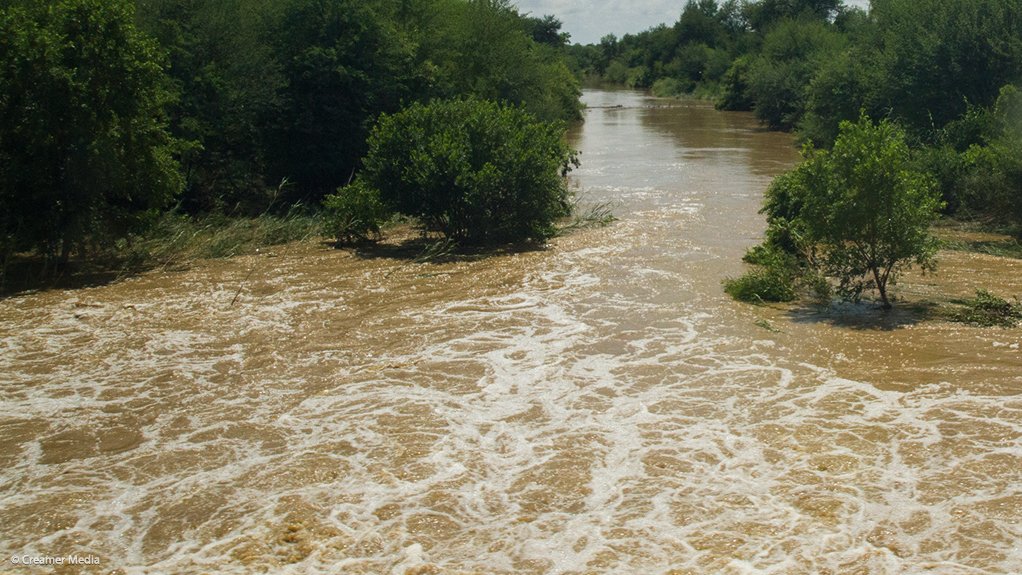


South Africa has begun the process of establishing a new utility to help it entice private investment in infrastructure needed to head off potentially crippling water shortages.
The Department of Water and Sanitation plans to submit a bill to the cabinet by the end of April that sets out proposals for the creation of the National Water Resources Agency, according to Sean Phillips, its director general. It will be created by combining the department’s Water Trading Entity and the Trans-Caledon Tunnel Authority, or TCTA, and could be operational next year.
With Africa’s most industrialized economy and a growing population, South Africa is struggling to keep pace with water demand. The country is one of the world’s 30 driest, with rainfall, while variable across the nation, averaging less than 500 mm a year and climate change is expected to make it even more arid. A national water plan released in 2019 said R900-billion needs to be spent on water-supply and storage infrastructure by 2030.
“We want to create an entity to raise non-fiscus finance” and it should have a substantial balance sheet, Phillips said in a March 28 interview. “It would use a variety of different approaches,” including raising money based on revenue streams from particular projects, loans and other forms of finance that will draw in private companies to provide water, he said.
Concessions, which would allow the private operation of water facilities, would be considered, he said.
A state utility that operates free of day-to-day political oversight may be more efficient at raising finance and running assets, and may help ease pressure on the state to fund water provision. It will also combine two organizations, cutting down on costs and bureaucracy, said Barbara Schreiner, executive director of the Water Integrity Network, an international advocacy group that campaigns for transparency and capacity development in the water sector.
The agency’s formation is in line with President Cyril Ramaphosa’s stated aim of attracting private investment to fund hundreds of billions of rand of infrastructure, a marked break from the government’s previous practice of financing most public water, power and transport facilities itself.
The cabinet will need to approve the bill before it is released for public comment. It will then go back to the cabinet, whereupon it will be referred to parliament for approval and the president to sign it into law as an Act.
The functioning of the agency will most closely mirror the way South Africa finances its national road network through the South African National Roads Agency. The country’s power also mostly comes from a national electricity utility, Eskom Holdings.
WATER ASSETS
The replacement value of South Africa’s national water assets is currently between R200-billion and R300-billion, according to Phillips, when asked about the potential size of the entity’s balance sheet.
The Water Trading Entity was created in 1983 to develop, operate and maintain national water assets using money allocated from the national fiscus. The TCTA, an agency of the water department, was established in 1986 and initially raised finance and built the South African section of the Lesotho Highlands Water Project, which supplies the country with water from the mountainous enclave of Lesotho. It has since built a number of other projects.
The TCTA has raised private finance but it has depended on Treasury guarantees that have added to credit-rating risks for the government, which has already accumulated sovereign debt that equates to about 70% of gross domestic product. The authority currently has outstanding loans of R3.8-billion, according to data compiled by Bloomberg.
While the TCTA has raised money on a project-specific basis, the new utility could seek funding based on the national revenue stream from water services, Schreiner said. That could see some of the money directed toward providing water for underserved communities, she added.
The establishment of the agency has been under consideration since before the end of apartheid in 1994, but its creation was stalled after South Africa’s first democratic elections as the new government didn’t regard it as the best structure to make water access more equitable as supply was extended to additional Black households. A renewed attempt to set it up in about 2008 failed and the idea was then revived several years ago.
Article Enquiry
Email Article
Save Article
Feedback
To advertise email advertising@creamermedia.co.za or click here
Research Reports
Projects
Latest News

Showroom
Columbus Stainless, based in Middelburg, Mpumalanga, is Africa’s only producer of stainless steel flat products. In addition, Columbus is the only...
VISIT SHOWROOM
Design, Construction and Maintenance of Site Erected, Welded Bulk Storage Tanks for the Petrochemical, LNG, Ammonia and Sustainable fuel Sectors.
VISIT SHOWROOM
Announcements
What's On
Subscribe to improve your user experience...
Option 1 (equivalent of R125 a month):
Receive a weekly copy of Creamer Media's Engineering News & Mining Weekly magazine
(print copy for those in South Africa and e-magazine for those outside of South Africa)
Receive daily email newsletters
Access to full search results
Access archive of magazine back copies
Access to Projects in Progress
Access to ONE Research Report of your choice in PDF format
Option 2 (equivalent of R375 a month):
All benefits from Option 1
PLUS
Access to Creamer Media's Research Channel Africa for ALL Research Reports, in PDF format, on various industrial and mining sectors
including Electricity; Water; Energy Transition; Hydrogen; Roads, Rail and Ports; Coal; Gold; Platinum; Battery Metals; etc.
Already a subscriber?
Forgotten your password?
Receive weekly copy of Creamer Media's Engineering News & Mining Weekly magazine (print copy for those in South Africa and e-magazine for those outside of South Africa)
➕
Recieve daily email newsletters
➕
Access to full search results
➕
Access archive of magazine back copies
➕
Access to Projects in Progress
➕
Access to ONE Research Report of your choice in PDF format
RESEARCH CHANNEL AFRICA
R4500 (equivalent of R375 a month)
SUBSCRIBEAll benefits from Option 1
➕
Access to Creamer Media's Research Channel Africa for ALL Research Reports on various industrial and mining sectors, in PDF format, including on:
Electricity
➕
Water
➕
Energy Transition
➕
Hydrogen
➕
Roads, Rail and Ports
➕
Coal
➕
Gold
➕
Platinum
➕
Battery Metals
➕
etc.
Receive all benefits from Option 1 or Option 2 delivered to numerous people at your company
➕
Multiple User names and Passwords for simultaneous log-ins
➕
Intranet integration access to all in your organisation