Senegal's 'Pink Lake' recovers its rosy hue, reviving salt trade

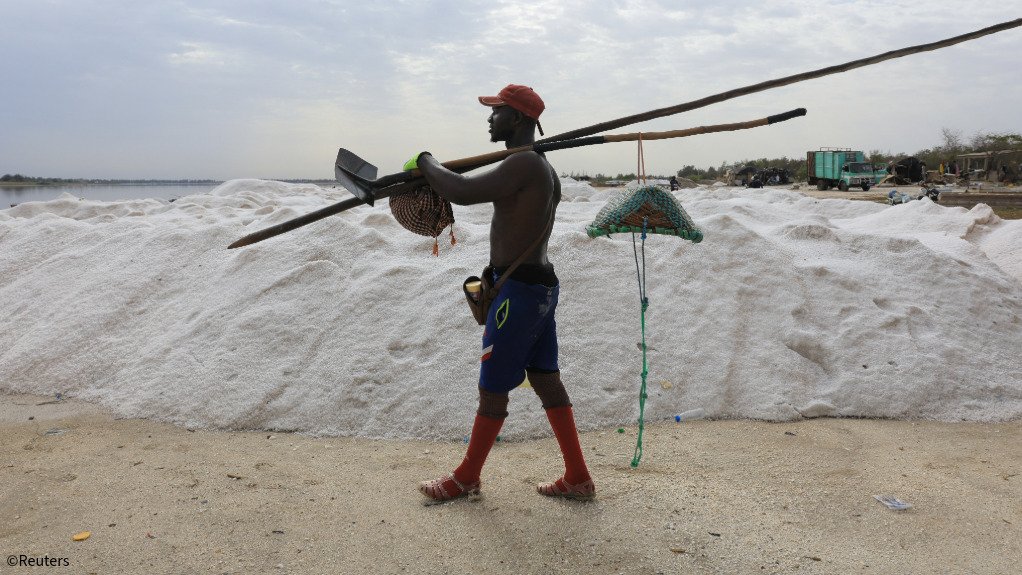


Standing waist-deep in the waters of Senegal’s famed Pink Lake, Seydou Toure uses a shovel to scrape salt from the lakebed that he will later sell to tourists and traders.
It’s a way of life that sustained him for more than a decade and a half before flooding in 2022 altered the ecosystem, robbing the lake of the salinity that both paid Toure’s bills and gave the water its rosy hue.
Overnight, salt harvesters like Toure lost their jobs and tourism slowed to a trickle, devastating the local economy.
Now that painful chapter appears to be ending: After a yearslong effort to pump excess water from the lake, its old colour is back, and community leaders earlier this month held a traditional ceremony marking its official re-opening for salt extraction.
'WE HAD LOST EVERYTHING'
Pink Lake, officially known as Lake Retba, gets its colour from microorganisms such as the Dunaliella salina algae that thrive in highly saline conditions, according to geologist Cheikh Ibrahima Youm of Cheikh Anta Diop University in Dakar.
Roughly 3 000 salt harvesters normally work at the lake located 30 km northeast of Dakar, according to Ibrahima Mbaye, president of a local NGO dedicated to protecting the lake. Nearly 2 000 additional people depend indirectly on the industry through activities like transport and trade, he said.
Most years, the lake can also attract between 7 000 and 8 000 visitors during the tourist season, which runs from October to May, he said.
But in August 2022, during a period of severe flooding in Dakar, authorities diverted floodwaters into Pink Lake, using it for emergency drainage because it is in a low-lying area, Mbaye said.
The influx of freshwater diluted the lake’s highly saline waters, disrupting both salt formation and the conditions needed for its famous pink colour, Youm said.
"We woke up one morning, and we had lost everything," Toure said.
REVIVING THE LAKE
Associations representing salt producers, tour operators, artisans and local businesses immediately got to work raising around 23-million CFA francs (around $40 000) to fund pumping operations aimed at removing excess water from the lake, Mbaye said. The money was used to rent pumps, buy fuel and install roughly 600 metres of piping to drain water towards the sea, he said.
Around 100 volunteers helped install, operate and monitor the pumping system, Mbaye said, adding that local authorities later helped by providing a larger pump and electricity.
As salinity gradually returned, so did the lake's colour.
Local hotels are now preparing for tourists to follow suit, and Toure is once again spending hours in the water extracting salt.
"The work is physically demanding," he said, rubbing shea butter onto his skin for protection.
But he has no qualms with his chosen career.
"The money I earned from this salt allowed me to buy land, horses and cattle. Everything comes from the lake," he said.
"If someone wanted to become a salt harvester, I would tell them not to hesitate... it's worth it."
Article Enquiry
Email Article
Save Article
Feedback
To advertise email advertising@creamermedia.co.za or click here
Research Reports

Projects

Latest Multimedia

Latest News

Showroom
Iritron delivers advanced automation, control, and optimisation solutions to the Mining, Minerals & Metals, Consumer Package Goods and...
VISIT SHOWROOM
ATI systems comprises five divisions: electrical assemblies, drives and controls, feedback sensors, enclosures, and strip guiding.
VISIT SHOWROOM


Announcements
What's On
Subscribe to improve your user experience...
Option 1 (equivalent of R125 a month):
Receive a weekly copy of Creamer Media's Engineering News & Mining Weekly magazine
(print copy for those in South Africa and e-magazine for those outside of South Africa)
Receive daily email newsletters
Access to full search results
Access archive of magazine back copies
Access to Projects in Progress
Access to ONE Research Report of your choice in PDF format
Option 2 (equivalent of R375 a month):
All benefits from Option 1
PLUS
Access to Creamer Media's Research Channel Africa for ALL Research Reports, in PDF format, on various industrial and mining sectors
including Electricity; Water; Energy Transition; Hydrogen; Roads, Rail and Ports; Coal; Gold; Platinum; Battery Metals; etc.
Already a subscriber?
Forgotten your password?
Receive weekly copy of Creamer Media's Engineering News & Mining Weekly magazine (print copy for those in South Africa and e-magazine for those outside of South Africa)
➕
Recieve daily email newsletters
➕
Access to full search results
➕
Access archive of magazine back copies
➕
Access to Projects in Progress
➕
Access to ONE Research Report of your choice in PDF format
RESEARCH CHANNEL AFRICA
R4500 (equivalent of R375 a month)
SUBSCRIBEAll benefits from Option 1
➕
Access to Creamer Media's Research Channel Africa for ALL Research Reports on various industrial and mining sectors, in PDF format, including on:
Electricity
➕
Water
➕
Energy Transition
➕
Hydrogen
➕
Roads, Rail and Ports
➕
Coal
➕
Gold
➕
Platinum
➕
Battery Metals
➕
etc.
Receive all benefits from Option 1 or Option 2 delivered to numerous people at your company
➕
Multiple User names and Passwords for simultaneous log-ins
➕
Intranet integration access to all in your organisation