


Robots trusted to do noncritical manufacturing tasks


In South Africa, 86% of manufacturing employees surveyed trust robots to do cleaning and 83% trust them to deliver parcels and orders, but fewer than half of employees, or 43%, would trust robots in such tasks as managing dangerous manufacturing, said cybersecurity services multinational Kaspersky.
The company conducted a study of employees of manufacturing companies and other large organisations in the Middle East, Türkiye and Africa region, which showed that employees trust robots to perform ordinary tasks in logistics, transportation and cleaning, but not for life-critical functions, such as performing surgeries, flying aeroplanes without pilots or managing dangerous manufacturing or pharmaceutical production.
Only 24% of local respondents trust robots to perform a surgery.
These concerns can be explained by the fact that 70% of all employees point out that it is unclear who bears responsibility if robots fail in their duties owing to an equipment malfunction or a cyberattack.
Further, 50% of employees believe that, if robots malfunction, they can cause a physical threat to humans, said Kaspersky technical experts head Emad Haffar.
One of the reasons for the lack of trust in robots is the belief that robots are prone to cyberattacks. This view is supported by 73% of employees surveyed in South Africa, he noted.
“Today, robotics are used together with industrial control systems (ICS) and other information technology to handle production processes, replacing manual labour and improving efficiency, speed, quality and performance. Our research shows a split in employees’ opinion on the duties that robots are fit to carry out,” said Haffar.
“While employees in general are ready for robots to perform unskilled duties, such as cleaning and order delivery, the majority are not ready to trust robots with critical functions, which, if done wrong, could cause financial damage or be a physical threat to humans,” he said.
Further, from January to September 2022, malicious objects were blocked on 38% of ICS computers in the Middle East, Türkiye and Africa region that were protected by Kaspersky solutions, according to Kaspersky ICS Cyber Emergency Response Team statistics.
Article Enquiry
Email Article
Save Article
Feedback
To advertise email advertising@creamermedia.co.za or click here
Research Reports

Projects


Latest Multimedia


Latest News

Showroom

As a reticulator, Egoli Gas provides natural gas to homes and businesses via underground pipes.
VISIT SHOWROOM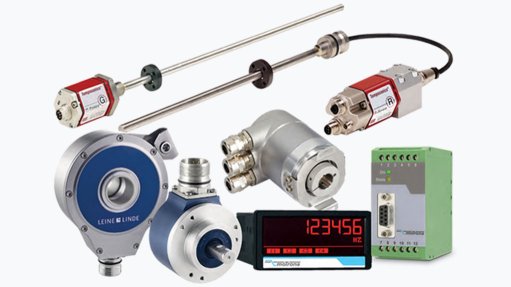
ATI systems comprises five divisions: electrical assemblies, drives and controls, feedback sensors, enclosures, and strip guiding.
VISIT SHOWROOM



Press Office
Announcements
What's On
Subscribe to improve your user experience...
Option 1 (equivalent of R125 a month):
Receive a weekly copy of Creamer Media's Engineering News & Mining Weekly magazine
(print copy for those in South Africa and e-magazine for those outside of South Africa)
Receive daily email newsletters
Access to full search results
Access archive of magazine back copies
Access to Projects in Progress
Access to ONE Research Report of your choice in PDF format
Option 2 (equivalent of R375 a month):
All benefits from Option 1
PLUS
Access to Creamer Media's Research Channel Africa for ALL Research Reports, in PDF format, on various industrial and mining sectors
including Electricity; Water; Energy Transition; Hydrogen; Roads, Rail and Ports; Coal; Gold; Platinum; Battery Metals; etc.
Already a subscriber?
Forgotten your password?
Receive weekly copy of Creamer Media's Engineering News & Mining Weekly magazine (print copy for those in South Africa and e-magazine for those outside of South Africa)
➕
Recieve daily email newsletters
➕
Access to full search results
➕
Access archive of magazine back copies
➕
Access to Projects in Progress
➕
Access to ONE Research Report of your choice in PDF format
RESEARCH CHANNEL AFRICA
R4500 (equivalent of R375 a month)
SUBSCRIBEAll benefits from Option 1
➕
Access to Creamer Media's Research Channel Africa for ALL Research Reports on various industrial and mining sectors, in PDF format, including on:
Electricity
➕
Water
➕
Energy Transition
➕
Hydrogen
➕
Roads, Rail and Ports
➕
Coal
➕
Gold
➕
Platinum
➕
Battery Metals
➕
etc.
Receive all benefits from Option 1 or Option 2 delivered to numerous people at your company
➕
Multiple User names and Passwords for simultaneous log-ins
➕
Intranet integration access to all in your organisation
