Power blind spots – gaining visibility into what lies beneath





This article has been supplied.
By: Anoop Hariparsad - Offer Marketing Manager, Microgrids, MEA at Schneider Electric
It might sound almost too simplistic, but for many organisations and their finance teams, monthly electricity bills are the only evidence of energy performance and resultant costs incurred. But, unfortunately, beneath this bird’s eye view also lies a significant blind spot; visibility into energy consumption and how inefficiencies are quietly draining profitability in the background.
The reality is that many buildings, factories, and commercial sites today still depend on fragmented or outdated metering systems which make them reliant on utility bills and a very broad snapshot of total consumption.
And granted, it might show much energy is used overall, however, it says very little about which systems are driving costs, when equipment is operating unnecessarily, or where inefficiencies are developing over time.
The hidden costs
As mentioned, a lot of facilities’ meter only incoming supply. This means they can see total consumption across the site, but not what is happening downstream.
Within any modern facility, energy demand is distributed across multiple systems, HVAC, lighting, office spaces, kitchens, production equipment, server rooms, refrigeration, and more. Each of these loads behaves differently throughout the day and presents its own opportunities for optimisation.
However, when organisations cannot isolate and monitor these individual loads, it leads to multiple blind spots.
As an example, who often does one not see office buildings fully illuminated late into the night, despite minimal occupancy? In industrial environments, machinery may continue to run during breaks, shift changes, or idle periods, simply because no one realises the energy impact. HVAC systems frequently operate at full capacity long after buildings have emptied.
These “background loads” can compound into substantial operational costs. And worst, organisations are often blissfully unaware of these loads draining energy and profitability.
Implement data-driven operations
This brings us back to metering. Whilst it might sound quite straightforward, implementing sub-metering across key operational areas, will start eliminating blind spots one by one.
Indeed, instead of simply knowing how much electricity the site consumed, teams can identify exactly where energy is being used, at what times, and under what operating conditions. It creates common language between operations, maintenance, and finance.
Operations gain visibility into production-related consumption patterns, whereas finance teams gain credible data to support investment decisions and efficiency initiatives.
For maintenance, in many cases, rising energy consumption can serve as an early warning indicator for equipment deterioration. Motors, bearings, compressors, and HVAC systems often draw more power as performance degrades.
Realising smarter energy management
A growing number of organisations are adopting compact digital meters that have evolved basic readings to provide real-time operational insight.
Solutions such as Schneider Electric PowerLogic PM2000 metering are helping facilities establish this visibility without requiring large-scale infrastructure overhauls.
This enables facilities to move from static reporting toward live operational awareness.
Instead of waiting for a monthly utility statement, teams can monitor consumption trends in real time, analyse historical usage patterns, and configure alarms for unusual operating conditions or excessive demand spikes.
Connected metering also supports broader sustainability and decarbonisation objectives as it provides insight into where emissions originate, allowing for more accurate strategy execution.
Ultimately, smart metering forms a vital part of the evolution of energy management. Gone are the days of analogue meters, replaced by an intelligent flow of operational data that enables facilities to measure performance, analyse behaviour, and control consumption dynamically.
Article Enquiry
Email Article
Save Article
Feedback
To advertise email advertising@creamermedia.co.za or click here
Research Reports

Projects

Latest News
Showroom
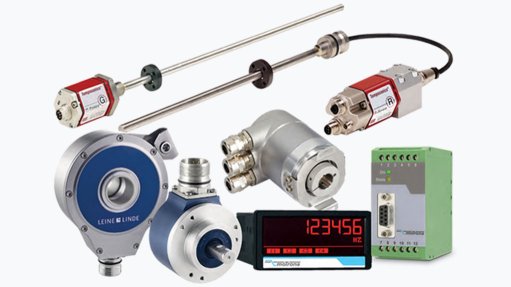
ATI systems comprises five divisions: electrical assemblies, drives and controls, feedback sensors, enclosures, and strip guiding.
VISIT SHOWROOM
For over 30 years, Werner South Africa Pumps & Equipment (PTY) LTD has been designing, manufacturing, supplying and maintaining specialist...
VISIT SHOWROOM


Announcements
What's On
Subscribe to improve your user experience...
Option 1 (equivalent of R125 a month):
Receive a weekly copy of Creamer Media's Engineering News & Mining Weekly magazine
(print copy for those in South Africa and e-magazine for those outside of South Africa)
Receive daily email newsletters
Access to full search results
Access archive of magazine back copies
Access to Projects in Progress
Access to ONE Research Report of your choice in PDF format
Option 2 (equivalent of R375 a month):
All benefits from Option 1
PLUS
Access to Creamer Media's Research Channel Africa for ALL Research Reports, in PDF format, on various industrial and mining sectors
including Electricity; Water; Energy Transition; Hydrogen; Roads, Rail and Ports; Coal; Gold; Platinum; Battery Metals; etc.
Already a subscriber?
Forgotten your password?
Receive weekly copy of Creamer Media's Engineering News & Mining Weekly magazine (print copy for those in South Africa and e-magazine for those outside of South Africa)
➕
Recieve daily email newsletters
➕
Access to full search results
➕
Access archive of magazine back copies
➕
Access to Projects in Progress
➕
Access to ONE Research Report of your choice in PDF format
RESEARCH CHANNEL AFRICA
R4500 (equivalent of R375 a month)
SUBSCRIBEAll benefits from Option 1
➕
Access to Creamer Media's Research Channel Africa for ALL Research Reports on various industrial and mining sectors, in PDF format, including on:
Electricity
➕
Water
➕
Energy Transition
➕
Hydrogen
➕
Roads, Rail and Ports
➕
Coal
➕
Gold
➕
Platinum
➕
Battery Metals
➕
etc.
Receive all benefits from Option 1 or Option 2 delivered to numerous people at your company
➕
Multiple User names and Passwords for simultaneous log-ins
➕
Intranet integration access to all in your organisation