Outcomes-based bonds a powerful tool


KHURSHID FAZEL Webber Wentzel recently advised African banking giant FirstRand Bank on the structuring and issuance of South Africa's first outcomes-based water bond



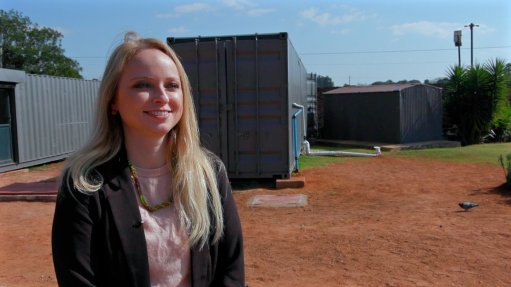
The compounding pressures of accelerating urbanisation, decaying legacy systems, climate change and chronic underinvestment in public infrastructure over decades mean that both the public and private sectors must urgently mobilise towards solutions, says law firm Webber Wentzel partner Khurshid Fazel.
“Across the African continent, water infrastructure is under increasing strain,” she stresses.
Development finance institution (DFI) African Development Bank estimates that the continent’s water and sanitation infrastructure financing gap runs into the tens of billions of dollars each year.
Gaps in constrained public budgets cannot be closed by DFIs and multilateral lenders alone. Private capital markets, with their scale and appetite for yield, represent the most significant untapped source of infrastructure finance on the continent, notes Fazel.
She points out that private investors, however, require predictable, risk-adjusted returns underpinned by credible legal frameworks, which infrastructure projects in emerging markets cannot always realistically offer. Sustainable development imperatives and environmental, social and governance incentives continue to drive investment in these areas though.
While green bonds have played an important role in growing the sustainable finance market, these have also attracted criticism for their susceptibility to greenwashing, with a high risk that sustainability drivers are not matched by substantive outcomes, creating ongoing risk for investors, says Fazel, who notes that outcomes-based bond structures could be a transformative instrument in this context.
These instruments create a formal, legally enforceable link between financial terms and independently verified real-world outcomes, offering private investors a direct connection between capital and impact.
“They are characterised by a variable component of financial return to investors, where that variability is determined by whether agreed environmental or social outcomes are achieved and verified,” she explains.
For developing economies in particular, these structures are compatible with blended finance approaches, enabling the strategic use of concessional or philanthropic capital to derisk investment and enhance returns for private investors.
“The application of outcomes-based finance to nature-based solutions for water security is a natural fit. By monetising environmental outcomes, it becomes possible to construct a financial instrument that is credible to capital markets investors while directly funding the kind of innovative solutions that water security demands,” Fazel explains.
Webber Wentzel recently advised African banking giant FirstRand Bank on the structuring and issuance of South Africa’s first outcomes-based water bond.
The bond finances a large-scale, nature-based water security initiative focused on removing invasive alien plants in strategically important Western Cape catchments – a proven method of increasing streamflow into major dam systems and strengthening long-term regional water security.
The science underpinning this intervention is well established, providing confidence to investors and translating into greater water availability across the user base.
Fazel explains the legal architecture required to establish this instrument is complex and novel in African development finance, demanding robust and objective outcome metrics, clear contractual frameworks and coordination across multiple stakeholders.
The transaction structure developed for this bond is designed to be replicable and deployable across different catchment systems, issuers and capital markets throughout the continent.
“As investor confidence in these structures matures, outcomes-based water bonds have clear potential to become a standard tool in the African infrastructure finance toolkit, channelling private capital at the scale the continent’s water crisis demands,” concludes Fazel.
Article Enquiry
Email Article
Save Article
Feedback
To advertise email advertising@creamermedia.co.za or click here
Research Reports
Projects
Latest Multimedia

Latest News

Showroom

ATI systems comprises five divisions: electrical assemblies, drives and controls, feedback sensors, enclosures, and strip guiding.
VISIT SHOWROOM
Tsurumi Pumps Africa is a specialist supplier of Japanese-engineered submersible pumping solutions, serving customers across the African continent.
VISIT SHOWROOM

Press Office
Announcements
What's On
Subscribe to improve your user experience...
Option 1 (equivalent of R125 a month):
Receive a weekly copy of Creamer Media's Engineering News & Mining Weekly magazine
(print copy for those in South Africa and e-magazine for those outside of South Africa)
Receive daily email newsletters
Access to full search results
Access archive of magazine back copies
Access to Projects in Progress
Access to ONE Research Report of your choice in PDF format
Option 2 (equivalent of R375 a month):
All benefits from Option 1
PLUS
Access to Creamer Media's Research Channel Africa for ALL Research Reports, in PDF format, on various industrial and mining sectors
including Electricity; Water; Energy Transition; Hydrogen; Roads, Rail and Ports; Coal; Gold; Platinum; Battery Metals; etc.
Already a subscriber?
Forgotten your password?
Receive weekly copy of Creamer Media's Engineering News & Mining Weekly magazine (print copy for those in South Africa and e-magazine for those outside of South Africa)
➕
Recieve daily email newsletters
➕
Access to full search results
➕
Access archive of magazine back copies
➕
Access to Projects in Progress
➕
Access to ONE Research Report of your choice in PDF format
RESEARCH CHANNEL AFRICA
R4500 (equivalent of R375 a month)
SUBSCRIBEAll benefits from Option 1
➕
Access to Creamer Media's Research Channel Africa for ALL Research Reports on various industrial and mining sectors, in PDF format, including on:
Electricity
➕
Water
➕
Energy Transition
➕
Hydrogen
➕
Roads, Rail and Ports
➕
Coal
➕
Gold
➕
Platinum
➕
Battery Metals
➕
etc.
Receive all benefits from Option 1 or Option 2 delivered to numerous people at your company
➕
Multiple User names and Passwords for simultaneous log-ins
➕
Intranet integration access to all in your organisation