Opportunities for minerals recovery and reduced legacy tailings risks

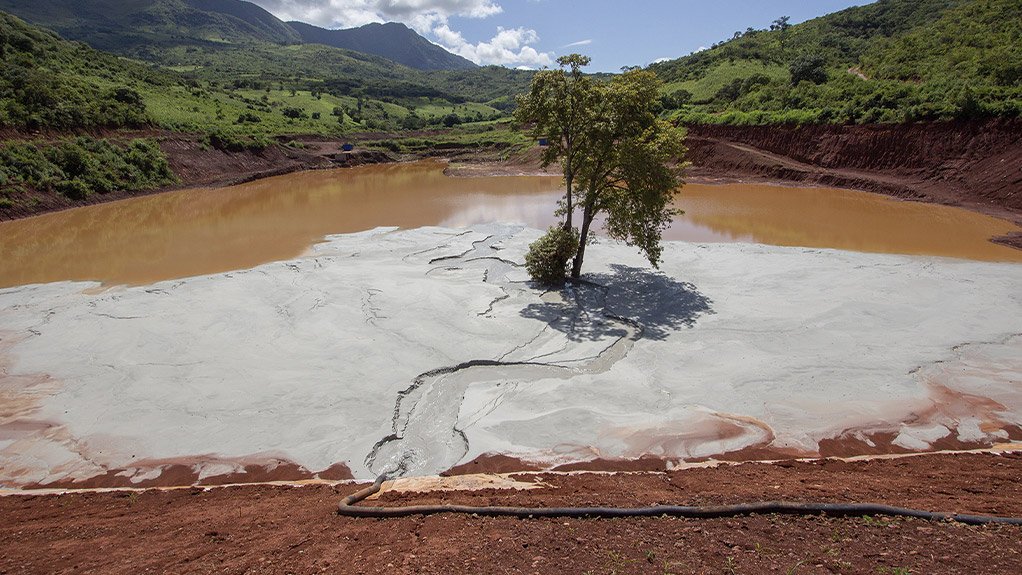


The retreatment of tailings storage facilities (TSFs) is emerging as a significant opportunity for the mining industry to recover valuable minerals while also reducing long-term environmental liabilities, according to SLR Consulting asset transition and closure business lead Danie Otto.
The company asserts that many historic dumps still contain valuable recoverable minerals, noting that gold, in particular, has become increasingly attractive as commodity prices have strengthened.
Otto says that the opportunity is being driven by advancements in the scale, technology and regulatory context surrounding tailings management. Otto, who is also president of the Land Rehabilitation Society of Southern Africa, says retreatment enables a fundamental reset in environmental compliance.
“When historic tailings are reprocessed and relocated, they must be deposited in facilities designed to meet modern regulatory requirements, including the Global Industry Standard on Tailings Management,” he explains.
Modern facilities can now be designed, constructed and managed using professional expertise and the latest pollution control technologies. These include engineered liners, drainage systems and water recovery infrastructure that significantly reduce seepage risks.
“By removing legacy deposits and relocating material to modern facilities, mining companies can significantly reduce long-term environmental liabilities,” he says. “This reduces the liability of continuous seepage treatment and continuous dust prevention, for instance, as these features are more efficiently built into the new systems.”
Otto highlights developments in geosynthetic materials and liners as one of the most important innovations shaping modern TSFs.
At the same time, erosion control technologies such as biodegradable netting are transforming rehabilitation efforts. These nets reduce wind force, minimise dust pollution and create more favourable conditions for vegetation to establish and thrive. Because they are made from organic materials, they biodegrade over time and contribute positively to the surrounding ecosystem.
“On the biological front, innovations in phytoremediation and microbiology are pushing the boundaries even further,” Otto continues. “Scientists are now able to deploy bacteria and plants that actively neutralise pollutants, absorb heavy metals and improve soil conditions.”
Using bacteria that consume acid, professional scientists have been able to extract sulphates and generate carbonates from TSFs, effectively producing alkaline conditions from acidic environments. Similarly, certain plant species act as hyper-accumulators, drawing contaminants from tailings and storing them in biomass that can then be removed from the system.
“While it is difficult to render tailings completely inert, these technologies significantly reduce environmental risk and improve ecological outcomes,” he says.
Modern TSF strategies are also aligning with broader sustainability goals such as biodiversity restoration and carbon sequestration. In some cases, these efforts may also generate additional revenue streams through carbon and biodiversity credits, further strengthening the commercial case for rehabilitation.
Otto affirms that, despite ongoing challenges around compliant mine closure and mine closure certification in particular, TSF retreatment remains one of the most practical and impactful pathways for addressing mining’s environmental legacy.
Article Enquiry
Email Article
Save Article
Feedback
To advertise email advertising@creamermedia.co.za or click here
Research Reports

Projects


Latest Multimedia


Latest News

Showroom

Sulzer South Africa, established in 1922, partners with critical industries like power, oil & gas, water, mining, and chemicals to boost...
VISIT SHOWROOM
Occupational health services, mobile clinics, wellness campaigns, aviation.
VISIT SHOWROOM


Press Office
Announcements
What's On
Subscribe to improve your user experience...
Option 1 (equivalent of R125 a month):
Receive a weekly copy of Creamer Media's Engineering News & Mining Weekly magazine
(print copy for those in South Africa and e-magazine for those outside of South Africa)
Receive daily email newsletters
Access to full search results
Access archive of magazine back copies
Access to Projects in Progress
Access to ONE Research Report of your choice in PDF format
Option 2 (equivalent of R375 a month):
All benefits from Option 1
PLUS
Access to Creamer Media's Research Channel Africa for ALL Research Reports, in PDF format, on various industrial and mining sectors
including Electricity; Water; Energy Transition; Hydrogen; Roads, Rail and Ports; Coal; Gold; Platinum; Battery Metals; etc.
Already a subscriber?
Forgotten your password?
Receive weekly copy of Creamer Media's Engineering News & Mining Weekly magazine (print copy for those in South Africa and e-magazine for those outside of South Africa)
➕
Recieve daily email newsletters
➕
Access to full search results
➕
Access archive of magazine back copies
➕
Access to Projects in Progress
➕
Access to ONE Research Report of your choice in PDF format
RESEARCH CHANNEL AFRICA
R4500 (equivalent of R375 a month)
SUBSCRIBEAll benefits from Option 1
➕
Access to Creamer Media's Research Channel Africa for ALL Research Reports on various industrial and mining sectors, in PDF format, including on:
Electricity
➕
Water
➕
Energy Transition
➕
Hydrogen
➕
Roads, Rail and Ports
➕
Coal
➕
Gold
➕
Platinum
➕
Battery Metals
➕
etc.
Receive all benefits from Option 1 or Option 2 delivered to numerous people at your company
➕
Multiple User names and Passwords for simultaneous log-ins
➕
Intranet integration access to all in your organisation