NAACAM-ILO study calls for action to secure jobs as auto sector moves to EVs

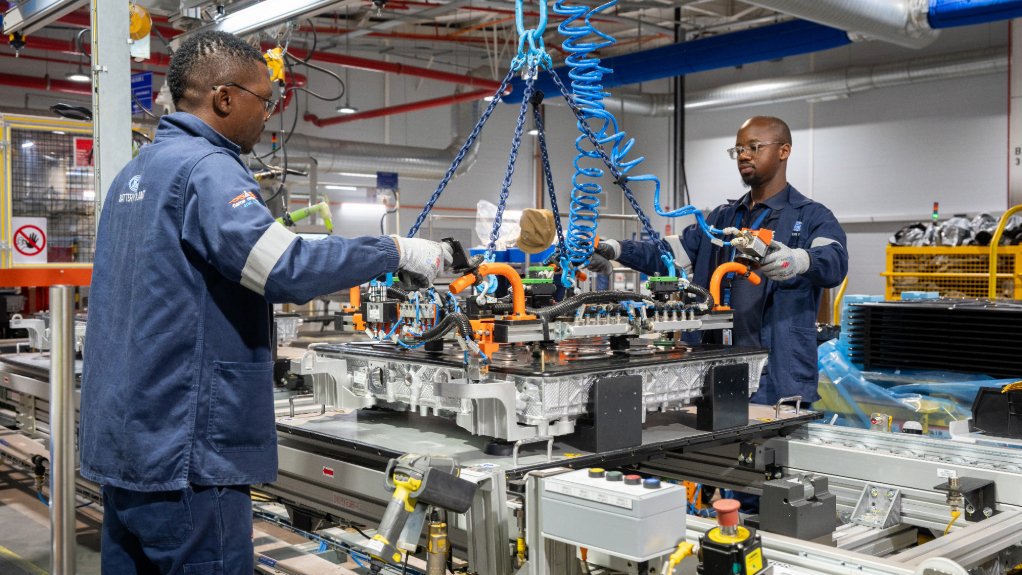


A worst-case scenario could see South Africa’s shift to new-energy vehicles (NEVs) place an estimated 8 200 direct jobs at risk up to 2035, indicates a new research study by the National Association of Automotive Component and Allied Manufacturers (NAACAM), in partnership with the International Labour Organization (ILO).
The study examines the employment impacts of South Africa’s shift from the manufacture and use of internal combustion engine (ICE) vehicles, to the assembly and use of NEVs, which includes hybrids, plug-in hybrids and battery electric vehicles.
NAACAM describes South Africa’s move to NEVs as one of the most significant industrial shifts facing the country’s automotive sector in decades.
“Whether that transition results in industrial growth or manufacturing decline will depend on the policy choices and investments made today.”
The NAACAM–ILO research highlights both the risks and opportunities facing the industry.
While 8 200 jobs could be at risk, it is also possible that the right industrial policies and investment incentives could create an estimated 3 370 direct jobs through the localisation of selected NEV components, such as high-voltage wire harnesses, thermal management systems and hydrogen fuel cells.
The report finds that South Africa already has production capability that could be adapted to manufacture several NEV components.
Realising this opportunity, however, will require stronger demand- and supply-side incentives and accelerated investment in skills development and production capability.
Stakeholder consultations also revealed that many local component manufacturers are not yet planning to diversify into NEV component production, citing government policy uncertainty, logistical challenges and limited investment incentives as key constraints.
In short, the study recommends six priority actions to support a competitive and inclusive transition.
The first is to introduce demand-side incentives to accelerate NEV adoption by South Africa’s car-buying public, while supply-side incentives should also be strengthened to encourage investment in component manufacturing.
Workforce skills audits should be conducted, and structured training pathways established.
A third priority should be to expand accredited NEV curricula, training infrastructure and specialist teaching capacity; with another priority to strengthen the future talent pipeline through improved matric completion and technical education.
A last priority should be to provide appropriate income support and reskilling opportunities for workers displaced during the transition.
The NAACAM–ILO study places specific emphasis on the importance of preparing the workforce for the technologies that will shape the next generation of vehicle manufacturing.
While many skills currently used in ICE component production remain relevant, they will increasingly need to be complemented by capabilities in robotics, AI, advanced manufacturing, green production techniques and specialised NEV technologies.
The research notes that South Africa’s skills development ecosystem remains at a basic level of readiness, requiring significant investment to meet future industry demand.
As governments and manufacturers around the world accelerate the transition to cleaner mobility, Naacam believes that South Africa has an important role to play in the NEV transition.
“However, becoming a competitive production location for NEV components will require a well-coordinated effort among all relevant stakeholders to ensure the country’s skills base is prepared to support the transition.”
The research report was informed by engagement with component manufacturers, vehicle manufacturers, organised labour, government, industry associations, training providers and community stakeholders.
Article Enquiry
Email Article
Save Article
Feedback
To advertise email advertising@creamermedia.co.za or click here
Research Reports
Projects


Latest Multimedia


Latest News
Showroom
Established in 1983, the ASTPM is an industry association and representative body of the welded carbon steel tube and pipe manufacturers of South...
VISIT SHOWROOM
Occupational health services, mobile clinics, wellness campaigns, aviation.
VISIT SHOWROOM


Press Office
Announcements
What's On
Subscribe to improve your user experience...
Option 1 (equivalent of R125 a month):
Receive a weekly copy of Creamer Media's Engineering News & Mining Weekly magazine
(print copy for those in South Africa and e-magazine for those outside of South Africa)
Receive daily email newsletters
Access to full search results
Access archive of magazine back copies
Access to Projects in Progress
Access to ONE Research Report of your choice in PDF format
Option 2 (equivalent of R375 a month):
All benefits from Option 1
PLUS
Access to Creamer Media's Research Channel Africa for ALL Research Reports, in PDF format, on various industrial and mining sectors
including Electricity; Water; Energy Transition; Hydrogen; Roads, Rail and Ports; Coal; Gold; Platinum; Battery Metals; etc.
Already a subscriber?
Forgotten your password?
Receive weekly copy of Creamer Media's Engineering News & Mining Weekly magazine (print copy for those in South Africa and e-magazine for those outside of South Africa)
➕
Recieve daily email newsletters
➕
Access to full search results
➕
Access archive of magazine back copies
➕
Access to Projects in Progress
➕
Access to ONE Research Report of your choice in PDF format
RESEARCH CHANNEL AFRICA
R4500 (equivalent of R375 a month)
SUBSCRIBEAll benefits from Option 1
➕
Access to Creamer Media's Research Channel Africa for ALL Research Reports on various industrial and mining sectors, in PDF format, including on:
Electricity
➕
Water
➕
Energy Transition
➕
Hydrogen
➕
Roads, Rail and Ports
➕
Coal
➕
Gold
➕
Platinum
➕
Battery Metals
➕
etc.
Receive all benefits from Option 1 or Option 2 delivered to numerous people at your company
➕
Multiple User names and Passwords for simultaneous log-ins
➕
Intranet integration access to all in your organisation