Modern Precast System And Modular Construction: Where To Apply?





This article has been supplied.
“In many parts of the world there is a big demand for new housing. To meet the backlog, many countries have put together plans to build a big number of low cost or affordable housing units in a very short time. However, all those future housing units need to meet a range of different demands to be acceptable” says Curt Lindroth, Area Sales Director, Elematic Oyj, based in Finland.
What should an acceptable solution provide?
Lindroth went on to ask, “How can we build acceptable housing units within a reasonable time frame, with a limited budget and at the same time provide a solid foundation for living and prosperity for the future home owners and tenants?”.
“As in all projects, everything starts from defining what is an acceptable solution, what such a solution should provide. Therefore, the question comes down to the selection of the building method and the choice of the building materials”.
3D modules are trendy but not very handy
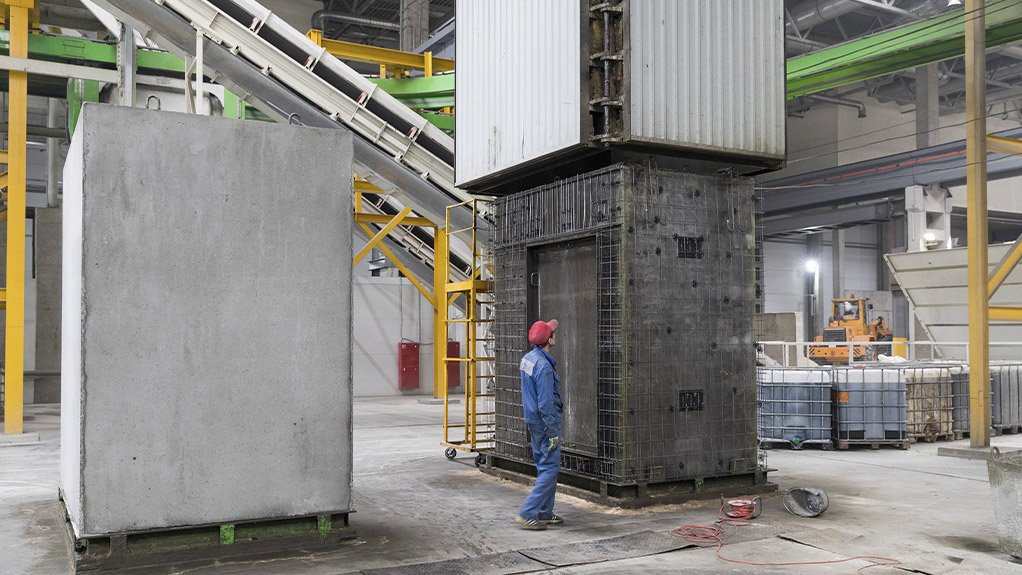
Currently, there is a growing interest in manufacturing pre-designed standard box unit modules at a factory as this speed ups the assembly at site. For example, a precast concrete company in Dubai applied the principles of modular construction in a villa project. They stretched the 3D design to room-sized 3D modules in precast concrete. The modules were assembled at the factory using precast concrete panels including finishing, electrical cabling, sockets and plumbing.
Additionally, the modules were transported to the site where the villa was assembled in only 48 hours. The time they spent preparing modules at the factory is, of course, not included.
Even if the short assembly time sounds great, there are some downsides. Room-sized 3D modules in precast concrete are heavy and may weigh more than 30 tons. Handling, lifting and transportation of such heavy modules is challenging and it may cause damages to the finishing or to the structure.
Often the end result is a situation where the overall cost per built up square meter is higher than that of using modern, design-focused precast system.
Using 3D steel moulds for production at the factory may be applicable to pre-manufacturing of bathroom and elevator shaft modules. However, it is important to keep in mind that there is a balance of just how heavy and complex precast concrete products are feasible to pre-manufacture. Architectural freedom may get very limited if buildings are completely built using 3D moulds.
Modern precast offers practicality and saves costs
Modern, design-focused precast concrete is suitable for all types of buildings, in seismic areas and also in areas prone to tornadoes. Precast concrete can be used as the main building material or only partly as a structural component.
When high-quality, energy-efficient buildings have been the target, the modern, design-focused precast concrete has repeatedly been selected as the construction method. Precast concrete is a proven, industrialised building method. Even if installation still takes place at the construction site, the main part of the work is transferred from the chaos of a building site to controlled, organised factory conditions. In addition, housing units are still completed within a reasonable time, cost-efficiently and in a safe manner.
The use of precast concrete brings quite a lot of savings compared to alternative solutions. The savings come from a number of sources. As an example, in residential buildings, the span of pre-stressed precast hollow core slabs can be from 8 meters to 12 meters. The external insulated precast concrete wall panels can work as the only load-bearing walls.
Furthermore, pre-stressed hollow-core slabs save up to 45 percent in concrete compared to reinforced concrete floor casted in a 3D mould, or a plain cast-in-situ reinforced slab. Pre-stressing steel can also be cut by 30 percent because of the lower self-weight of hollow core slabs. In an average apartment this means savings of about 14 tons of concrete and more than 250 kg of steel. Moreover, pre-stressed hollow core slabs can be partly recessed which makes it easier to prepare bathroom plumbing.
Optimised production process
Modern automated precast concrete production plants optimise entire precast production process, from 3D building design, to the construction site. The production lines feature advanced software, modern table circulation and state-of the art production machinery. Automated functions cover planning, monitoring and controlling the process of producing building blocks for acceptable buildings.
An acceptable building for a home should, first of all, be affordable and of a decent quality, with sufficient living space, good structural stability and located in a sustainable neighbourhood. The acceptable home needs to match expectations of future home owners and tenants.
“To sum up, good quality and low life-cycle costs of precast concrete buildings make them an attractive choice for home owners. Add to that short construction time and cost efficiency of the construction process and you get an optimal choice for large housing projects” concluded Lindroth.
Elematic, based in Finland, is regarded as a world leader in the supply of precast concrete production technologies.
Article Enquiry
Email Article
Save Article
Feedback
To advertise email advertising@creamermedia.co.za or click here
Research Reports

Projects



Latest News


Showroom
Mitsubishi Chemical Advanced Materials South Africa (Pty) Ltd is a leading manufacturer of high-performance engineering plastics for the mining...
VISIT SHOWROOM
Multotec, recognised industry leaders in metallurgy and process engineering help mining houses across the world process minerals more efficiently,...
VISIT SHOWROOM


Press Office
Announcements
What's On
Subscribe to improve your user experience...
Option 1 (equivalent of R125 a month):
Receive a weekly copy of Creamer Media's Engineering News & Mining Weekly magazine
(print copy for those in South Africa and e-magazine for those outside of South Africa)
Receive daily email newsletters
Access to full search results
Access archive of magazine back copies
Access to Projects in Progress
Access to ONE Research Report of your choice in PDF format
Option 2 (equivalent of R375 a month):
All benefits from Option 1
PLUS
Access to Creamer Media's Research Channel Africa for ALL Research Reports, in PDF format, on various industrial and mining sectors
including Electricity; Water; Energy Transition; Hydrogen; Roads, Rail and Ports; Coal; Gold; Platinum; Battery Metals; etc.
Already a subscriber?
Forgotten your password?
Receive weekly copy of Creamer Media's Engineering News & Mining Weekly magazine (print copy for those in South Africa and e-magazine for those outside of South Africa)
➕
Recieve daily email newsletters
➕
Access to full search results
➕
Access archive of magazine back copies
➕
Access to Projects in Progress
➕
Access to ONE Research Report of your choice in PDF format
RESEARCH CHANNEL AFRICA
R4500 (equivalent of R375 a month)
SUBSCRIBEAll benefits from Option 1
➕
Access to Creamer Media's Research Channel Africa for ALL Research Reports on various industrial and mining sectors, in PDF format, including on:
Electricity
➕
Water
➕
Energy Transition
➕
Hydrogen
➕
Roads, Rail and Ports
➕
Coal
➕
Gold
➕
Platinum
➕
Battery Metals
➕
etc.
Receive all benefits from Option 1 or Option 2 delivered to numerous people at your company
➕
Multiple User names and Passwords for simultaneous log-ins
➕
Intranet integration access to all in your organisation