Increased delivery capability needed to meet demand


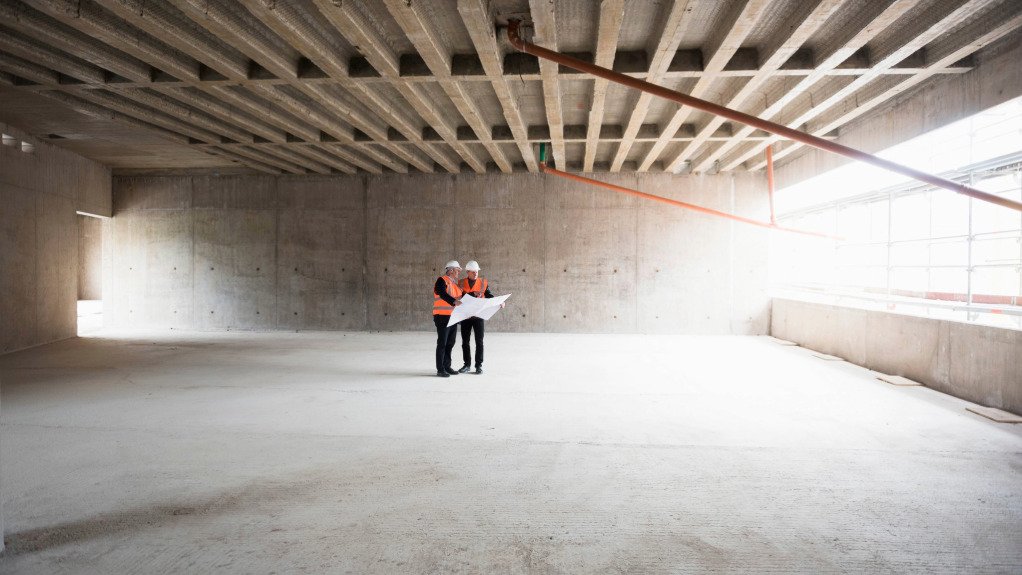
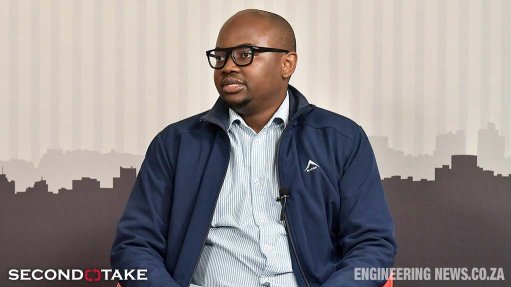
GEORGE ASAMANI Without strong project leadership, communication breakdowns, scheduling errors and poor coordination can quickly lead to delays, reworking and rising costs
BUILDING CAPABILITY Countries that prioritise building the local project delivery capability will have a clear advantage in converting mineral potential into operational projects and sustained economic value




The global construction sector will require nearly 2.5-million additional project professionals by 2035 to meet demand, thereby posing indirect risks to mining projects, which depend heavily on construction delivery capability, as professionals head to plug the construction industry gap, according to research by nonprofit organisation the Project Management Institute (PMI).
PMI has conducted extensive research which highlights an emerging shortage of construction project management professionals. These are required for the successful delivery of mining projects in Africa, and their absence poses a significant execution risk, explains PMI sub-Saharan Africa MD George Asamani.
Sub-Saharan Africa is not immune to this pressure, he says, adding that the region alone is projected to face a shortage of about 149 000 construction project professionals by 2035, rising to more than 214 000 in higher growth scenarios.
This shortage matters for mining, as such projects are complex, multidisciplinary undertakings that require coordination across engineering, logistics, permitting, environmental compliance, community engagement and infrastructure development, highlights Asamani.
“Without strong project leadership, communication breakdowns, scheduling errors and poor coordination can quickly lead to delays, reworking and rising costs,” he states.
However, timing has made this challenge more acute, with financial information, analytics, and energy and commodities intelligence company S&P Global Market Intelligence estimating that the global average time to bring a new mine into operation has stretched to about 18 years.
As such, for African countries seeking to benefit from the growing demand for copper, cobalt, lithium and other critical minerals, shortening development timelines is essential, states Asamani.
“If project management capability does not grow alongside investment, funding will move faster than projects can be delivered, slowing Africa’s ability to turn mineral resources into economic value,” he explains.
Untapped Mineral Wealth
According to multilateral financial institution the African Finance Corporation’s 2026 Compendium of Africa’s Strategic Minerals, the continent holds an estimated $29.5-trillion in mineral wealth and about 20% of global reserves, with roughly $8.6-trillion still untapped.
The report further highlights that a major opportunity for Africa is to accelerate industrialisation and job creation by expanding downstream industries, including aluminium, fertiliser, battery materials and alloys.
However, unlocking that value will depend not only on geological potential, but on execution capability as well, states Asamani.
“Mining development is closely linked to large-scale construction activities and shortages in project management capability can directly affect the pace at which new mines are built and commissioned,” he explains.
The competition for talent will extend beyond the mining sector, as infrastructure, energy, housing and industrial development projects will all compete for the same pool of skilled project leaders, adds Asamani.
However, he says that countries that prioritise building local project delivery capability – including through internationally recognised credentials such as the PMI’s Construction Professional certification – will have a clear advantage in converting mineral potential into operational projects and sustained economic value.
“In a highly competitive global environment, execution capability will increasingly determine which mining projects succeed and which remain on paper,” adds Asamani.
Meanwhile, the growing role of technologies – such as digital modelling, AI and advanced data analytics – in improving scheduling, risk management and decision-making on large projects is fundamentally reshaping and modernising mining project delivery, reports civil engineering company Casting Crown Company MD Dr Gbolahan Oyelakin.
These tools are shifting the mining industry from reactive schedule-driven operations to a predictive, data-driven and proactive sector, where decision-making is faster, risks are lower, and outcomes are more predictable, he states.
“This transformation impacts every phase, from initial design and mine development planning to daily execution. AI-enabled digital tools are replacing static, linear planning with dynamic, iterative and highly optimised processes to create standardised systems and artefacts,” explains Oyelakin.
Moreover, the execution phase of a mining project will benefit from a shift away from siloed departmental plans toward a single, unified source of truth, with precise insights generated by the system, he adds.
In addition to this, Oyelakin says that real-time field data provides “unprecedented visibility” into operations, enabling proactive management, while enhancing environmental, social and governance commitment, strict compliance and safety management.
“The growth trajectory is crystal clear – mining project delivery is becoming a highly digital, data-centric discipline,” states Oyelakin.
As such, he says project management and consulting firms and role-players that successfully integrate these tools – moving from fragmented, manual processes to connected, intelligent workflows – will be the companies and individuals that consistently deliver projects on time, within budget and to the highest standards of safety and sustainability, as well as develop an effective business continuity stream.
Although technology is available, the main challenge is change management and fostering a culture ready to embrace and adopt these powerful new capabilities, with project management and consulting firms having “a lot to do” in this regard to support early adoption and transition, concludes Oyelakin.
Article Enquiry
Email Article
Save Article
Feedback
To advertise email advertising@creamermedia.co.za or click here
Research Reports

Projects


Latest Multimedia


Latest News


Showroom


The Steel Tube Export Association of South Africa was established to develop sustainable, internationally competitive carbon steel tube and pipe...
VISIT SHOWROOM
Press Office
Announcements
What's On
Subscribe to improve your user experience...
Option 1 (equivalent of R125 a month):
Receive a weekly copy of Creamer Media's Engineering News & Mining Weekly magazine
(print copy for those in South Africa and e-magazine for those outside of South Africa)
Receive daily email newsletters
Access to full search results
Access archive of magazine back copies
Access to Projects in Progress
Access to ONE Research Report of your choice in PDF format
Option 2 (equivalent of R375 a month):
All benefits from Option 1
PLUS
Access to Creamer Media's Research Channel Africa for ALL Research Reports, in PDF format, on various industrial and mining sectors
including Electricity; Water; Energy Transition; Hydrogen; Roads, Rail and Ports; Coal; Gold; Platinum; Battery Metals; etc.
Already a subscriber?
Forgotten your password?
Receive weekly copy of Creamer Media's Engineering News & Mining Weekly magazine (print copy for those in South Africa and e-magazine for those outside of South Africa)
➕
Recieve daily email newsletters
➕
Access to full search results
➕
Access archive of magazine back copies
➕
Access to Projects in Progress
➕
Access to ONE Research Report of your choice in PDF format
RESEARCH CHANNEL AFRICA
R4500 (equivalent of R375 a month)
SUBSCRIBEAll benefits from Option 1
➕
Access to Creamer Media's Research Channel Africa for ALL Research Reports on various industrial and mining sectors, in PDF format, including on:
Electricity
➕
Water
➕
Energy Transition
➕
Hydrogen
➕
Roads, Rail and Ports
➕
Coal
➕
Gold
➕
Platinum
➕
Battery Metals
➕
etc.
Receive all benefits from Option 1 or Option 2 delivered to numerous people at your company
➕
Multiple User names and Passwords for simultaneous log-ins
➕
Intranet integration access to all in your organisation