Organisations welcome fuel price relief but call for further measures

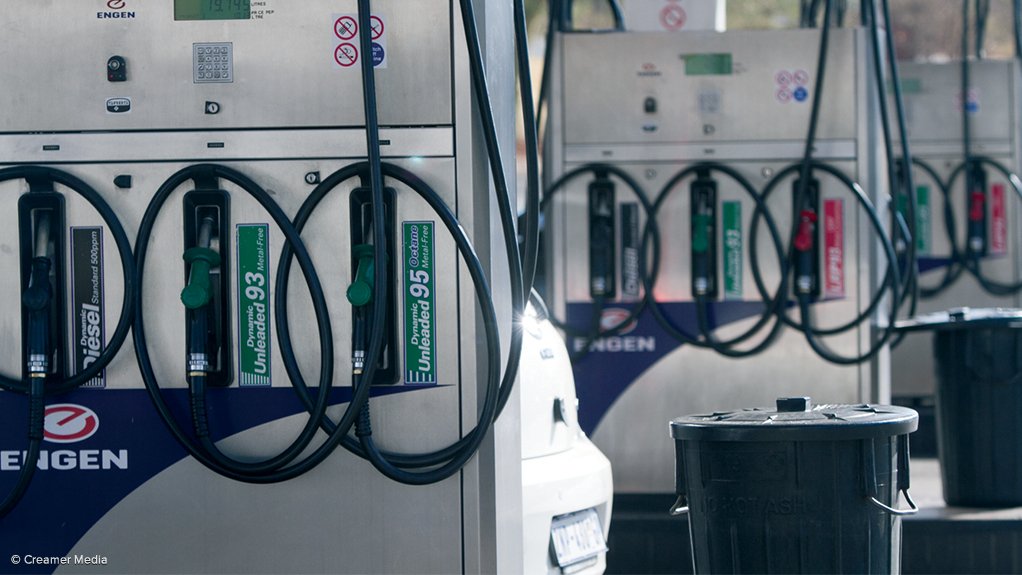


Agriculture representative bodies AgriSA and Agbiz have welcomed the announcement by Finance Minister Enoch Godongwana and Mineral and Petroleum Resources Minister Gwede Mantashe of a R3-a-litre cut in the fuel levy for April.
The Ministers announced in a joint statement on March 31 that the R3-a-litre cut in the fuel levy was an immediate intervention that would be implemented in the price structures of petrol and diesel from April 1 to May 5.
Relief measure would be re-evaluated on a monthly basis for May and June.
A broader package of measures would also be considered to support households and key sectors of the economy.
“The escalation of conflict in the Middle East has materially increased risks to global energy markets, placing significant upward pressure on domestic fuel prices. Recent data from the Central Energy Fund Group suggests historically high fuel price increases from April as a result,” the Ministers noted.
The Department of Mineral and Petroleum Resources (DMPR) pointed out that the increase in international energy prices led to higher contributions to the basic fuel prices of petrol, diesel and illuminating paraffin by R5.26, R9.49 and R10.80 a litre, respectively.
Further, the rand depreciated against the dollar, which led to higher contributions to the basic fuel prices of petrol, diesel and illuminating paraffin by 56.18c, 78.07c and 83.21c a litre, respectively.
The general fuel levy for petrol would have been R4.10 a litre and the general fuel levy for diesel R3.93; however, the R3-a-litre reduction for April means the general fuel levy for petrol reduces to R1.10 a litre and the general fuel levy for diesel to 93c a litre. These amounts exclude other levies such as the Road Accident Fund (RAF) and Carbon Fuel levies.
As a result, petrol 93 and 95 will increase by R3.06 a litre, while diesel (0.05%) will increase by R7.37 a litre and diesel (0.005%) by R7.51 a litre for April.
The Ministers said the partial reduction in the fuel levy would cost about R6-billion in foregone tax revenue for the month.
“The relief measure is designed to be fiscally neutral and the government will implement mechanisms to recoup the foregone revenue within the fiscal framework approved during the 2026 Budget,” the Ministers noted.
They further reassured the public that South Africa had sufficient fuel supply to meet current and projected demand.
“Reports of shortages in certain areas are largely due to localised distribution and logistical challenges driven by panic buying rather than a lack of national fuel stocks and these are expected to self-correct in the coming days.
“Motorists and businesses are encouraged to purchase fuel responsibly and avoid unnecessary stockpiling,” they added.
MARKET RESPONSE
AgriSA and Agbiz said the reduction in the fuel levy provides important relief to both consumers and producers in a context of heightened global energy market volatility.
“As the government has noted, rising fuel costs are already placing upward pressure on food and transport inflation, with broader implications for the economy.
“From an agricultural perspective, this intervention is particularly significant and it represents a R6-billion relief for the country and consumers. Fuel is a core input across the entire value chain, supporting on-farm production, irrigation, harvesting, processing and logistics.
“In most farming systems, fuel accounts for between 12% and 18% of production costs, making it a critical cost driver in periods of volatility. The relief measure will therefore help to ease immediate cost pressures and could play an important role in buffering against further food price inflation in the short term,” the organisation stated.
However, they emphasise that the current challenges facing the agricultural sector extend beyond price alone. Recent engagements with farmers and fuel suppliers indicate that the sector is experiencing a combination of price increases, supply constraints and operational uncertainty at farm level, particularly during the coming production periods for winter and summer grain.
“These pressures are unfolding at a time when producers are already operating in a low-margin environment, characterised by relatively low commodity prices and elevated input costs.”
They further pointed out that, in addition to fuel, other major inputs such as fertiliser, often accounting for up to 35% to 50% of production costs, are also under upward pressure due to global supply disruptions and geopolitical risks.
“This compounds the financial strain on producers and increases the sensitivity of the sector to further shocks. Against this backdrop, while the temporary fuel levy relief is a positive and necessary step, it should be seen as part of a broader set of interventions required to stabilise the system,” the organisations said.
AgriSA and Agbiz reiterated their call for additional, targeted measures to improve market responsiveness and ensure continuity of supply. These would include greater flexibility in the fuel price adjustment mechanism, including more frequent reviews during periods of volatility; greater transparency on the national stock levels of fuels; consideration of a temporary reduction in the RAF levy; and extending the diesel rebate for primary users to 100%.
These measures were not intended to increase costs to the sector, but rather to ensure that pricing reflected underlying conditions more accurately, thereby reducing incentives for panic buying or withholding supply, they said.
The organisations noted that government’s plans to review the fuel pricing framework over the medium term would be critical in addressing structural inefficiencies and ensuring that the fuel pricing system remained aligned with the needs of key productive sectors of the economy, in particular the agricultural value chain.
Meanwhile, the Solidarity Research Institute (SRI) said it hoped the expected increase in the cost of living, driven by the largest fuel price hike in South Africa’s history, would be short-lived. It stated, despite the fuel levy relief, the increase in fuel prices was still "a major blow".
It pointed out that the 39.6% increase in the diesel price to R7.37 a litre would result in the fuel cost of transporting a load of goods from Gauteng to Durban rising by more than R2 200.
“The effect of this is that inflation on all items that must be transported will rise sharply. The cost of imported products will inevitably rise more sharply, because the impact on all transport costs will be substantial,” said SRI economic researcher Theuns du Buisson.
He added that the higher diesel costs would also have a noticeable impact on public transport.
"We can expect taxi and bus services to increase their prices drastically in the coming weeks. These costs will then be passed on directly to people who are already under serious financial pressure,” said Du Buisson.
TOO LATE
The Organisation Undoing Tax Abuse (OUTA) has also welcomed government’s intervention, but said the announcement came too late, with South Africans and businesses having been left in the dark while the scale of the impending increases became clear well before month-end.
With petrol increases projected at around R5 a litre and up to R10 a litre for diesel, there was enough information available for earlier action, the civil society organisation said.
“Government cannot keep reacting at the last minute while households and businesses carry the uncertainty. This relief is welcome, but it should have been communicated earlier to allow people to plan and absorb the impact," said OUTA CEO Wayne Duvenage.
The organisation stated that earlier intervention would have reduced panic, improved planning and softened the economic ripple effects already building across transport, food prices and essential goods.
It also stressed that the cut in the fuel levy was "a temporary fix, not a solution".
OUTA further called for greater transparency on South Africa’s strategic oil reserves, including current levels, the framework guiding their use, usage policy and whether these reserves would be used during periods of price pressure.
“There is no justification for keeping the public in the dark on strategic oil reserves. South Africans deserve to know what safeguards are in place and when they will be used to protect the economy,” Duvenage said.
Article Enquiry
Email Article
Save Article
Feedback
To advertise email advertising@creamermedia.co.za or click here
Research Reports

Projects

Latest Multimedia

Latest News
Showroom

We at Hawk High Pressure Pumps specialise in industrial pumps and pumping systems. Our high pressure washing equipment is locally manufactured and...
VISIT SHOWROOM
Sika South Africa is a trusted partner for the nation’s infrastructure, commercial, residential, and industrial sectors.
VISIT SHOWROOM

Press Office
Announcements
What's On
Subscribe to improve your user experience...
Option 1 (equivalent of R125 a month):
Receive a weekly copy of Creamer Media's Engineering News & Mining Weekly magazine
(print copy for those in South Africa and e-magazine for those outside of South Africa)
Receive daily email newsletters
Access to full search results
Access archive of magazine back copies
Access to Projects in Progress
Access to ONE Research Report of your choice in PDF format
Option 2 (equivalent of R375 a month):
All benefits from Option 1
PLUS
Access to Creamer Media's Research Channel Africa for ALL Research Reports, in PDF format, on various industrial and mining sectors
including Electricity; Water; Energy Transition; Hydrogen; Roads, Rail and Ports; Coal; Gold; Platinum; Battery Metals; etc.
Already a subscriber?
Forgotten your password?
Receive weekly copy of Creamer Media's Engineering News & Mining Weekly magazine (print copy for those in South Africa and e-magazine for those outside of South Africa)
➕
Recieve daily email newsletters
➕
Access to full search results
➕
Access archive of magazine back copies
➕
Access to Projects in Progress
➕
Access to ONE Research Report of your choice in PDF format
RESEARCH CHANNEL AFRICA
R4500 (equivalent of R375 a month)
SUBSCRIBEAll benefits from Option 1
➕
Access to Creamer Media's Research Channel Africa for ALL Research Reports on various industrial and mining sectors, in PDF format, including on:
Electricity
➕
Water
➕
Energy Transition
➕
Hydrogen
➕
Roads, Rail and Ports
➕
Coal
➕
Gold
➕
Platinum
➕
Battery Metals
➕
etc.
Receive all benefits from Option 1 or Option 2 delivered to numerous people at your company
➕
Multiple User names and Passwords for simultaneous log-ins
➕
Intranet integration access to all in your organisation