Components sector calls for stronger localisation support


RENAI MOOTHILAL Through the South African Automotive Masterplan 2035, government and industry aim to increase local vehicle content to 60% and vehicle production to 1.4-million units by 2035



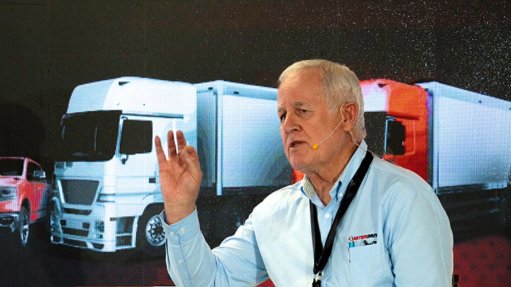
Greater policy support is needed to strengthen localisation and improve the competitiveness of South Africa’s automotive components manufacturing industry, says industry body the National Association of Automotive Component and Allied Manufacturers (NAACAM) CEO Renai Moothilal.
He says the sector remains strategically important, with automotive component manufacturing contributing more than R100-billion a year in gross value addition, generating R61.2-billion in direct export earnings and employing about 80 000 people.
However, the industry is facing structural pressures. Vehicle production has remained stagnant at about 600 000 units a year, while localisation has declined from 42% in 2021 to 39% in 2025. Increased import competition in the aftermarket segment has also intensified pressure on local manufacturers.
Moothilal says these conditions have contributed to the closure of more than 15 components manufacturers and highlight the need for policy reforms to improve production scale.
Despite the challenges, he says investment opportunities remain, including programmes linked to the next-generation Toyota Hilux, the new Volkswagen Tengo and Chery’s acquisition of the Nissan plant, in the Gauteng province.
“Through the South African Automotive Masterplan 2035, government and industry aim to increase local vehicle content to 60% and vehicle production to 1.4-million units by 2035.”
Moothilal adds that the policy framework is positive, but implementation support must improve through faster localisation programmes, stronger supplier development and action to address infrastructure, logistics and energy constraints.
He identifies growth opportunities in mineral beneficiation; the localisation of internal combustion engine, hybrid and new-energy vehicle components; the expansion of the automotive aftermarket; and deeper regional integration through the African Continental Free Trade Area (AfCFTA).
The AfCFTA’s automotive rules of origin, which require at least 40% African content in qualifying automotive products, could encourage investment in components manufacturing across the continent and deepen regional supply networks.
He adds that, regarding electrification, South African suppliers already produce many technology-agnostic components that can be used across different vehicle platforms: “The larger challenge is ensuring local vehicle production remains aligned with export market demand, particularly in the EU and UK, where demand is shifting towards low- and zero-emission vehicles.”
Moothilal notes that opportunities are emerging in battery materials and components, thermal management systems, power electronics, high-voltage wiring systems and charging infrastructure, while South Africa is also well placed to benefit from mineral beneficiation linked to future mobility technologies.
“Local manufacturers are increasingly investing in automation, digital manufacturing, data analytics, AI-enabled systems and predictive maintenance to maintain global competitiveness,” he adds.
To support the industry, Moothilal confirms that NAACAM supports the strategic use of tariffs within a broader industrial policy framework.
“Proposals include increasing completely built-up vehicle tariffs to 40%, from 25%, and completely knocked-down tariffs to 30%, from 20%, alongside stronger anti-dumping measures, expanded export support, skills development and continued collaboration with government on infrastructure and investment support,” he concludes.
Article Enquiry
Email Article
Save Article
Feedback
To advertise email advertising@creamermedia.co.za or click here
Research Reports

Projects

Latest Multimedia
Latest News

Showroom
Tsurumi Pumps Africa is a specialist supplier of Japanese-engineered submersible pumping solutions, serving customers across the African continent.
VISIT SHOWROOM
Rio Carb is an OEM (Original Equipment Manufacturer) of R-C700 Chromium Carbide (CrC) alloy clad wear plates and pipes used for heavy materials...
VISIT SHOWROOM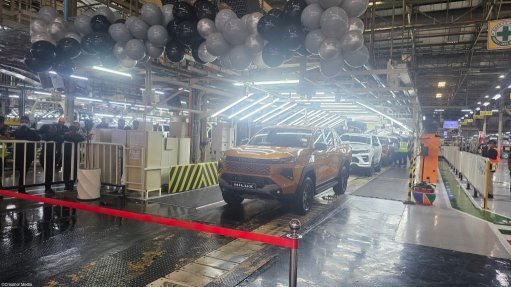


Announcements
What's On
Subscribe to improve your user experience...
Option 1 (equivalent of R125 a month):
Receive a weekly copy of Creamer Media's Engineering News & Mining Weekly magazine
(print copy for those in South Africa and e-magazine for those outside of South Africa)
Receive daily email newsletters
Access to full search results
Access archive of magazine back copies
Access to Projects in Progress
Access to ONE Research Report of your choice in PDF format
Option 2 (equivalent of R375 a month):
All benefits from Option 1
PLUS
Access to Creamer Media's Research Channel Africa for ALL Research Reports, in PDF format, on various industrial and mining sectors
including Electricity; Water; Energy Transition; Hydrogen; Roads, Rail and Ports; Coal; Gold; Platinum; Battery Metals; etc.
Already a subscriber?
Forgotten your password?
Receive weekly copy of Creamer Media's Engineering News & Mining Weekly magazine (print copy for those in South Africa and e-magazine for those outside of South Africa)
➕
Recieve daily email newsletters
➕
Access to full search results
➕
Access archive of magazine back copies
➕
Access to Projects in Progress
➕
Access to ONE Research Report of your choice in PDF format
RESEARCH CHANNEL AFRICA
R4500 (equivalent of R375 a month)
SUBSCRIBEAll benefits from Option 1
➕
Access to Creamer Media's Research Channel Africa for ALL Research Reports on various industrial and mining sectors, in PDF format, including on:
Electricity
➕
Water
➕
Energy Transition
➕
Hydrogen
➕
Roads, Rail and Ports
➕
Coal
➕
Gold
➕
Platinum
➕
Battery Metals
➕
etc.
Receive all benefits from Option 1 or Option 2 delivered to numerous people at your company
➕
Multiple User names and Passwords for simultaneous log-ins
➕
Intranet integration access to all in your organisation