Precision chemistry developed for complex DRC ores



DANIEL VERWEY Variable mineralogy and finer particle sizes require more customised reagent strategies supported by ongoing test work and process optimisation
LEFA MASIUANA In tailings applications, improving dewatering can reduce storage risks and lower environmental footprint




As the Democratic Republic of Congo (DRC) continues to expand copper and cobalt production to meet rising global demand for battery minerals, mining companies are using metallurgical solutions company BME Metallurgy’s expertise to improve efficiency while reducing environmental impact and operating costs, reports GM Lefa Masiuana.
As the DRC currently accounts for more than 70% of global cobalt production and is Africa’s largest copper producer, he says the country’s output is expected to continue growing as investment in the Central African Copperbelt accelerates.
However, Masiuana says expanding production is also bringing new processing challenges that require innovative mining chemical solutions.
As orebodies are becoming more challenging to process, BME Metallurgy business development manager Daniel Verwey explains the situation often requires finer grinding and more selective metallurgical processes to liberate valuable minerals efficiently.
Across the DRC Copperbelt, many operations are processing increasingly complex ores characterised by lower grades, variable mineralogy and higher impurity levels, which he says is particularly evident in oxide-sulphide transition zones, where impurity management, acid consumption and recovery optimisation are becoming increasingly important.
At the same time, Verwey says global battery and automotive supply chains are placing greater pressure on producers to align with stricter environmental, social and governance (ESG) standards.
In addition, as ore complexity increases, greater emphasis is being placed on reagent optimisation to improve flotation performance, hydrometallurgical efficiency and overall plant recovery, he notes, adding that advanced collectors, depressants and modifiers are becoming increasingly important in improving selectivity in difficult ore environments.
“Variable mineralogy and finer particle sizes require more customised reagent strategies,” says Verwey.
BME Metallurgy has helped operations reduce frother consumption by up to 50% while also improving recovery performance, reducing both operating costs and logistical pressure.
In hydrometallurgical circuits widely used across the Copperbelt, the company’s reagent technologies have also improved solvent extraction efficiency, reduced organic losses and increased plant throughput by up to 20% through better impurity management.
“These improvements are particularly important in solvent extraction-electrowinning operations where acid efficiency and extraction stability have a major impact on profitability,” he explains.
Water, Tailings Management Under Pressure
As processing capacity expands across mining regions such as Kolwezi and Lualaba, water management is becoming a critical operational concern for DRC miners, says Verwey, adding that the focus is on improving water recovery, reducing freshwater consumption and strengthening tailings management practices as ESG scrutiny intensifies.
Expanding copper and cobalt production places greater pressure on water infrastructure and raises expectations from international investors and downstream supply chains around responsible mining practices, he adds.
“Advanced thickening technologies using polyacrylamide flocculants and synergistic coagulants can improve settling rates and overflow clarity while supporting more efficient water recycling,” says Verwey, adding that this helps operations reduce pressure on local water resources while improving process performance.
Masiuana notes that as producers seek safer and more sustainable storage solutions, following increased global scrutiny of tailings failures in the mining industry, tailings management will continue to receive greater attention and BME Metallurgy will work with mines to optimise reagent dosing, improve slurry rheology and support more effective dewatering strategies.
According to Masiuana, global demand for responsibly sourced battery minerals will increasingly shape processing decisions in the DRC mining sector, with producers that supply international markets facing growing pressure to demonstrate responsible extraction practices, emissions management and safer chemical handling procedures.
BME Metallurgy is responding to this dynamic by expanding its portfolio of biodegradable and lower-toxicity reagent alternatives. Here, recent innovations include acid mist suppressants for copper electrowinning operations as well as technologies that support cyanide detoxification and emissions control.
One of BME Metallurgy’s emerging technologies is membrane-based reagent recovery, which enables the reuse of chemicals such as sulphuric acid and caustic soda.
“Early testwork indicates reagent recovery potential of up to 70%. This can significantly reduce chemical consumption while improving the economics of processing lower-grade deposits,” says Verwey.
Supply Chain Reliability
Reliable reagent supply remains a major operational consideration for mining companies operating in remote parts of the DRC, where logistical disruptions and border delays can quickly affect production continuity, says Verwey, adding that to mitigate these risks, BME Metallurgy maintains strategic stocking and diversified sourcing supported by regional infrastructure and supplier networks.
With copper and cobalt demand expected to remain strong as the global energy transition accelerates, he says DRC-based mining companies are expected to continue investing in technologies that improve recovery, operational efficiency and sustainability performance.
Article Enquiry
Email Article
Save Article
Feedback
To advertise email advertising@creamermedia.co.za or click here
Research Reports
Projects
Latest Multimedia

Latest News
Showroom
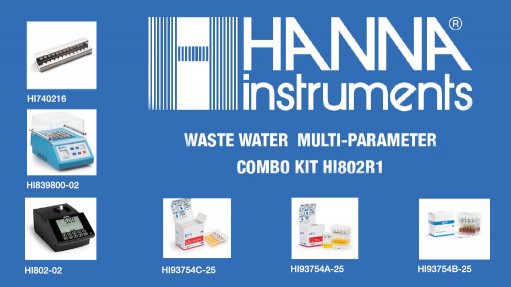
We supply customers with practical affordable solutions for their testing needs. Our products include benchtop, portable, in-line process control...
VISIT SHOWROOM
Columbus Stainless, based in Middelburg, Mpumalanga, is Africa’s only producer of stainless steel flat products. In addition, Columbus is the only...
VISIT SHOWROOM



Press Office
Announcements
What's On
Subscribe to improve your user experience...
Option 1 (equivalent of R125 a month):
Receive a weekly copy of Creamer Media's Engineering News & Mining Weekly magazine
(print copy for those in South Africa and e-magazine for those outside of South Africa)
Receive daily email newsletters
Access to full search results
Access archive of magazine back copies
Access to Projects in Progress
Access to ONE Research Report of your choice in PDF format
Option 2 (equivalent of R375 a month):
All benefits from Option 1
PLUS
Access to Creamer Media's Research Channel Africa for ALL Research Reports, in PDF format, on various industrial and mining sectors
including Electricity; Water; Energy Transition; Hydrogen; Roads, Rail and Ports; Coal; Gold; Platinum; Battery Metals; etc.
Already a subscriber?
Forgotten your password?
Receive weekly copy of Creamer Media's Engineering News & Mining Weekly magazine (print copy for those in South Africa and e-magazine for those outside of South Africa)
➕
Recieve daily email newsletters
➕
Access to full search results
➕
Access archive of magazine back copies
➕
Access to Projects in Progress
➕
Access to ONE Research Report of your choice in PDF format
RESEARCH CHANNEL AFRICA
R4500 (equivalent of R375 a month)
SUBSCRIBEAll benefits from Option 1
➕
Access to Creamer Media's Research Channel Africa for ALL Research Reports on various industrial and mining sectors, in PDF format, including on:
Electricity
➕
Water
➕
Energy Transition
➕
Hydrogen
➕
Roads, Rail and Ports
➕
Coal
➕
Gold
➕
Platinum
➕
Battery Metals
➕
etc.
Receive all benefits from Option 1 or Option 2 delivered to numerous people at your company
➕
Multiple User names and Passwords for simultaneous log-ins
➕
Intranet integration access to all in your organisation